

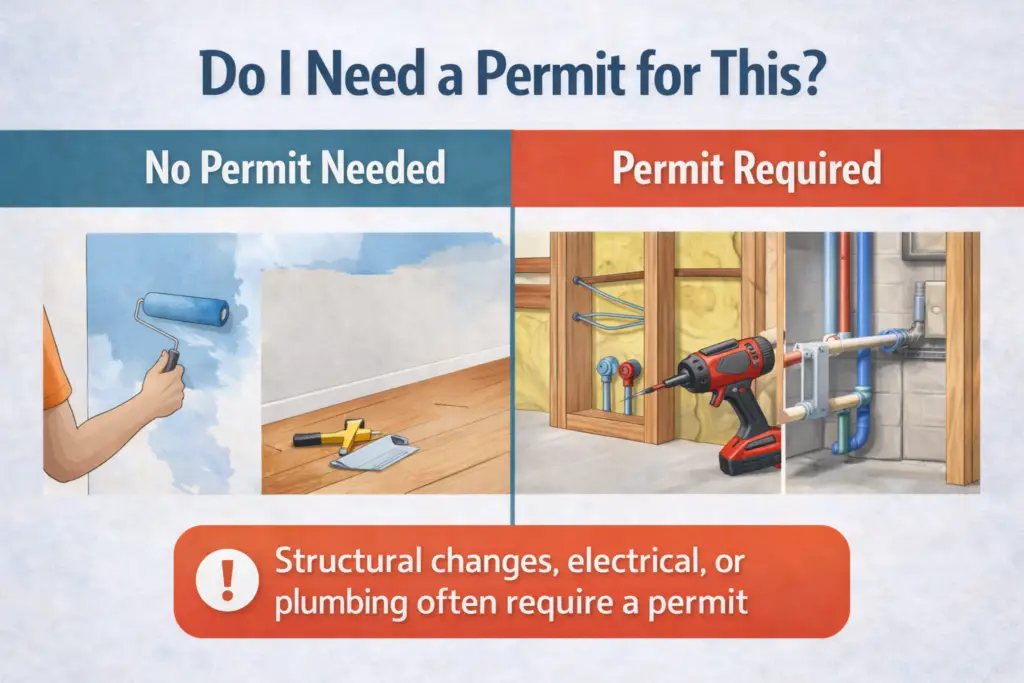
You’re planning a home project — maybe a bathroom update where you want to replace a swing door with a sliding one, or you’re dreaming about opening up the wall between your kitchen and living room. It feels like a reasonable improvement, not a major renovation.
Then the question hits:
Do I need a permit for this?
It’s one of the most common — and most confusing — questions homeowners face when renovating. Bathroom remodels, kitchen updates, basement finishing, electrical work, even decks and fences can fall into a gray area where the rules aren’t obvious.
Permit requirements vary by city, project type, and scope of work. And while pulling a permit can feel like an unnecessary hassle, skipping one when it’s required can lead to fines, delays, insurance issues, or problems when you sell your home.
This guide breaks it down in plain English. You’ll learn which home renovation projects usually require a permit, which ones usually don’t, and how to quickly check your local rules — so you can move forward confidently and avoid costly surprises later.
Why Permits Exist (and Why They’re So Confusing)
At their core, permits exist to protect safety, structural integrity, and long-term property value. They help ensure work is done to code, systems are installed correctly, and changes don’t create .
So why does it feel so unclear?
Because permit rules are:
- Local, not national
- Written by different cities and counties
- Updated at different times
- Interpreted based on the details of each project
A “small” project in one city may require a permit in another. And two projects that look identical on the surface can be treated differently if one involves moving plumbing, altering framing, or upgrading electrical.
That’s why guessing — or relying on someone else’s experience — is where homeowners get into trouble.
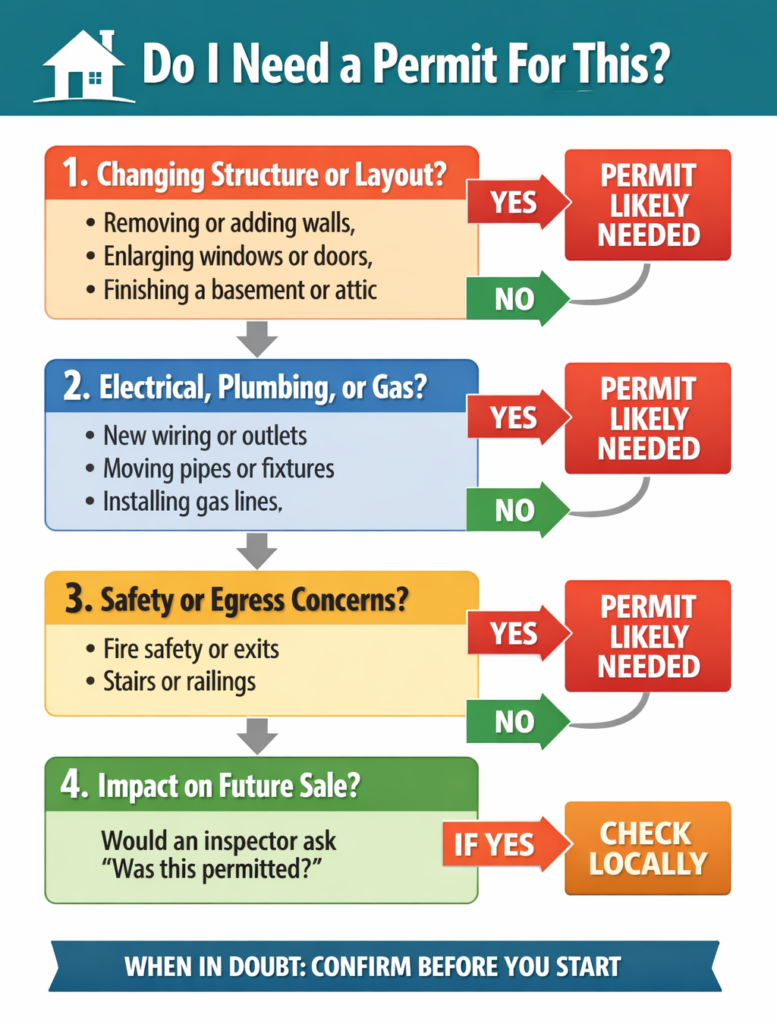
The “Do I Need a Permit?” Decision Flow
Before assuming yes or no, walk through these questions in order. For most homeowners, this flow answers the permit question faster — and more accurately — than searching city websites for hours.
Step 1: Are You Changing the Structure or Layout of Your Home?
This includes:
- Removing or adding walls
- Enlarging door or window openings
- Finishing an unfinished space like a garage, attic, or basement
If yes: A permit is usually required.
If no: Move to Step 2.
Step 2: Are You Touching Electrical, Plumbing, or Gas?
This includes:
- Adding or relocating outlets or lighting
- Moving plumbing fixtures
- Installing or modifying gas appliances or lines
If yes: A permit is usually required — even if the project feels minor.
If no: Move to Step 3.
Step 3: Does This Project Affect Safety or Egress?
Ask yourself:
- Could this impact fire safety?
- Does it change how someone exits the home in an emergency?
- Does it involve stairs, railings, or load-bearing elements?
If yes: A permit is often required.
If no: Move to Step 4.
Step 4: Would This Matter During an Inspection or Sale?
If a future buyer, inspector, or insurance company would reasonably ask:
“Was this work permitted?”
That’s a strong signal to verify requirements before starting.
If yes: Check locally.
If no: A permit is often not required — but confirmation is still smart.
AHA Pro Tip
When in doubt, checking first is never the mistake. Cities rarely penalize homeowners for asking before work begins — but fixing unpermitted work later can be stressful and expensive.
Home Renovation Projects That Usually Require a Permit
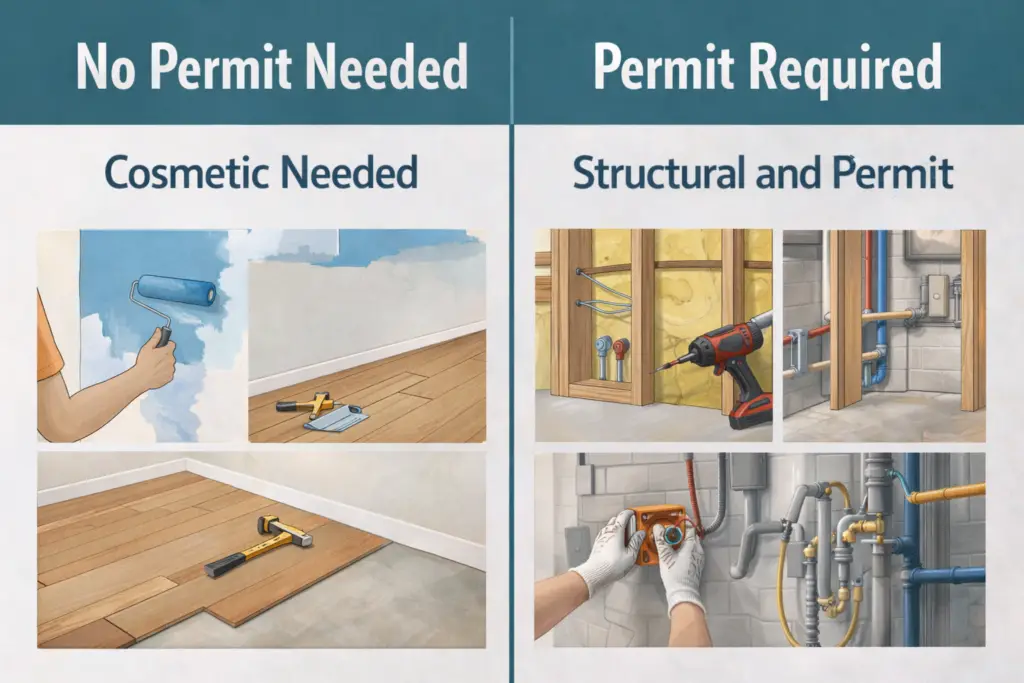
While rules vary, permits are commonly required when a project affects structure, systems, or safety.
Structural Changes
Permits are typically required for:
- Removing or modifying walls
- Opening up kitchens or living areas
- Enlarging doors or windows
- Converting garages, attics, or basements into living space
Even walls that “don’t look load-bearing” often require verification.
Bathroom Remodels Beyond Cosmetic Updates
Bathroom projects frequently trigger permits when they involve:
- Moving plumbing fixtures
- Converting tubs to showers
- Adding or relocating electrical
- Changing door types that affect wall framing
What feels like a layout tweak can still affect plumbing, ventilation, or structure.
Kitchen Renovations With Layout or System Changes
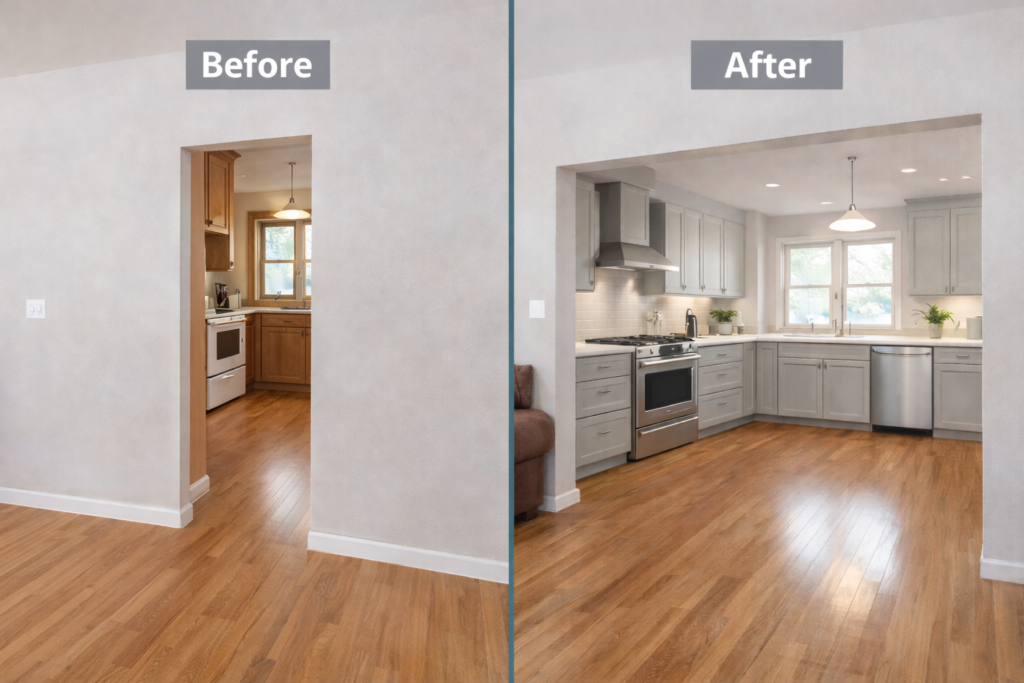
Permits are commonly required when you:
- Remove or modify walls
- Move sinks, dishwashers, or gas ranges
- Add circuits or outlets
- Relocate ventilation or range hoods
Cabinet-only updates are usually fine. System changes are not.
Electrical, Plumbing, and Gas Work
Permits are often required for:
- Electrical panel upgrades
- New circuits or EV chargers
- Plumbing line changes
- Gas appliance installation or relocation
These rules exist primarily for fire and safety protection.
Exterior and Major System Projects
Often require permits:
- Decks and patios
- Roof replacements (in many areas)
- HVAC replacements
- Window or door resizing
- Fences over height limits
Home Projects That Usually Don’t Require a Permit
Many purely cosmetic updates don’t require permits, including:
- Painting
- Installing flooring
- Replacing cabinets without layout changes
- Replacing countertops
Like-for-Like Replacements
Often allowed without permits:
- Swapping fixtures in the same location
- Replacing appliances using existing connections
- Replacing light fixtures without altering wiring
AHA Pro Tip
“No permit required” doesn’t mean “no standards.” Work still needs to meet local building codes.
Permit vs. No-Permit: Quick Comparison
| Project Type | Permit Usually Required? | Why |
|---|---|---|
| Painting, flooring | ❌ No | Cosmetic only |
| Cabinet replacement (same layout) | ❌ No | No system changes |
| Bathroom remodel (moving plumbing) | ✅ Yes | Plumbing + ventilation |
| Kitchen wall removal | ✅ Yes | Structural |
| Electrical panel upgrade | ✅ Yes | Fire safety |
| Adding outlets or circuits | ✅ Yes | Electrical code |
| Deck construction | ✅ Yes | Structural + safety |
| Fence (over height limit) | ⚠️ Sometimes | Zoning rules |
| Window replacement (same size) | ❌ Often no | No framing change |
| Window resizing | ✅ Yes | Structural opening |
| HVAC replacement | ✅ Often | Mechanical systems |
Why Your Neighbor’s Advice Might Be Wrong
“Well, I didn’t need a permit.”
That advice is common — and unreliable.
Permit requirements can vary based on:
- Location
- Year the work was done
- How the project was described
- Small details that change classification
Two identical-looking remodels can be treated very differently on paper.
Watch Out
Friends, neighbors, and even contractors can be helpful — but only your local building department can give a definitive answer for your home.
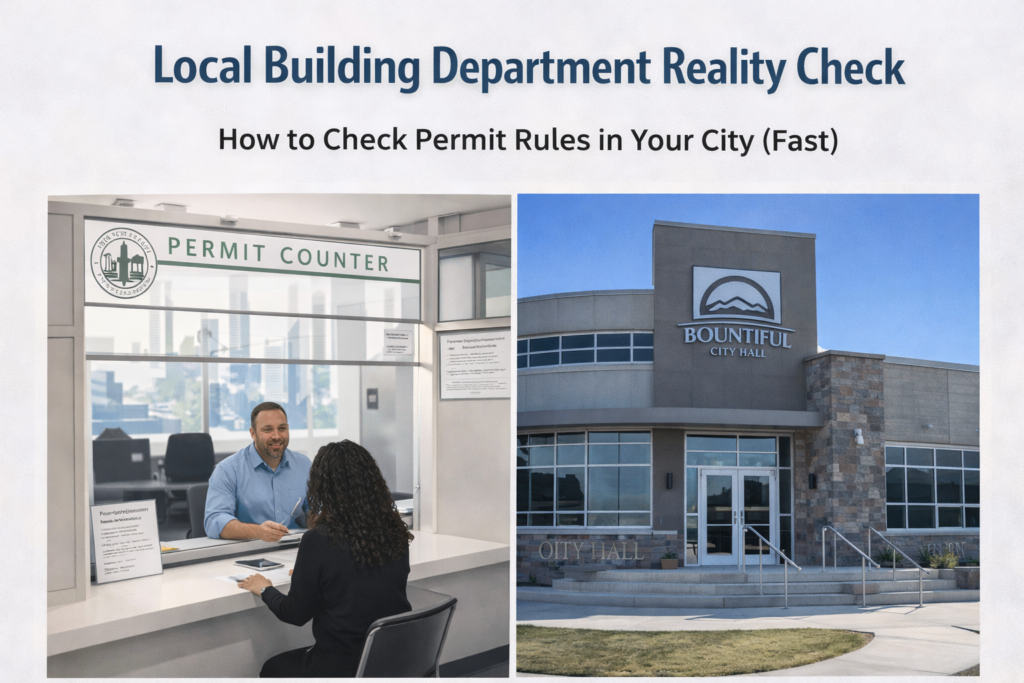
How to Check Permit Rules in Your City (Fast)
You don’t need to decode municipal law to get clarity.
Step 1: Search Smart
Search:
“[Your city or county] building permit homeowner”
Stick to official city or county pages.
Step 2: Find the “Work Requiring a Permit” List
Most cities publish homeowner-friendly lists outlining common projects.
Step 3: Call or Email If It’s a Gray Area
A simple question like:
“I’m remodeling a bathroom and keeping fixtures in place but changing the door. Does this require a permit?”
Step 4: Keep a Record
An email response or webpage link can be helpful later — especially during resale.
What Happens If You Skip a Required Permit
This isn’t about fear — it’s about realism.
Most issues arise:
- During home inspections
- When filing insurance claims
- When selling the home
Outcomes often include retroactive permits, opening walls for inspection, or project delays. Fixable — but avoidable.
Bottom Line
If your project affects structure, systems, or safety, pause and check.
If it doesn’t, you’re often in the clear — just verify locally.
A few minutes of confirmation can save months of frustration later.
Keep track of your renovation details with our Home Improvement Tracker.
Explore more homeowner planning tools with AHA and make confident renovation decisions before work begins.