

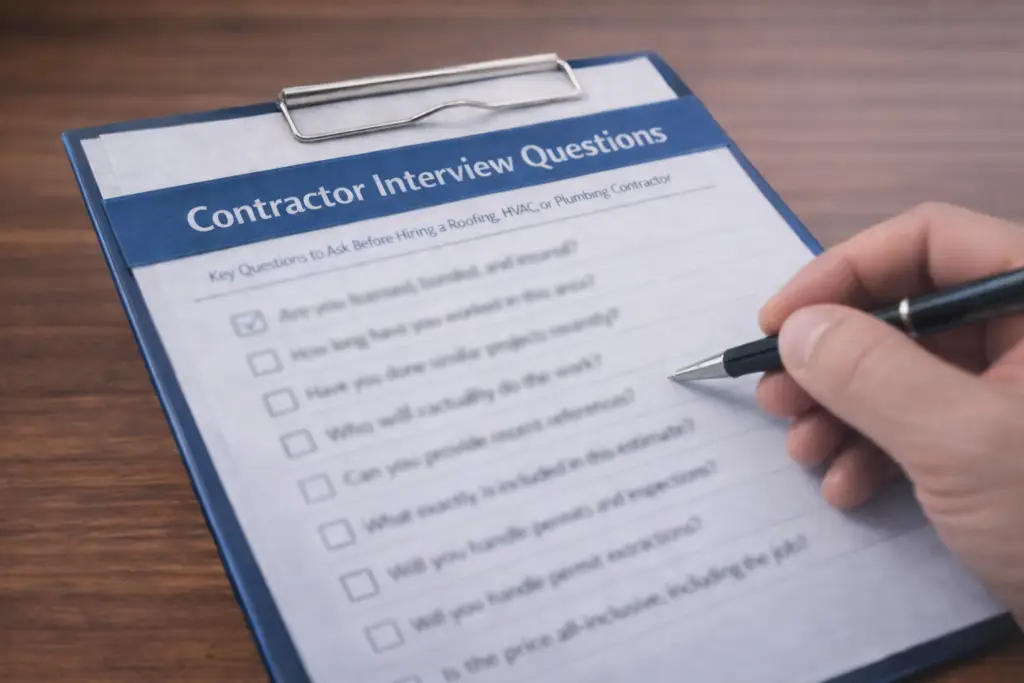
Why Asking the Right Questions Matters More Than Price
Hiring a contractor is one of those homeowner moments where the pressure escalates quickly. Roof leaks don’t wait. HVAC failures during a heat wave can’t be postponed. Plumbing problems have a way of demanding immediate attention.
That urgency is exactly why many homeowners end up with surprise costs, poor workmanship, or contractors who disappear once payment is made. Price alone doesn’t protect you. The questions you ask — and how a contractor responds — do.
Knowing what to ask a contractor before hiring helps you slow the process just enough to make a confident decision, even when the repair itself feels time-sensitive. These questions aren’t about being difficult. They’re about protecting your home, your finances, and your peace of mind.
When This Level of Vetting Makes Sense
Not every home repair needs a full contractor interview. If you’re hiring someone for a small, low-risk job — like a basic service call or a minor repair — using every question on this list may be unnecessary.
This guide is most useful when:
- The project costs more than a few hundred dollars
- The work affects your home’s safety, structure, or core systems
- The job could uncover hidden issues
- You’re being asked to sign a contract or pay a deposit
Smaller jobs usually only require a short version of this list.
Small Repairs or Service Calls: Start With These Basics
With lower-cost work, start with:
- Are you licensed and insured?
- What does this price include?
- Who do I contact if there’s a problem?
- When will the work be completed?
If the job grows in scope, cost, or complexity, that’s your cue to slow down and work through the full list.
What to Ask a Contractor Before Hiring Them
Before you start calling contractors or comparing bids, take a breath. This section works best as a conversation guide, not an interrogation — helping you listen for clarity and professionalism rather than sales pressure.

Are you licensed, bonded, and insured?
Start here. This question sets the tone and quickly reveals whether you’re speaking with a professional or someone hoping you won’t look too closely.
Why this matters: If a worker is injured on your property or damage occurs during the job, you could be financially responsible if proper coverage isn’t in place.
AHA Insight: Reputable contractors don’t hesitate here. They explain their coverage clearly and can provide documentation without defensiveness.
How long have you worked in this area?
After credentials, move to context. Local experience often matters more than glossy marketing.
Contractors who regularly work in your area understand local building codes, permitting offices, climate conditions, and common construction challenges. Fly-by-night operators tend to disappear when issues surface later.
Have you completed similar projects recently?
Now narrow the focus. You’re not just hiring a contractor — you’re hiring someone for this project, in this house.
Recent experience matters more than old photo galleries. Ask about projects completed within the past year or two and what challenges came up.
Who will actually be doing the work?
Clarity here prevents frustration later. The person giving the estimate isn’t always the person who shows up.
Ask who will be on-site, who supervises the job, and who your point of contact will be if questions or issues arise.
Can you provide recent references?
Online reviews help, but they don’t tell the whole story. Recent homeowners can tell you what it’s like to live through the project — not just admire the finished result.
Ask whether the job stayed on budget, how problems were handled, and whether they’d hire the contractor again.
What exactly is included in this estimate?
This is where many homeowner regrets quietly begin. Two estimates can look similar while covering very different scopes of work.
With roofing projects, ask about underlayment, flashing, and cleanup. When it comes to HVAC work, clarify ductwork, electrical upgrades, and system sizing. Plumbing estimates should confirm permits, inspections, and wall repairs.
AHA Insight: Vague estimates are where surprise costs hide. Contractors who explain what isn’t included are often more trustworthy than those who promise everything.

Will you handle permits and inspections?
Permits aren’t just paperwork — they’re homeowner protection.
Unpermitted work can create insurance problems, derail future home sales, and force costly corrections later.
AHA Insight: Contractors who suggest skipping permits to “save time or money” are shifting risk onto you, not themselves.
What is the payment schedule?
Money conversations can feel uncomfortable, but avoiding them is far riskier.
Industry norms usually require a modest deposit followed by payments tied to completed milestones. Be cautious of requests for full payment upfront or cash-only arrangements.
What’s the realistic timeline?
Rather than chasing guarantees, look for honesty.
Ask when the job can start, how long it should take, and what factors could cause delays. Thoughtful answers matter more than optimistic promises.
How will you protect my home during the job?
Respect for your space often predicts respect for your project.
Roofing jobs should include landscaping protection and thorough cleanup. HVAC and plumbing work should include floor, wall, and furniture protection.
How do you handle change orders or surprises?
Unexpected issues happen — especially in older homes. What matters is how they’re handled.
Document all changes in writing, price them clearly, and approve them before work continues.
Will you provide lien waivers?
This question protects you from a problem many homeowners don’t discover until it’s too late.
Lien waivers confirm that subcontractors and suppliers have been paid, helping prevent legal claims against your home even after you’ve paid the contractor.
What happens if there’s a problem after the job is done?
The best contractors don’t rush past this question — they welcome it.
Ask about workmanship warranties, follow-up procedures, and who to contact if issues appear after completion.
Pro Tip: How Contractors Answer Matters as Much as What They Say

Professional contractors expect informed homeowners. They explain clearly, answer questions without pressure, and don’t rush decisions.
AHA Insight: Clear questions signal that you’re organized and serious — which often leads to better communication, more realistic pricing, and fewer surprises. If something feels off during the conversation, it rarely improves once work begins.
How AHA Helps Homeowners Hire With Confidence
If you want additional structure after gathering estimates, the AHA SmartHire Contractor Kit helps homeowners organize bids, track questions, and protect themselves legally.
It includes interview prompts, comparison tools, lien waiver guidance, and contract red-flag checklists — designed to support confident decisions without pressure.
Final Takeaway: Confident Questions Prevent Costly Regrets
Asking the right questions before hiring a contractor doesn’t make you difficult — it makes you prepared. Roofing, HVAC, and plumbing projects are too important to leave to guesswork.
Slow down when you can. Ask clearly. Get answers in writing. And remember: the best contractors respect homeowners who know what to ask.