

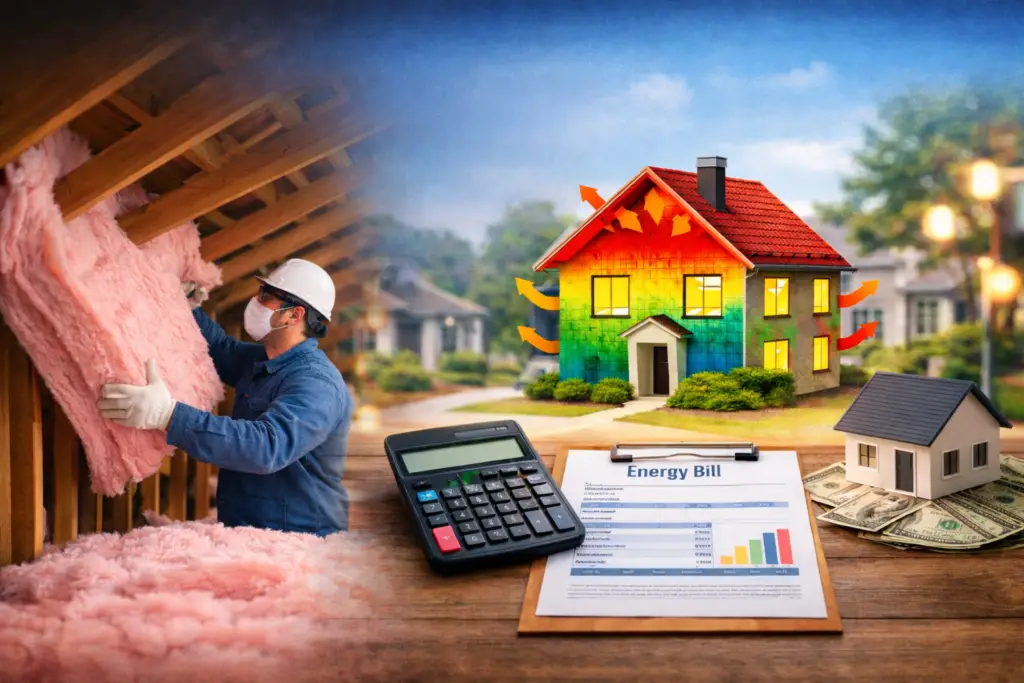
If your home feels drafty in winter, overheats in summer, or comes with energy bills that never seem to go down, insulation is often the quiet culprit. Heating and cooling account for a major share of household energy use, and poor insulation lets that expensive air slip right through your home’s shell.
That’s why home insulation cost savings is such a common search. Insulation isn’t glamorous like a kitchen remodel, but it’s one of the few upgrades that can lower monthly bills, improve comfort, and pay for itself over time. The challenge is understanding what insulation really costs, how much it can save, and what level of disruption to expect.
This guide breaks it all down — insulation basics, cost per square foot, ROI by insulation type, installation timelines, and the questions homeowners ask most before moving forward.
Insulation 101: How Home Insulation Actually Works
Insulation slows heat transfer. In winter, it helps keep warmth inside your home. In summer, it keeps hot outdoor air out. The less heat that moves through your walls, ceilings, and floors, the less your HVAC system has to work — and the less you pay in energy bills.
Insulation performance is measured using R-value, which indicates resistance to heat flow. Higher R-values mean better insulating power, but here’s the key homeowner takeaway:
The best insulation isn’t just the highest R-value — it’s the right material, installed correctly, in the right place.
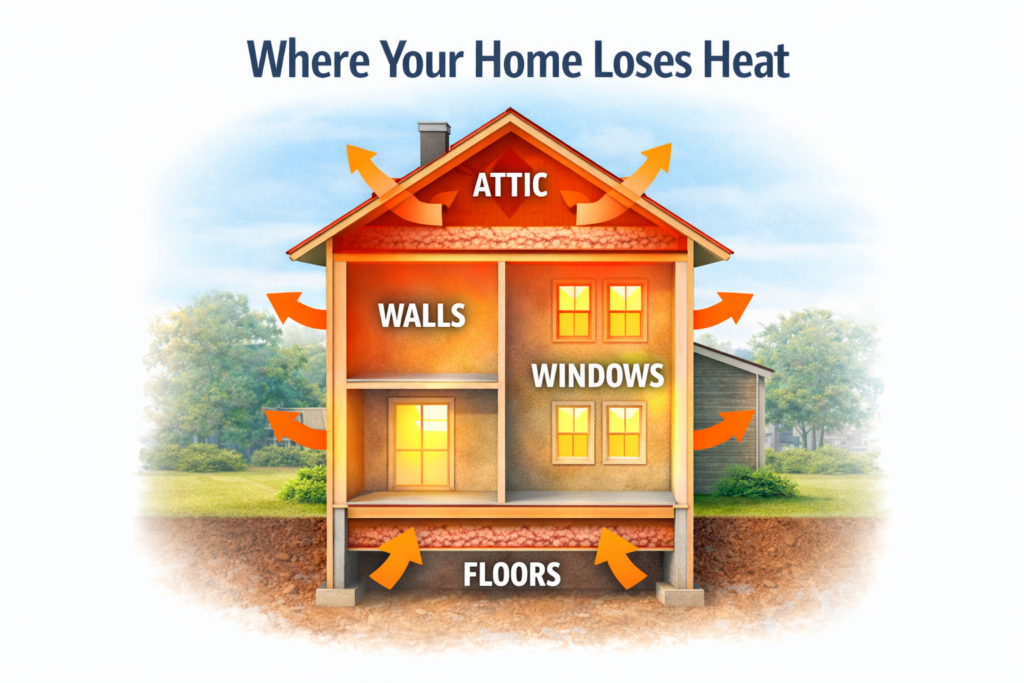
Most homes lose energy in predictable areas:
- Attics and ceilings
- Exterior walls
- Basements, crawlspaces, and rim joists
- Gaps around wiring, plumbing, and ductwork
That’s why insulation upgrades are often targeted instead of whole-house overhauls.
Before You Price Insulation: Check Where Your Home Is Losing Energy
Before you spend money on insulation, it’s worth understanding where your home is actually losing energy. Many homeowners assume insulation is the problem — but in reality, air leaks, poor sealing, or missing insulation in just a few areas may be driving higher energy bills.
A simple walkthrough can help you spot the most common trouble areas, like under-insulated attics, leaky rim joists, or drafty walls.
To make this easier, AHA created a DIY Home Energy Audit Checklist you can use to evaluate your home room by room — no special tools required.
Completing a quick energy audit first can help you:
- Prioritize the most cost-effective insulation upgrades
- Avoid over-insulating areas that don’t need it
- Get more accurate estimates when you do request quotes
Home Insulation Cost: What You’ll Pay Per Square Foot
Rather than guessing total project costs, insulation is best understood by cost per square foot (SF). This lets you compare quotes accurately and estimate your own budget based on your home’s size and scope.
The Big Three Insulation Types (Cost vs. ROI)
Fiberglass Insulation — Low Cost, Reliable ROI

Typical cost: ~$0.85–$1.50 per SF
ROI profile: Low upfront cost, fast payback
Best for: Attics, unfinished basements, budget-focused upgrades
Fiberglass insulation (batts or blown-in) is the most common option in U.S. homes because it’s affordable and effective when installed properly.
Why homeowners choose it:
- Lowest cost per SF
- Often delivers quick energy savings when attics are under-insulated
- Minimal installation disruption
Limitations:
- Does not stop air leaks on its own
- Performance depends heavily on installation quality
AHA insight: Fiberglass attic upgrades are often one of the fastest ways to improve home insulation cost savings.
Cellulose Insulation — Moderate Cost, Strong ROI in Older Homes
Typical cost: ~$1.00–$2.30 per SF
ROI profile: Moderate cost, strong real-world performance
Best for: Wall retrofits, older homes, eco-conscious homeowners
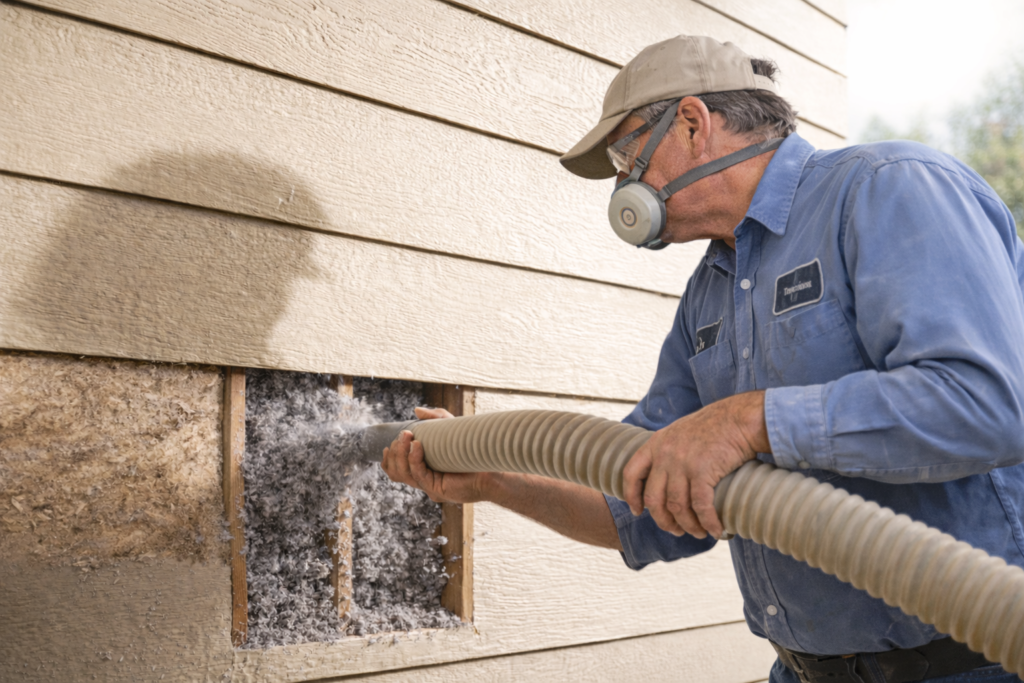
Cellulose insulation is blown into wall cavities and attic spaces, allowing it to fill gaps better than fiberglass.
Why homeowners choose it:
- Better coverage in irregular spaces
- Often outperforms fiberglass in older homes
- Made from recycled materials
Limitations:
- Can settle if not installed correctly
- Slightly higher cost per SF than fiberglass
Cellulose often shines in homes built before modern energy codes, where empty or under-filled wall cavities are common.
Spray Foam Insulation — High Cost, High ROI (When Used Strategically)

Typical cost: ~$1.70–$6.00 per SF
ROI profile: High upfront cost, high performance
Best for: Air sealing, comfort issues, hard-to-reach areas
Spray foam expands on contact, sealing air leaks while insulating at the same time. This makes it the most effective — and most expensive — insulation option.
Key distinctions:
- Open-cell spray foam: Lower cost, interior use
- Closed-cell spray foam: Higher cost, higher R-value, moisture resistance
Why homeowners choose it:
- Combines insulation and air sealing
- Excellent for rim joists, attic slopes, crawlspaces
Important reality check:
Spray foam delivers the best ROI when applied selectively, not sprayed throughout the entire home.
How Much Can Insulation Save on Energy Bills?
Most homeowners see 10–20% savings on heating and cooling costs after improving insulation and sealing air leaks, according to guidance from Energy.gov.
Savings tend to be higher when:
- The home is older or poorly insulated
- Energy prices are high
- Insulation is paired with air sealing
Insulation doesn’t eliminate energy bills — it reduces waste. And that reduction adds up year after year.
When Does Insulation Pay for Itself?
Because insulation costs vary by square footage and material, payback is best thought of in time, not totals.
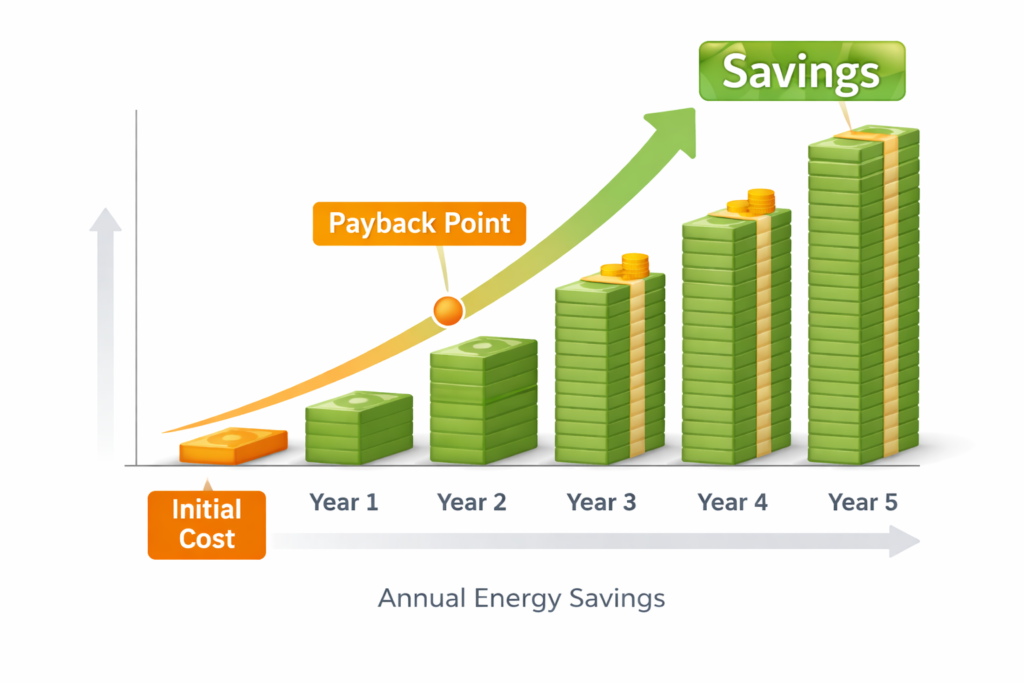
Most insulation projects pay for themselves in roughly 3–7 years, depending on:
- Cost per SF
- Current energy usage
- Local climate
- Future energy price increases
- Available rebates
After that, insulation continues delivering savings quietly, with little to no maintenance.
Pro Tip: Insulation performs best when paired with air sealing. Adding insulation without sealing leaks is like wearing a winter coat with the zipper open.
Watch Out: Over-insulating without proper ventilation can trap moisture and lead to mold, especially in attics and crawlspaces.
Insulation Comparison Calculator

Use the calculator below to estimate insulation costs and energy savings for your home. Results are based on typical per–square foot pricing and average energy savings ranges.
Insulation Cost, Savings & Payback Calculator
Not sure what rebates apply? Search the DSIRE rebate database
Estimates use typical per-square-foot costs and average energy-savings ranges. Rebates reduce upfront cost and may shorten payback time.
Estimates are for planning purposes only. Actual costs and savings vary by home condition, climate, and installation quality.
Frequently Asked Homeowner Questions About Insulation
Is insulation worth it if my home already has some?
Often yes. Many homes have insulation that’s insufficient, compressed, or poorly installed. Improving attic insulation alone can make a noticeable difference.
Will insulation really make my home more comfortable?
Yes. Better insulation reduces drafts, evens out room temperatures, and helps HVAC systems maintain consistent comfort.
Do I need an energy audit first?
Not always, but audits can help prioritize upgrades — especially for larger or older homes.
Is insulation a good DIY project?
Some fiberglass projects can be DIY-friendly. Wall insulation and spray foam are best handled by professionals due to safety, equipment, and performance concerns.
How long does installation take?
Most insulation upgrades take less than a day, with spray foam projects occasionally extending to multiple days depending on scope.
Can You Stay in the Home During Installation? What to Expect
Usually yes for fiberglass and cellulose. Spray foam often requires a short temporary exit while it cures. Most insulation projects are far less disruptive than homeowners expect, but it depends on the insulation type.
| Insulation Type | Can You Stay Home? | Typical Timeline | Disturbance |
| Fiberglass | Yes | ½–1 day | Low |
| Cellulose | Yes | ~1 day | Low–Moderate |
| Spray Foam | Temporary exit | 1–3 days | High (short-term) |
Fiberglass and cellulose installs are usually “workday projects.”
Spray foam typically requires leaving the home during application and curing (often 12–24 hours).
How to Decide If Insulation Is Right for Your Home
Insulation is usually a smart move if:
- Your home was built before the 1990s
- Energy bills feel high for your home size
- Certain rooms are always uncomfortable
- You plan to stay in the home at least 3–5 years
Starting with attics and air sealing often delivers the strongest home insulation cost savings without overwhelming your budget.
Bottom Line
Home insulation isn’t flashy, but it’s one of the most dependable ways to lower energy costs, improve comfort, and protect against rising utility prices. Understanding cost per square foot — not just total price tags — helps you make smarter, more confident decisions.