

Most homeowners don’t think about their roof… until something makes them look up.
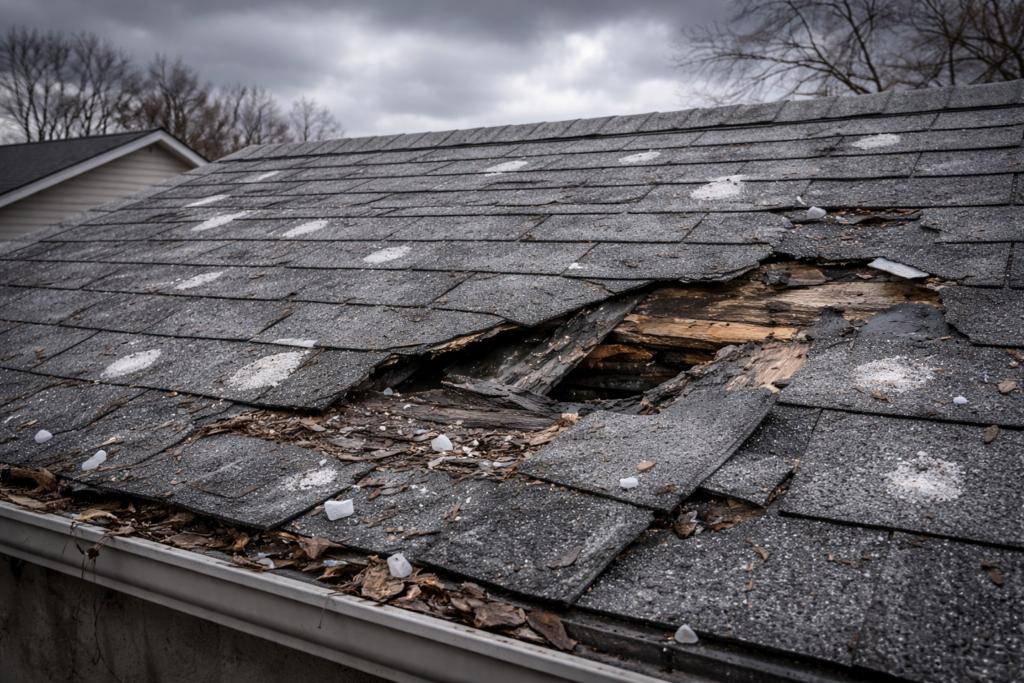
A storm rolls through and you find shingles in the yard.
Your neighbor replaces theirs and casually mentions it cost “about twenty grand.”
Or your insurance company asks how old your roof is — and you realize you’re not entirely sure.
Understanding roof lifespan isn’t about memorizing numbers. It’s about avoiding surprise. When you know roughly how long a roof lasts — and what affects it — you can plan ahead instead of reacting in panic.
Let’s walk through it clearly and calmly.
In This Guide:
- How Long Roofs Last (by material)
- What Affects Roof Lifespan
- Roof Replacement Cost Expectations
- How to Plan Financially (Without Stress)
- Roof Replacement Planning Calculator
- Frequently Asked Questions
How Long Does a Roof Last?
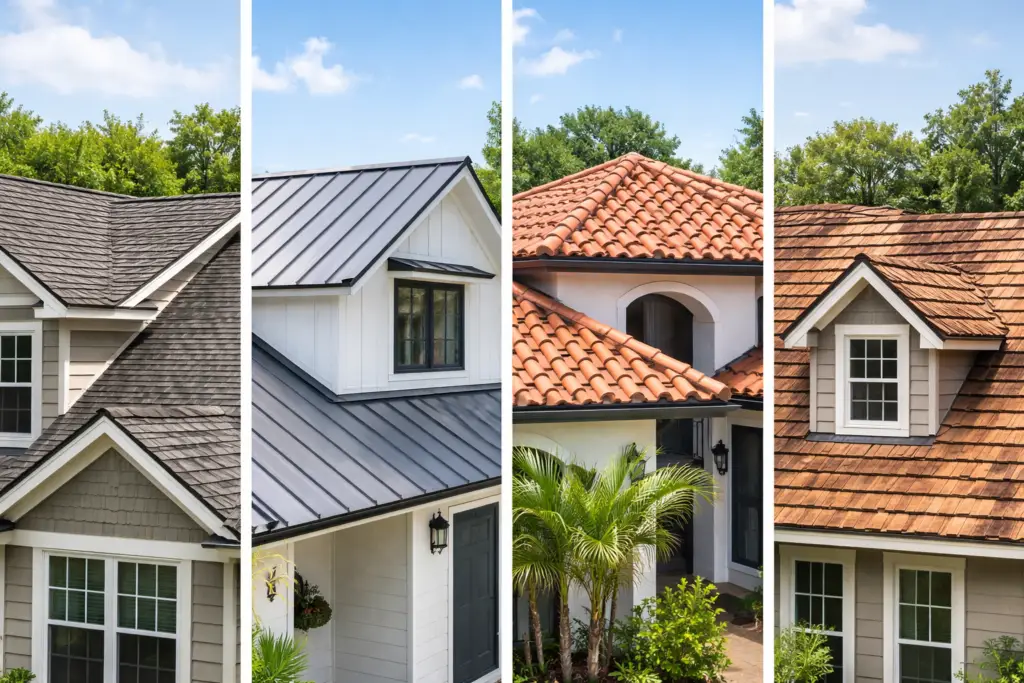
The average roof lifespan depends mostly on the material, the climate you live in, and how well it was installed and ventilated.
Here’s a practical breakdown:
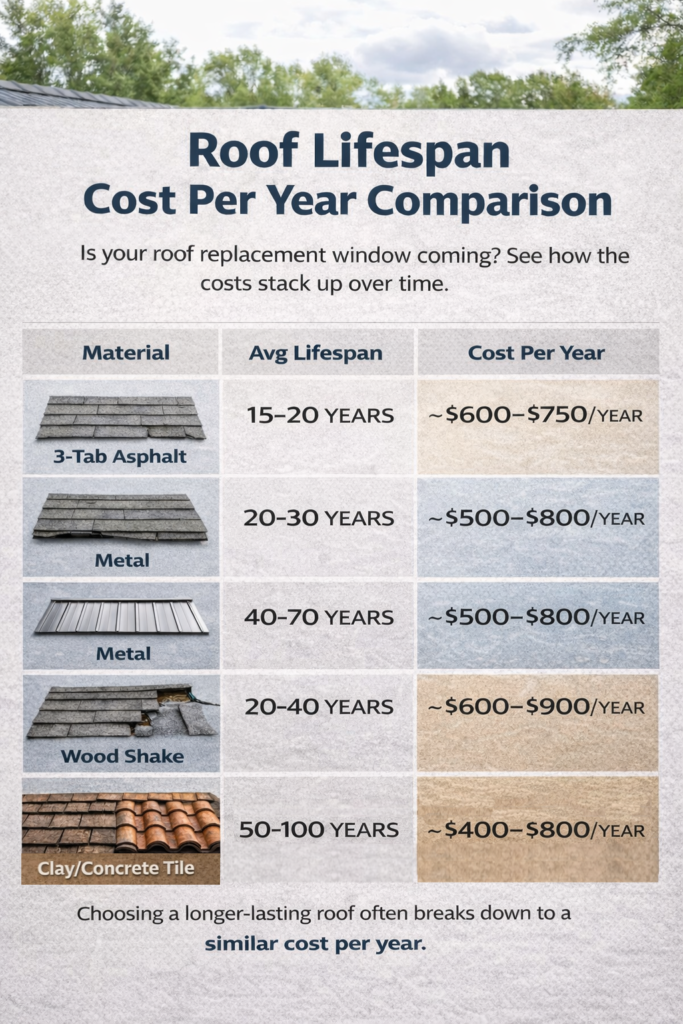
| Roof Type | Average Lifespan | Typical Cost Range | Estimated Cost Per Year* | Best For / Watch Outs |
|---|---|---|---|---|
| 3-Tab Asphalt | 15–20 years | $8,000–$15,000 | ~$600–$750/year | Budget replacement / Shorter lifespan |
| Architectural Asphalt | 20–30 years | $10,000–$20,000 | ~$500–$800/year | Most homes / Still vulnerable to hail |
| Metal | 40–70 years | $15,000–$40,000+ | ~$500–$800/year | Long-term owners / Higher upfront cost |
| Wood Shake | 20–40 years | $15,000–$30,000 | ~$600–$900/year | Curb appeal / Higher maintenance, fire risk |
| Clay/Concrete Tile | 50–100 years** | $20,000–$50,000+ | ~$400–$800/year | Warm climates / Heavy, may require structural support |
*Estimated cost per year is based on mid-range national pricing divided by average lifespan. Actual cost varies by region, roof size, and installation quality.
**Tile may last decades, but underlayment often requires replacement sooner.
If your home has a standard architectural asphalt roof (which most U.S. homes do), you’re usually looking at a 20–30 year window under normal conditions.
But “normal conditions” is doing a lot of work there.
One way to think about roof lifespan isn’t just total cost — it’s cost per year of use.
A $15,000 roof that lasts 25 years costs about $600 per year.
A $30,000 metal roof that lasts 50 years? Also about $600 per year.
When you look at roofing this way, something interesting happens. The materials that feel “expensive” upfront often land in a similar cost-per-year range as asphalt — they just shift the timing of the investment.
The real question isn’t just price. It’s how long you plan to stay in your home — and how much predictability matters to you.
What Affects Roof Lifespan?
Think of your roof like tires on a car. They don’t just age — they wear based on conditions.
Here’s what shortens a roof’s life:
- Poor attic ventilation (heat buildup “bakes” shingles)
- Repeated hail or wind damage
- Improper installation
- Low-quality materials
- Ice dams in colder regions
- Ignored small leaks
The U.S. Department of Energy notes that proper attic ventilation improves both energy performance and roof durability . When heat gets trapped in your attic, it can prematurely age shingles from underneath.
In hurricane-prone regions, roof attachment strength matters as much as the shingles themselves. Reinforced roof systems dramatically improve wind resistance, according to guidance from the Federal Emergency Management Agency .
Climate isn’t cosmetic. It’s structural.
Signs It May Be Time to Replace Your Roof
You don’t need to climb onto the roof. Start from the ground.
Watch for:
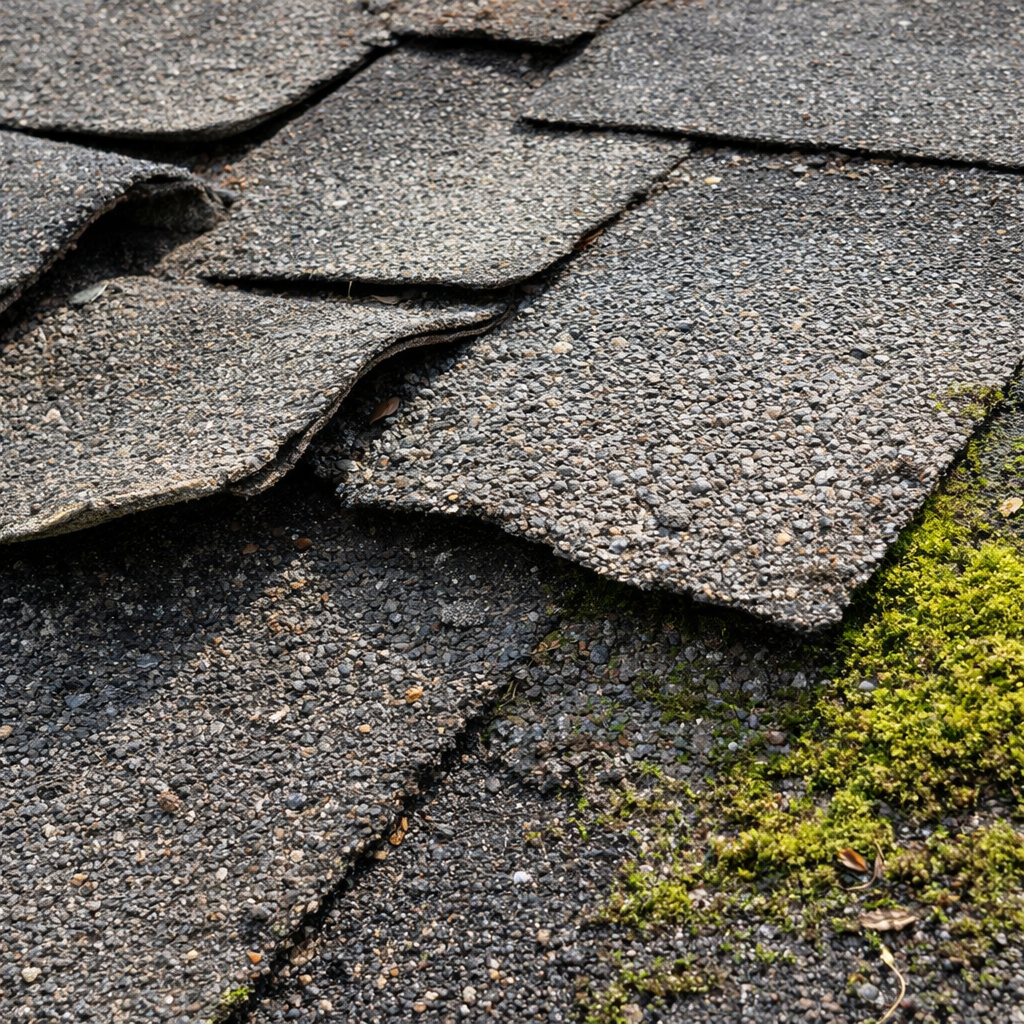
- Curling or buckling shingles
- Bald spots (granule loss)
- Frequent or recurring leaks
- Sagging areas
- Dark streaks or algae buildup
- Neighbors replacing roofs built at the same time
If your asphalt roof is approaching 20 years, you’re likely entering the planning phase — even if it “looks fine.”
And here’s something important: most roof failures don’t happen all at once. They decline gradually, then one storm exposes the weakness.
Planning early keeps you in control.
Roof Replacement Cost: What to Expect
Here’s how the installed planning ranges break down nationally:
| Material | Installed Range per SF |
|---|---|
| 3-Tab Asphalt | $4.50 – $7.00 |
| Architectural Asphalt | $6.00 – $9.50 |
| Metal | $9.00 – $16.00 |
| Wood Shake | $8.00 – $15.00 |
| Clay/Concrete Tile | $12.00 – $22.00 |
Regional variation:
High-wind or complex roofs → higher
Northeast & West Coast → higher end
Midwest & South → mid-range
Cost depends on:
- Roof size and pitch
- Material choice
- Tear-off vs. overlay
- Local labor rates
- Structural repairs underneath
Emergency replacements often cost more — not because contractors charge extra, but because you lose the ability to compare bids and plan timing.
How to Plan for Roof Replacement (Without Stress)
This is where homeowners shift from worry to control.
Step 1: Confirm Your Roof’s Age
Check:
- Your home inspection report
- Closing paperwork
- Previous contractor invoices
- County permit records (if available)
If you can’t find it, a roofer can often estimate age during an inspection.
Step 2: Estimate Your Replacement Window
Example:
Architectural asphalt roof
Installed 18 years ago
Average lifespan: 25 years
You may have 5–7 years remaining.
That’s not panic territory. That’s planning territory.
Step 3: Reverse Engineer the Savings
Let’s say replacement may cost $18,000.
If you have 6 years remaining:
$18,000 ÷ 6 years ÷ 12 months = $250/month
That’s very different from “we need $18,000 tomorrow.”
This is the shift most homeowners never make — and it’s the difference between disruption and stability.
Some homeowners also use broader home expense modeling tools to plan for larger predictable costs like roofing, HVAC replacement, and exterior repairs over time.
See What This Looks Like for Your Roof
If you want to turn your replacement estimate into a simple monthly planning number, use the calculator below.
It’s not about urgency. It’s about clarity.
Roof Replacement Planning & Cost Comparison
Installed cost estimates include labor and tear-off. Actual pricing varies by region and roof complexity.
Planning ahead — even by a few years — can dramatically reduce financial stress when replacement becomes necessary.
What Actually Happens During Roof Replacement?
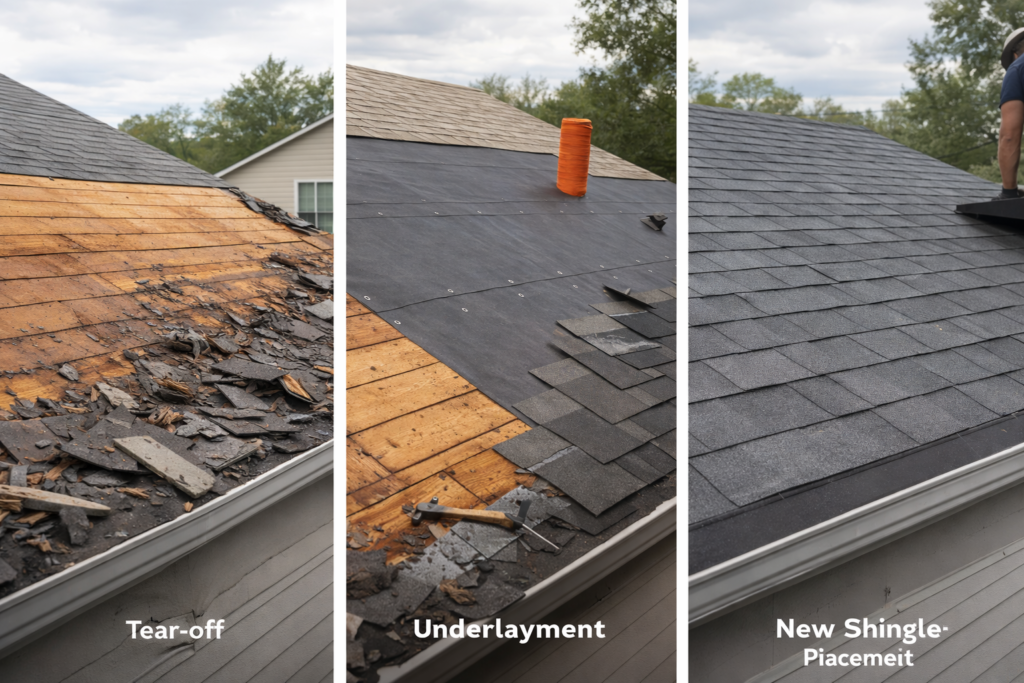
If you’ve never gone through a roof replacement, it helps to know what to expect.
Most projects follow this basic process:
- Old shingles are torn off down to the decking
- The roof deck is inspected for soft spots or rot
- Underlayment and water barriers are installed
- Flashing is replaced around chimneys and vents
- New roofing material is installed
Most asphalt roof replacements take 1–3 days.
The biggest cost variables tend to be hidden damage underneath, roof complexity, and local labor rates — not just the shingles themselves.
Knowing the process makes it easier to compare bids calmly.
A Common Scenario
A 20-plus-year-old asphalt roof can look “fine” from the ground. Then a moderate hailstorm hits. Tiny fractures weaken the shingles — damage that isn’t obvious right away.
Leaks don’t always show up immediately. Sometimes they appear months later, after repeated rain.
The real issue isn’t the storm. It’s whether the homeowner had planned for the replacement window.
If you’ve already been setting aside funds once your roof enters its later years, the transition is manageable. If not, it becomes urgent — and urgency is expensive.
The roof shouldn’t be the surprise.
Insurance & Regional Considerations
Some insurers begin limiting coverage or increasing deductibles once asphalt roofs reach 20–25 years old.
In hurricane-prone areas, upgraded underlayment and stronger roof connections may qualify for insurance discounts.
In hail-prone states, impact-rated shingles may reduce future damage risk.
Before replacing, check with your insurer to understand how material choice affects premiums.
If you’re reviewing your roof’s age, it’s also a good time to review your home insurance structure. Small adjustments — like deductible changes or bundling policies — can sometimes offset premium increases over time.
Watch Out
Not every roof that shows minor wear needs full replacement.
And not every “patch job” is a good long-term strategy.
If you receive a dramatic quote, consider:
- Getting a second opinion
- Asking whether repair vs. replacement is truly justified
- Requesting photos of underlying damage
Calm decisions beat rushed ones.
Frequently Asked Questions About Roof Lifespan
1. How long does a typical roof last?
Most asphalt shingle roofs last 20–30 years, depending on material quality, climate, and ventilation. Metal roofs can last 40–70 years, while tile roofs may last 50 years or more. Your roof lifespan depends heavily on installation quality and weather exposure.
2. How do I know when it’s time to replace my roof?
Common signs include curling or missing shingles, frequent leaks, sagging areas, and significant granule loss. If your asphalt roof is over 20 years old, it’s smart to schedule an inspection — even if there are no obvious leaks. Age alone can put you into the replacement planning window.
3. Should I repair my roof or replace it?
If the roof is relatively young and damage is localized, repairs may be sufficient. However, if your roof is nearing the end of its expected lifespan or has widespread wear, replacement is often more cost-effective long term. A professional inspection can help you decide based on structural condition, not just appearance.
4. Does a new roof lower insurance premiums?
In some cases, yes. Many insurers offer discounts for newer roofs, especially in hurricane- or hail-prone regions. Impact-resistant shingles or upgraded underlayment may qualify for additional savings. Before replacing your roof, ask your insurer how material choice affects premiums and deductibles.
5. How long does a roof last in hot climates?
Heat can shorten roof lifespan, particularly for asphalt shingles. Poor attic ventilation allows heat to build up beneath the roof deck, accelerating aging from below. In warmer regions, ventilation and reflective materials become even more important.
6. Is metal roofing worth the higher upfront cost?
Metal roofs typically cost more initially but last significantly longer. For homeowners planning to stay in their home long term, the cost per year of lifespan can be comparable to asphalt. The right choice depends on budget, climate, and how long you plan to own the home.
The Bottom Line
Your roof isn’t a surprise expense. It’s a predictable one — with a timeline.
You don’t need to guess. You don’t need to panic. And you definitely don’t need to wait for a leak to start thinking about it.
If your roof is entering its later years, shift from “Is this going to fail?” to:
“What’s my replacement plan?”
When you treat roof replacement like any other long-term home expense — something you model, budget for, and prepare in advance — it stops feeling like a crisis and starts feeling manageable.
Know your roof’s age.
Understand your planning window.
Set aside what you reasonably can.
The goal isn’t perfection.
It’s stability.
If you’re unsure about your roof’s condition or timeline, explore the AHA Repair Reserve Calculator to model future expenses or connect with vetted local professionals through AHA HomeAssist.
Because protecting your home is important.
But protecting your financial footing?
That’s what keeps homeownership sustainable.