

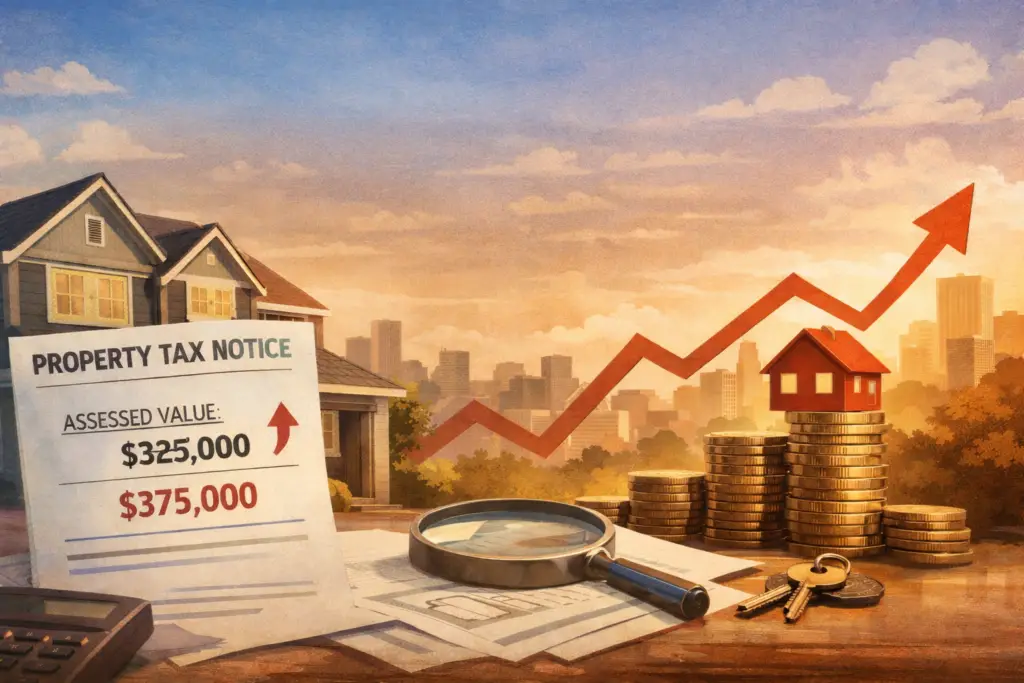
You open your property tax notice… and you kind of already know what you’re about to see.
A bigger number. No explanation. Just… higher.
And now you’re wondering:
Did I miss something? Did I do something that triggered this?
If you’re trying to figure out why your property taxes went up, you’re not alone. This is one of those frustrating homeowner moments that seems to come out of nowhere—and rarely comes with a clear explanation.
The good news? There are reasons this happens. And in many cases, there’s something you can do about it.
(This takes about 5 minutes to understand—and could save you hundreds a year.)
Why Did My Property Taxes Go Up?
Your property taxes usually increase for one of four reasons:
- Your home’s assessed value increased
- Your local tax rate went up
- You made improvements to your home
- You lost or missed an exemption
If any of these changed, your tax bill likely followed.
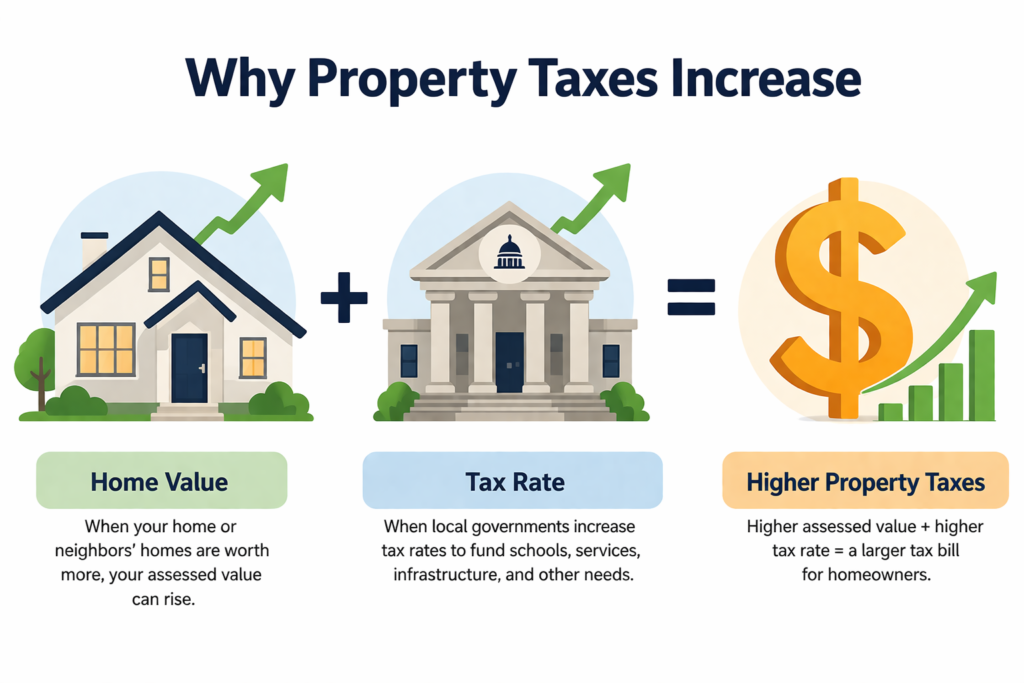
Why Property Taxes Increase (Even When Nothing Changed)
Property taxes come down to two moving parts:
- Your home’s property tax assessment
- Your local tax rate
If either one goes up… your bill follows.
Your Home Value Increased
Even if you didn’t renovate anything.
If homes around you are selling for more, your assessor may raise your value to match the market.
It’s like your house is being graded on a curve—and your neighborhood just got more expensive.
Your Local Tax Rate Went Up
Property taxes fund things like schools, roads, and emergency services.
When local budgets increase, tax rates often follow.
So yes… your bill can go up even if your home didn’t change at all.
You Made Improvements
Renovations like:
- Kitchen upgrades
- Finished basements
- Additions
…can increase your home’s assessed value.
From the assessor’s perspective, your home is now worth more.
You Lost (or Missed) an Exemption
This one surprises a lot of homeowners.
If a homestead exemption or other benefit expired—or wasn’t applied—you could see a noticeable jump.
The Part Most Homeowners Don’t Realize
Here’s the uncomfortable truth…
Property tax assessments aren’t always accurate.
They’re based on models, public records, and comparisons—not a detailed inspection of your home every year.
That means:
- Square footage could be off
- Condition could be overstated
- Comparable homes may not actually be comparable
And if no one questions it… the number sticks.
What To Do If Your Property Taxes Went Up
Let’s keep this simple… because this can spiral quickly if you let it.
You don’t need to become an expert—you just need to check a few key things.
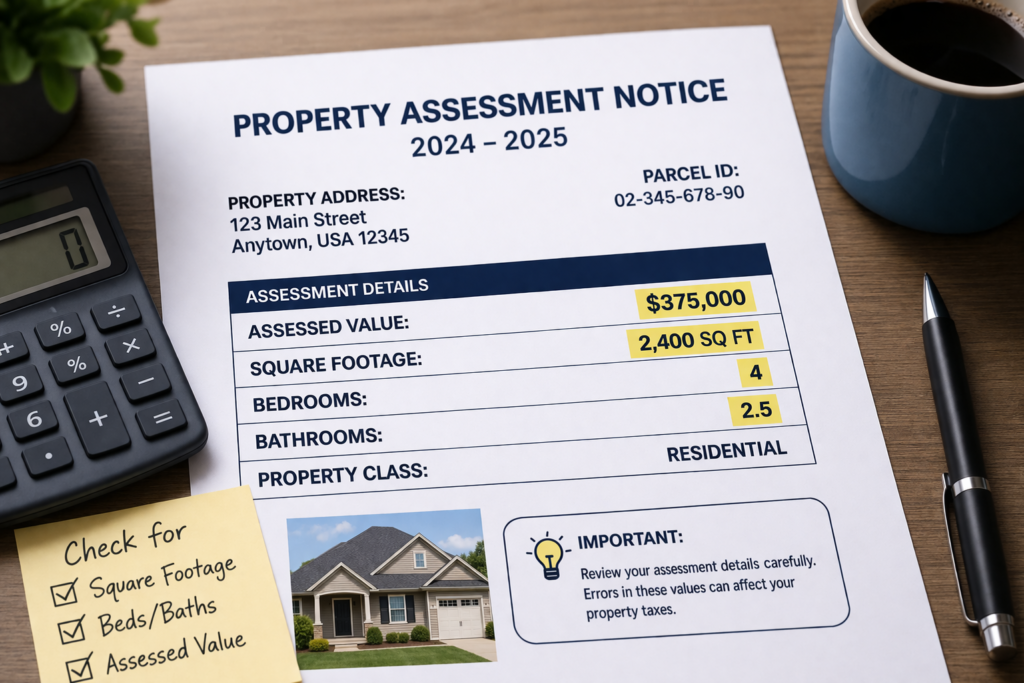
Step 1: Sanity Check Your Assessment
Start with the basics:
- Is the square footage accurate?
- Are bedrooms and bathrooms correct?
- Is your home’s condition overstated?
Even small errors can affect your property tax assessment.
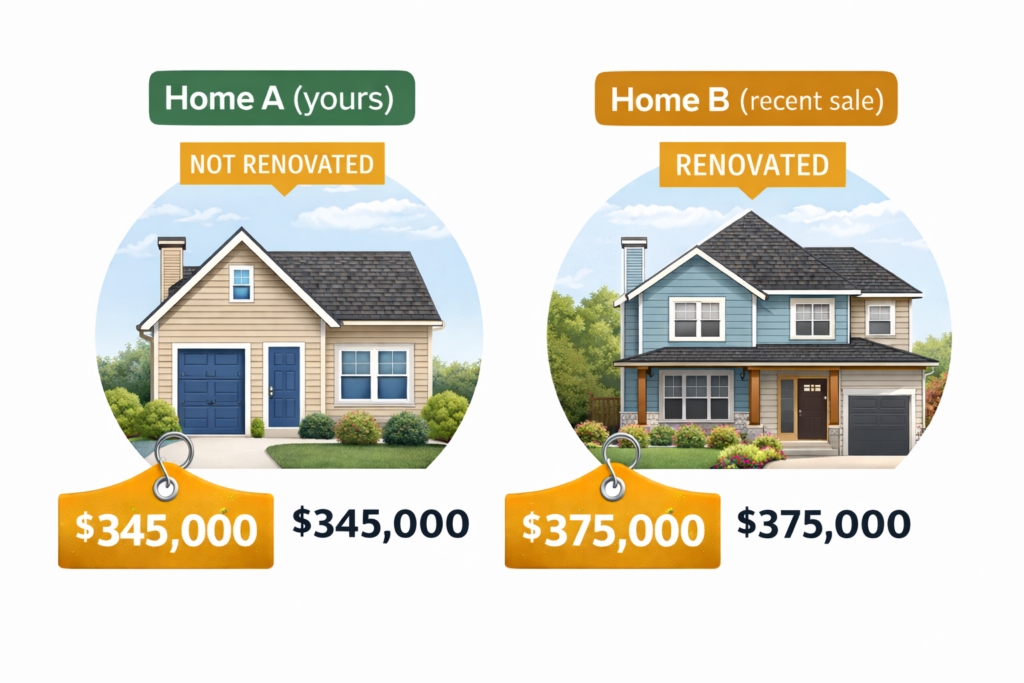
Step 2: Pressure Test the Value
Look at similar homes nearby.
If your home is valued higher than comparable properties, that’s a signal to look closer.
Step 3: Make Sure You’re Not Missing Savings
Before appealing, check for exemptions like:
- Homestead
- Senior or veteran benefits
These can lower your tax bill without changing your home’s value.
Step 4: Decide If It’s Worth Challenging
Not every property tax increase is wrong.
But if something doesn’t add up—and you have evidence—it may be worth taking the next step.
🏡 Real Example: How One Homeowner Lowered Their Property Tax Bill
Let’s make this real.
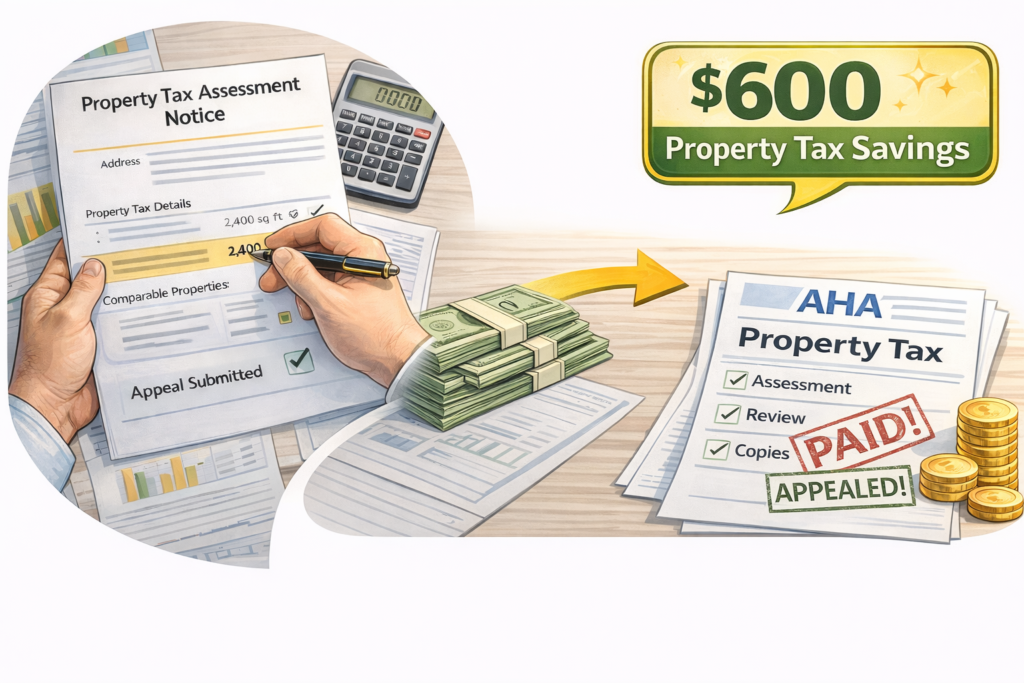
A homeowner received their annual assessment, and their home value jumped from $325,000 to $375,000 in one year—adding about $900 annually to their taxes.
At first, they assumed it was just the market going up—and almost ignored it.
But something didn’t sit right.
When they looked closer, they found:
- Their home was listed at 2,400 sq ft, but was actually closer to 2,150 sq ft
- The assessor compared their home to recently renovated properties—while theirs hadn’t been updated
They pulled a few comparable sales and submitted a simple appeal.
Result?
The value was adjusted to $345,000, saving about $600 per year.
Over 5 years, that’s roughly $3,000 back in their pocket—from a few hours of effort.
⚠️ When Appealing Might Not Work (Or Could Backfire)
Appealing your property taxes is usually low risk—but it’s not risk-free.
When Your Value Is Already Fair
If your home’s value matches recent sales, there may not be much to change.
When Your Home Might Be Undervalued
In rare cases, an appeal can trigger a closer review—and your value could go up.
When You Don’t Have Strong Evidence
Appeals are based on data—not opinions.
Without solid comparables or documentation, your chances are low.
💡 How to Avoid This
Before filing, take time to:
- Compare real local sales
- Verify your property details
- Understand how your value was calculated
Or follow a structured process so you’re not guessing.
Take Control—Your Way
If your property taxes went up, you have two solid paths forward.
And neither one requires you to just accept the increase.
🧰 Option 1: Do It Yourself (DIY)
If you want to dig in and handle it yourself, you can.
The AHA DIY Property Tax Appeal Toolkit gives you step-by-step guidance to:
- Review your assessment
- Compare home values
- Build your case
- File an appeal with confidence
🛡️ Option 2: Have It Done With You (DIFM)
If you’d rather not figure this out on your own—or worry about missing something—there’s an easier path.
With Property Defender, AHA members get support reviewing their property tax assessment and identifying potential issues early.
Instead of juggling:
- Records
- Comparables
- Deadlines
…you get guidance that helps you make the right call without the guesswork.
The Real Difference
Both paths can help you avoid overpaying.
The difference is simple:
- DIY → You do the work, AHA gives you the tools
- DIFM → AHA helps carry the load
Frequently Asked Questions About Property Tax Increases
Can I appeal my property taxes if they go up?
Yes. If your property tax assessment is higher than your home’s actual market value, you can file an appeal with your local assessor. You’ll need supporting evidence like comparable home sales and accurate property details.
Will my property taxes go up if I appeal?
It’s possible, but uncommon. If your home is undervalued, a review could increase it. In most cases, appeals based on accurate data carry low risk.
How often do property taxes increase?
Property taxes can increase annually based on home values, tax rates, and exemptions. In rising markets, increases are common.
What happens if I miss the appeal deadline?
You typically have to wait until the next cycle to appeal. Deadlines are strict, so it’s important to act early.
What’s the difference between assessed value and market value?
Assessed value is used to calculate taxes. Market value is what your home would likely sell for. If your assessed value is higher, you may have grounds to appeal.
The Bottom Line
Property taxes don’t usually go down on their own.
But that doesn’t mean you’re stuck with whatever number shows up.
You can check it.
You can challenge it.
And you can choose how hands-on you want to be.
👉 Start with the approach that fits you—and make sure you’re not paying more than you should