

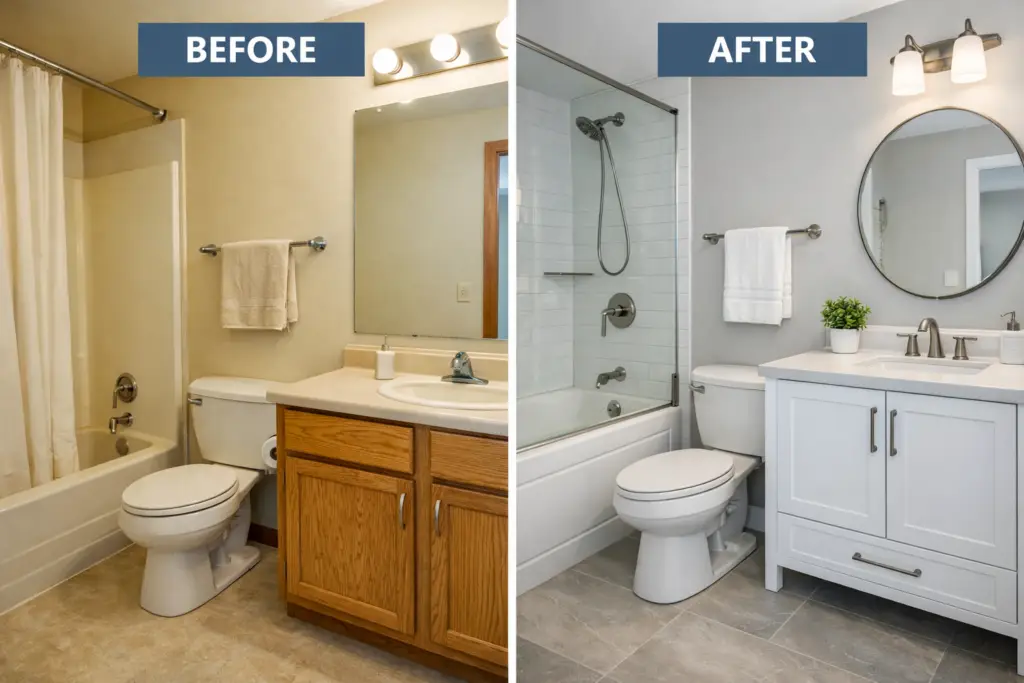
Bathroom remodels don’t usually go over budget because homeowners choose the “wrong” tile or faucet. They go over budget because of labor, time, and a series of small decisions that quietly compound—moving plumbing, underestimating how long work takes, buying specialty tools, or fixing mistakes that didn’t seem like mistakes at first.
Industry averages show a professionally remodeled bathroom costs around $10,000, with higher-end projects climbing past $30,000. DIY or hybrid remodels can save 40–50%, but only when homeowners are strategic about what they take on themselves—and disciplined about what they don’t.
This guide breaks your bathroom remodel budget into real line items, converts costs into per-square-foot numbers, and surfaces the hidden “uh-ohs” homeowners often discover too late: time overruns, tool costs, learning curves, and rework. The goal isn’t to discourage DIY—it’s to help you DIY the right things.
First, the Math: What a Bathroom Remodel Really Costs
To make this practical, let’s start with numbers you can scale to your own home.
Typical Bathroom Size
Most full bathrooms fall between 40–80 square feet.
For consistency, we’ll use 60 square feet (SF) as a baseline.
Average Bathroom Remodel Cost Breakdown (Contractor-Led)
Average Total Cost: ~$10,000
Average Cost per SF: ~$165/SF
| Category | % of Budget | Cost (60 SF) | Cost per SF |
|---|---|---|---|
| Labor (demo, install, tile, plumbing, electrical) | 45–50% | $4,500–$5,000 | $75–$85 |
| Fixtures (toilet, vanity, tub/shower, faucets) | 20–25% | $2,000–$2,500 | $33–$42 |
| Tile & finishes | 15–20% | $1,500–$2,000 | $25–$33 |
| Permits, design, contingency | 5–10% | $500–$1,000 | $8–$17 |
| Total | 100% | ~$10,000 | ~$165/SF |
Key takeaway: More than half of your budget is driven by labor and labor risk, not materials. That’s where real savings live.
The #1 Rule for Cutting Costs: Don’t Move the Plumbing
If contractors had to give just one piece of advice, this would be it:
Protect the existing plumbing layout whenever possible.
Moving a toilet, shower drain, or vanity often triggers:
- Subfloor or slab work
- Vent stack changes
- Additional permits and inspections
- Delays across multiple trades
That’s why plumbing changes frequently add $3,000–$8,000, or $50–$130 per SF, to a small bathroom.
When moving plumbing is worth it:
- The layout is functionally broken
- Accessibility or aging-in-place upgrades require it
- Structural work already forces the issue
Otherwise, keeping the layout intact alone can preserve 20–40% of your bathroom remodel budget.
Labor Is the Real Cost Driver (Not Materials)
Homeowners often fixate on tile or fixture prices, but professionals price bathrooms around time, sequencing, and risk.
In a $10,000 remodel:
- ~$5,000 is labor
- ~$5,000 is everything else combined
That’s why selective DIY can reduce costs—but only when chosen carefully.
Contractor Time vs. DIY Time: The Cost You Don’t See on Paper
Contractors don’t just work faster because they have better tools. They’re faster because they’ve done the same task hundreds of times. They know the right sequence, timing windows, and failure points.
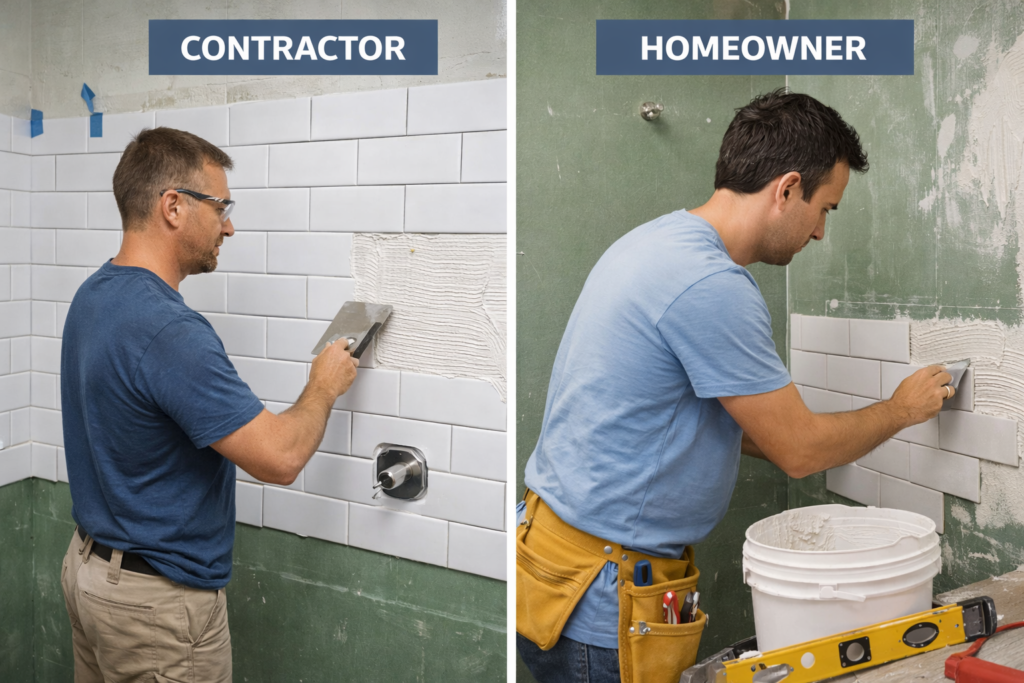
| Task | Contractor Time | Typical DIY Time |
|---|---|---|
| Demolition | 4–8 hours | 1–2 full days |
| Painting | 4–6 hours | 1–2 days |
| Vanity install | 2–3 hours | 1 full day |
| Tile installation | 1–2 days | 5–10 days |
| Grouting | 2–4 hours | 1–2 days (or more) |
| Fixture installs | 1–2 hours | 4–6 hours |
A task that takes a contractor half a day can easily take a homeowner an entire weekend—or longer if something goes wrong.
The DIY “Uh-Ohs” Homeowners Don’t See Coming
Uh-Oh #1: Timing Mistakes
Tile and grout have strict timing windows. Let grout set too long, and a two-hour cleanup can turn into days of scrubbing and tons of added stress.
Uh-Oh #2: Sequence Errors
Bathrooms are highly sequenced spaces. One step out of order—painting before final caulking, installing fixtures before tile cures—can mean undoing finished work.
Uh-Oh #3: Physical Toll
Tile and grout work is punishing. Fatigue leads to rushed decisions late in the day, when mistakes are most likely.
Uh-Oh #4: “It Looks Fine… For Now”
Some mistakes don’t show up immediately. Poor waterproofing or slight drainage errors can take months—or years—to reveal themselves.
Uh-Oh #5: Opportunity Cost
Weeks spent learning, fixing, and redoing work is time not spent working, resting, or enjoying the finished space.
Tools: The Third Hidden Cost of DIY
DIY often requires specialized tools most homeowners don’t already own.
The Tile Saw Reality Check
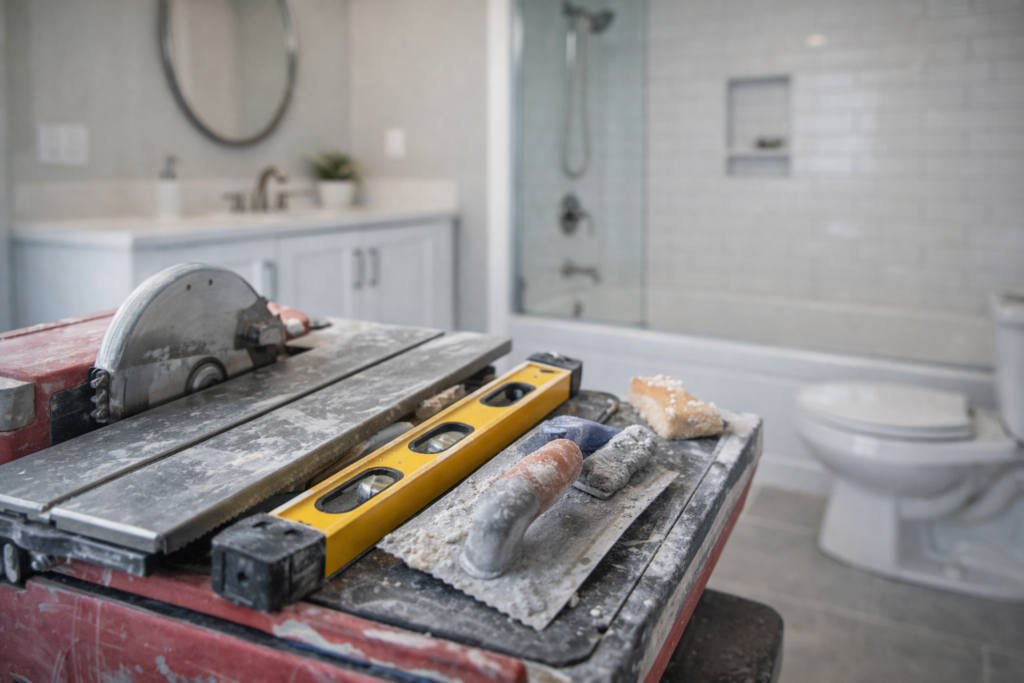
- Buy (entry-level wet saw): $300–$700
- Buy (pro-grade): $900–$1,500+
- Rent: $60–$100/day or ~$200/week
Most DIY tile jobs only require active saw use for 2–3 days.
A $600 saw used twice = $300 per use, plus setup time, storage, blade wear, and resale hassle.
Contractors spread that same tool cost across hundreds of jobs—and already know how to use it efficiently.
Common DIY Tools That Inflate Budgets
| Tool | Buy Cost | Rent Cost | Risk |
|---|---|---|---|
| Tile saw | $300–$1,500 | $60–$100/day | High learning curve |
| Mixing drill & paddle | $150–$300 | $30–$50/day | Improper mixing ruins mortar |
| Laser level | $120–$400 | ~$40/day | Misuse causes visible errors |
| Job-grade wet/dry vac | $150–$250 | ~$40/day | Often needed longer than expected |
Buying multiple one-project tools can quietly add $500–$1,500, erasing much of the labor savings DIY promised.
Reuse Before You Replace
One of the simplest ways to save money is reusing what still works.
Good candidates:
- Toilets that function well and meet code
- Solid vanity boxes that can be refinished
- Mirrors, lighting, accessories
Replacing these rarely improves performance—but it always adds cost.
Tile Strategy: Reduce Labor Without Reducing Impact
Tile installation is labor-intensive. Tile material often isn’t.
Smarter approaches:
- Fully tile the shower, paint elsewhere
- Use large-format tile (fewer grout lines = faster installs)
- Skip complex patterns and borders
Cost reality:
- Full-room tile: ~$40–$60/SF installed
- Shower-only + focal areas: ~$15–$25/SF averaged
DIY vs. Contractor Decision Matrix: What to Do Yourself—and What to Hire Out
Use this matrix before committing to any task.
| Task | DIY Feasibility | Contractor Advantage | Hidden Risk |
|---|---|---|---|
| Demolition (non-structural) | High | Speed & debris control | Hitting pipes or wiring |
| Painting | High | Faster, cleaner finish | Poor prep shows later |
| Mirrors, shelves, hardware | High | — | Minimal |
| Vanity swap (same footprint) | Medium | Faster leveling & alignment | Leaks, uneven install |
| Tile installation | Low | Precision & speed | Lippage, waterproofing failure |
| Grouting | Low–Medium | Timing & technique | Over-set grout cleanup |
| Waterproofing | Very Low | System knowledge | Hidden leaks, mold |
| Plumbing rough-ins | Very Low | Code compliance | Leaks, failed inspections |
| Electrical work | Very Low | Safety & code | Fire risk |
The 3-Question Reality Check
Before DIY’ing any task, ask:
- If I mess this up, do I have to tear finished work out?
- Does this task require precise timing or sequencing?
- Do I need to buy or rent specialty tools?
If you answer yes to two or more, hiring a contractor is usually cheaper—and far less stressful.
Smart Splurges That Actually Improve Daily Life
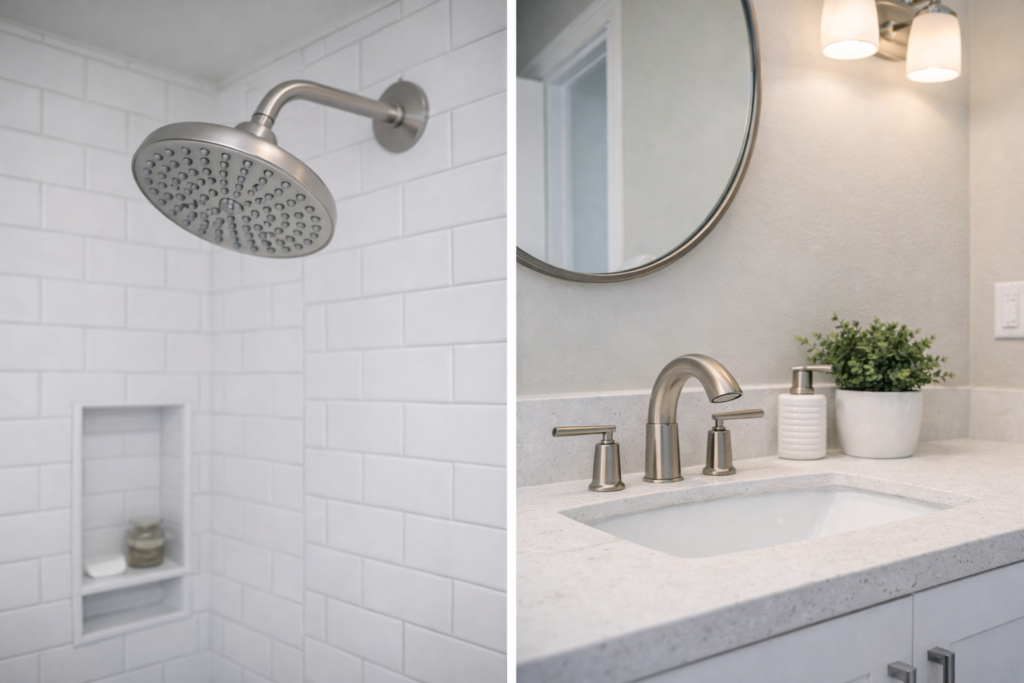
If you save money through layout discipline and selective DIY, consider reinvesting a small portion into:
- Quality showerheads
- Touchless or upgraded faucets
- Bidet toilet seats
- Better lighting
These upgrades improve daily comfort without adding major labor or risk.
What Cutting the Budget in Half Really Looks Like
Baseline contractor remodel:
$165/SF × 60 SF = ~$10,000
Smart hybrid approach:
- Keep layout: −$3,000
- Selective DIY (demo, paint): −$1,500
- Tile strategy change: −$1,200
- Reuse + stock vanity: −$800
Revised total: ~$5,500
Revised cost per SF: ~$90/SF
Same bathroom. Same function. Same visual impact—nearly half the cost.
Actionable Conclusion: Think in Cost per Square Foot, Time, and Risk
The fastest way to control your bathroom remodel budget is to stop thinking only in dollars and start thinking in cost per square foot, time, tools, and risk.
As a rough guide:
- High-end remodel: $200–$300/SF
- Standard contractor remodel: ~$160–$180/SF
- Smart hybrid / selective DIY: ~$85–$110/SF
Before signing anything, protect yourself by understanding the hiring process—not just the price. AHA recommends reviewing:
These resources help homeowners avoid vague bids, surprise costs, and hiring mistakes that turn “savings” into stress.