

It’s early. The house is still quiet.
You’re standing in the kitchen in slippers, coffee in hand, and there it is — your heating bill.
Higher than last month. Higher than last winter.
And the frustrating part? You didn’t change anything.
If you’ve found yourself asking, “Why is my heating bill so high this winter?” — you’re not alone. January and February routinely bring higher energy costs. But when the increase feels sharper than expected, it’s usually not one dramatic mistake.
It’s a handful of small, quiet energy losses adding up.
The reassuring part? Most of them are predictable. And most are fixable.
Let’s look at where your heat may really be going — and how to reduce heating costs without a full remodel.
Hidden Energy Wasters in Your Home — and How to Fix Them
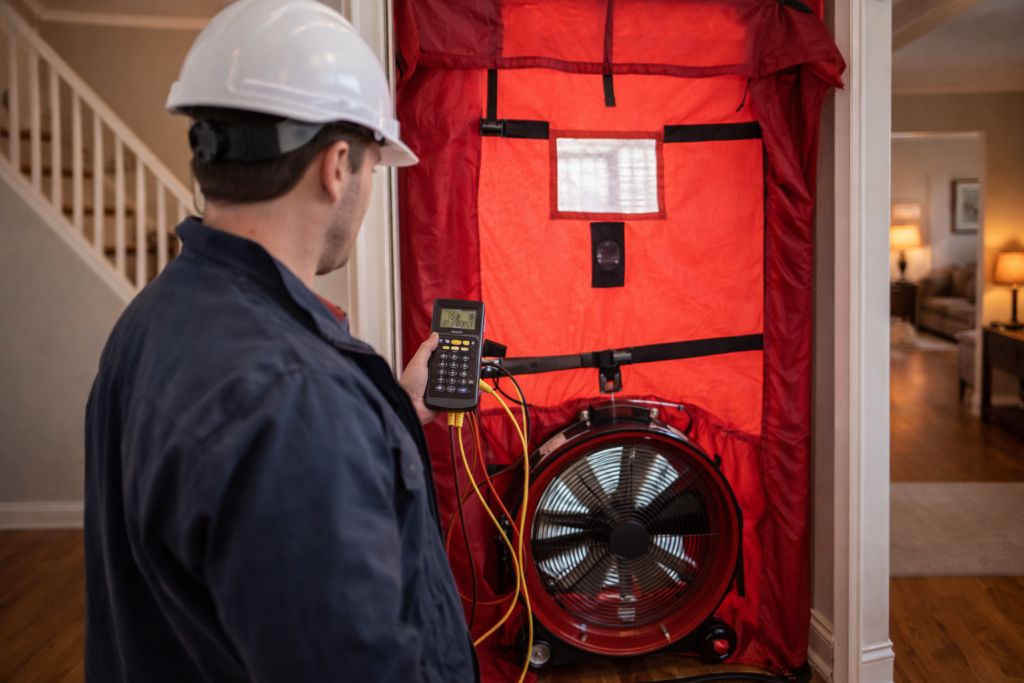
According to the U.S. Department of Energy’s Energy Saver guidance, air leaks and inadequate insulation are among the leading causes of winter heat loss in American homes.
Even newer homes lose more heat than their owners realize.
Small Air Leaks Add Up
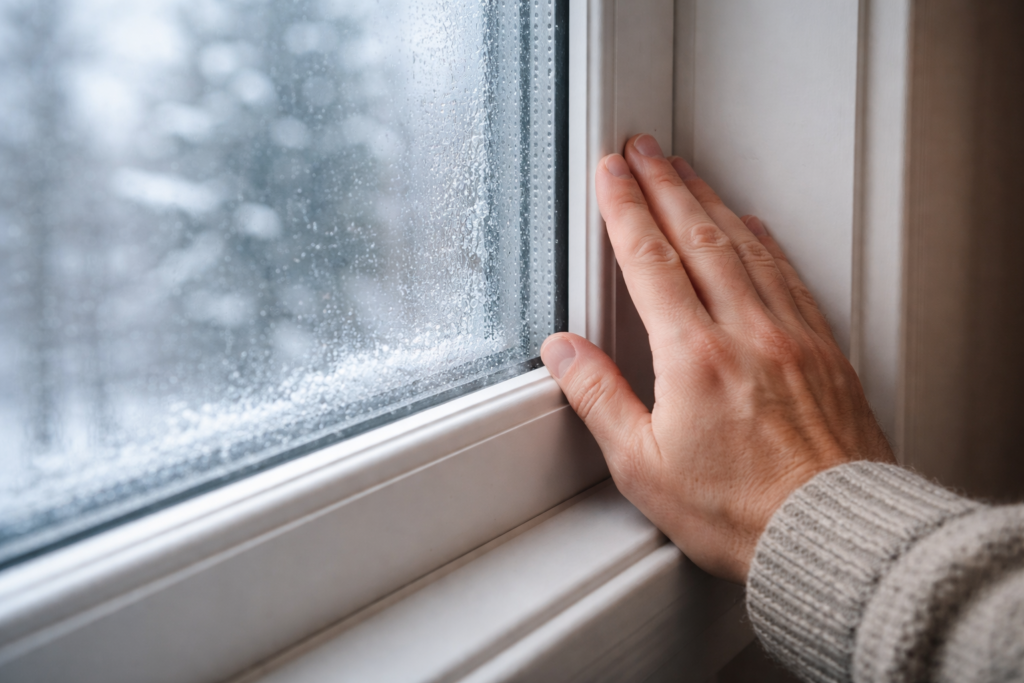
Your house may look sealed. It probably isn’t.
Tiny gaps around windows, doors, attic hatches, plumbing penetrations, and electrical outlets allow warm air to drift out and cold air to slip in.
Over time, those small leaks can significantly increase heating costs.
Start here:
- Add weatherstripping around exterior doors
- Install clear window insulation film
- Place foam gaskets behind outlets on exterior walls
- Seal attic floor gaps before adding insulation
On a cold day, slowly move your hand along window frames and baseboards. If you feel air movement, that’s likely contributing to a higher heating bill.
Attic Insulation May Be Thinner Than You Think
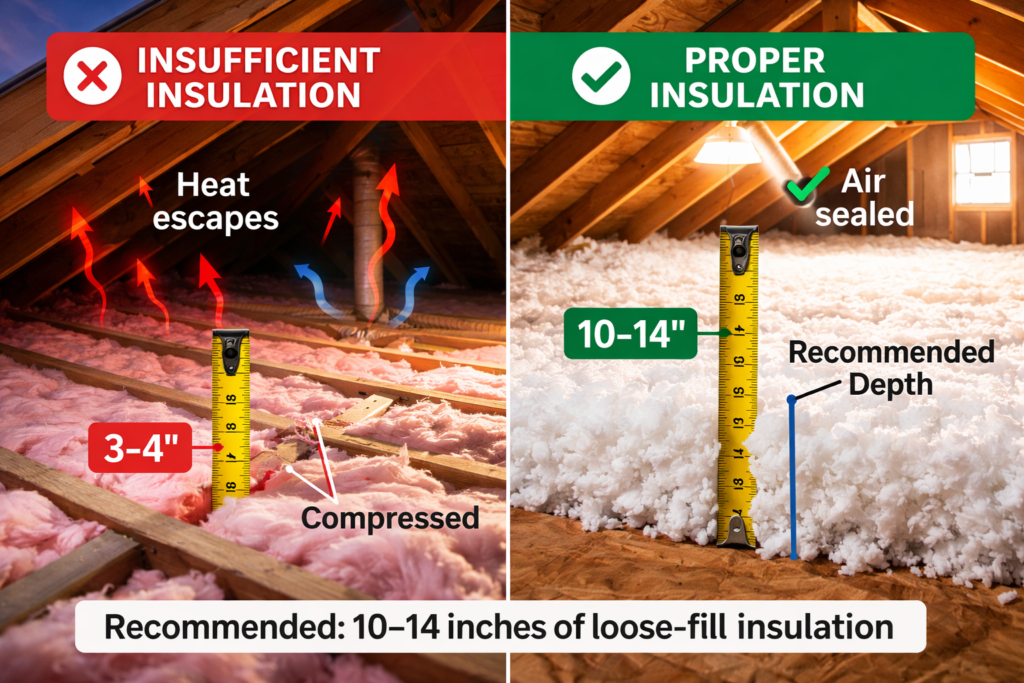
Heat rises. If your attic insulation is too shallow or compressed, your heating system is essentially warming your roof.
In many climates, 10–14 inches of loose-fill insulation is recommended for effective thermal protection. Many older homes fall short of this.
Before adding insulation, seal air leaks in the attic floor. Insulating without sealing allows warm air to continue escaping.
Among all winter energy-saving improvements, properly sealing and insulating the attic often delivers one of the strongest returns.
Fireplace and Chimney Drafts
Even unused fireplaces can pull heated air out of your home.
Make sure the damper is fully closed. If the fireplace is rarely used, a removable chimney balloon can reduce heat loss. Glass fireplace doors also help limit airflow.
An open chimney can quietly increase your heating bill without you realizing it.
When Your Heating System Works Harder Than It Should
Sometimes the issue isn’t escaping air — it’s efficiency.
A Dirty Furnace Filter
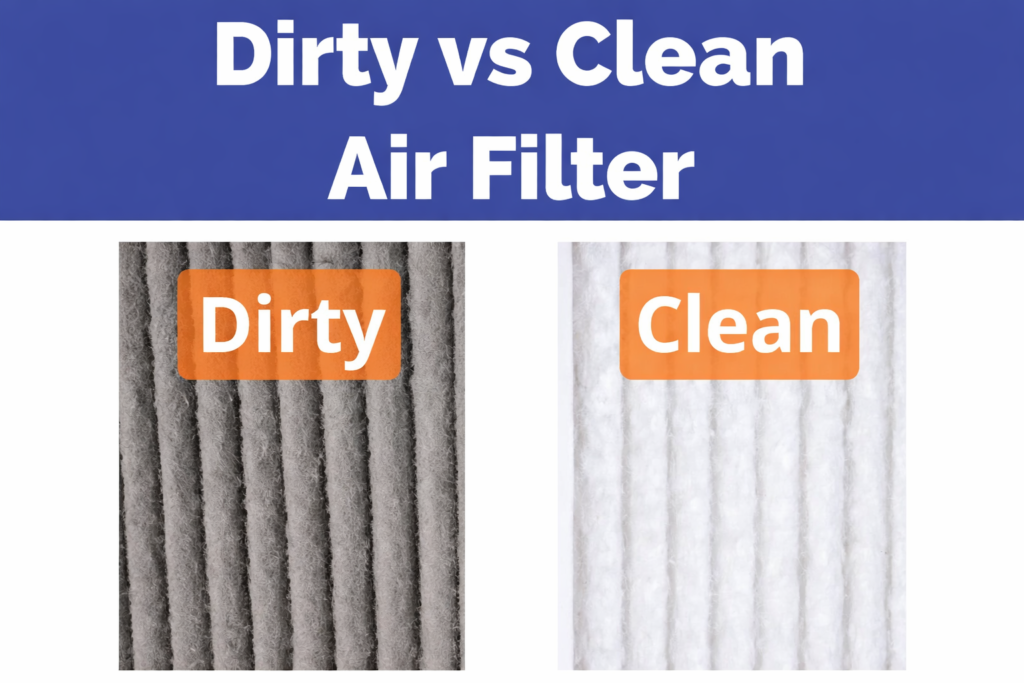
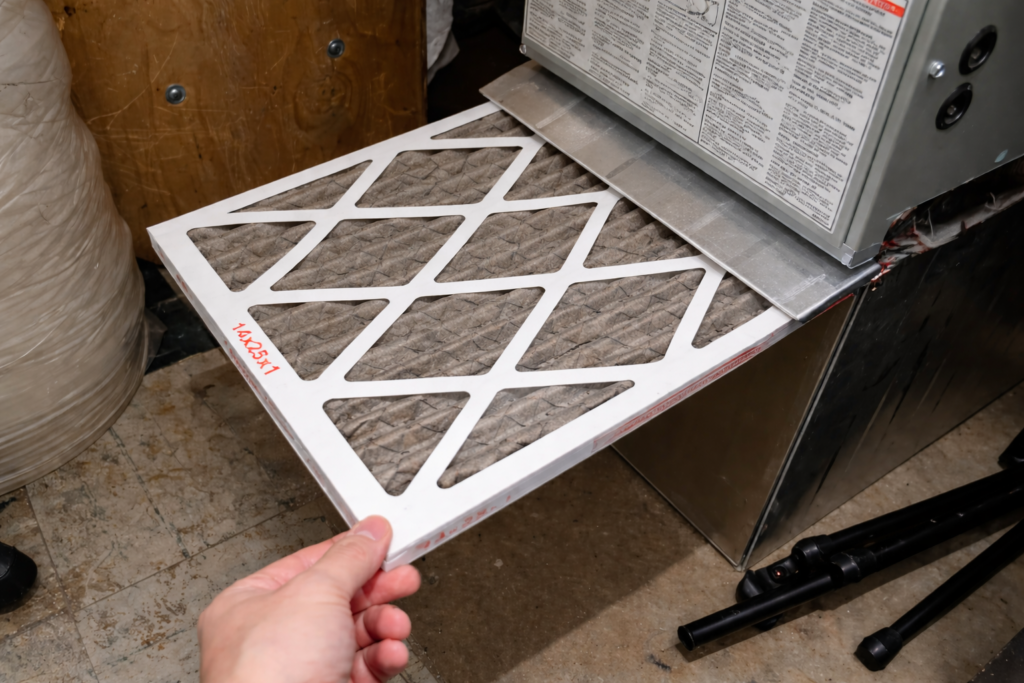
A clogged filter restricts airflow. Your system runs longer to maintain temperature. Energy use increases.
Replace filters every 1–3 months during heating season. Set a reminder. It’s one of the simplest ways to reduce heating costs immediately.
An Aging Furnace
If your heating system is more than 15 years old, it may operate at significantly lower efficiency than modern models.
That doesn’t mean you need to replace it tomorrow. But annual maintenance becomes especially important.
If repairs are becoming frequent, compare the system’s Annual Fuel Utilization Efficiency (AFUE) rating to newer models. The most expensive system isn’t always the smartest choice — but understanding efficiency differences can help you make an informed decision.
Before upgrading, check for rebates and tax credits.
Heating Rooms You Rarely Use
Guest rooms, storage spaces, finished basements — you may be heating areas that sit empty most of the week.
Close doors to rarely used rooms. If your HVAC system allows it, modestly reduce airflow in those areas. Avoid closing too many vents in a forced-air system, as it can affect pressure balance.
If using space heaters to supplement heat, operate them only when attended and keep them away from fabrics. Ensure smoke and carbon monoxide detectors are working properly.
Everyday Habits That Influence Heating Costs
Not all winter energy loss is structural. Sometimes it’s behavioral — and subtle.
Thermostat Creep
Each degree higher can increase heating costs by approximately 1–3%.
Lowering the thermostat 7–10 degrees overnight or while away can meaningfully reduce winter bills. Programmable or smart thermostats help maintain consistency without sacrificing comfort.
Low Indoor Humidity
Dry air feels colder than properly humidified air — even at the same temperature.
Maintaining indoor humidity around 30–40% can make your home feel warmer without increasing thermostat settings.
Window Heat Loss
Windows lose heat through conduction, even when closed.
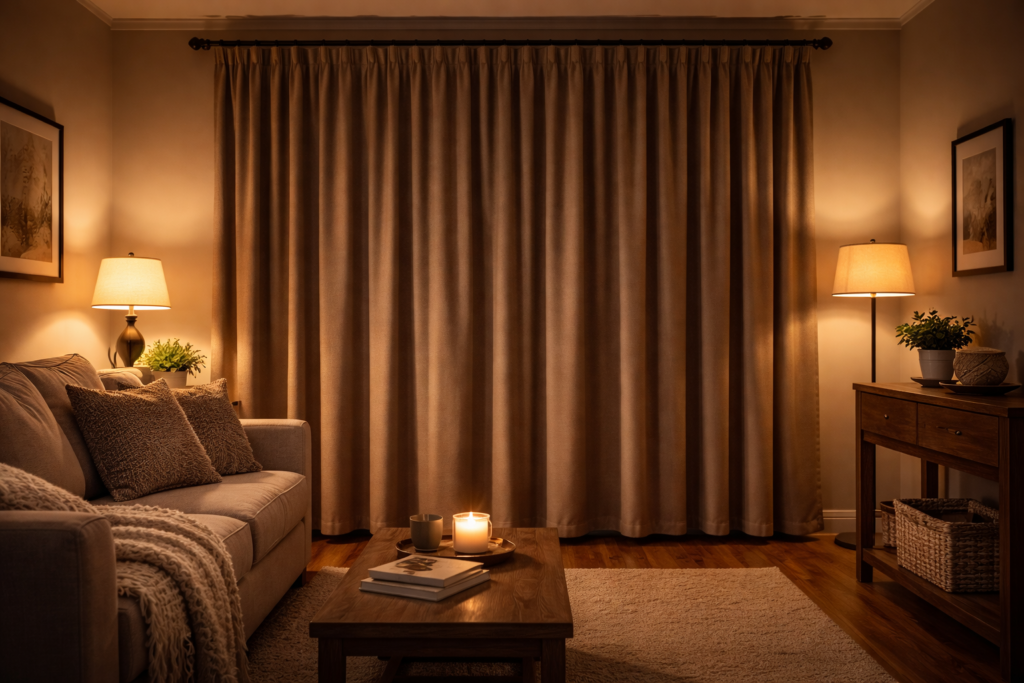
Open curtains during sunny days for passive warmth. Close insulated curtains at night to help reduce heat loss.
Curtains aren’t just decorative in winter — they help lower heating costs.
Is It Your House or Your Utility?
Before assuming something is wrong, separate usage from pricing.
Step 1: Compare Usage
Look at your actual energy use (therms or kilowatt-hours) compared to the same month last year.
- Usage up significantly? Likely a home efficiency issue.
- Usage similar but bill higher? Possibly a rate increase.
Step 2: Check Rate Changes
Utilities sometimes increase rates due to fuel costs or infrastructure investments.
If rates increased, your home may not be the problem.
Step 3: Ask About Budget Billing
Many utilities offer budget billing programs that spread winter spikes into predictable monthly payments.
It won’t reduce energy use — but it can reduce stress.
Rebates and Weatherization Assistance That Can Lower Heating Bills
If winter heating bills feel overwhelming, support programs may help.
Utility Rebates
Many local utilities offer rebates for:
- Smart thermostats
- Heat pumps
- High-efficiency furnaces
- Insulation upgrades
- Air sealing improvements
Check your utility’s energy efficiency page before starting major upgrades.
Federal Energy Tax Credits
Homeowners may qualify for federal tax credits for:
- Insulation
- Energy-efficient windows
- Heat pumps
- High-efficiency HVAC systems
Tax credits reduce your tax liability dollar-for-dollar. Confirm eligibility and limits with a tax professional.
Weatherization Assistance Program (WAP)
The U.S. Department of Energy’s Weatherization Assistance Program (WAP) helps qualifying households improve energy efficiency at little to no cost.
Services may include:
- Air sealing
- Insulation
- HVAC improvements
- Health and safety checks
Households at or below approximately 200% of federal poverty guidelines may qualify, though state rules vary.
Many homeowners assume they won’t qualify — and are surprised to learn they do.
Applications are handled locally through community action agencies.
Winter Heating Bill Q&A
Is it normal for heating bills to spike in January and February?
Yes. These are typically the coldest months. The question is whether your usage increased more than expected compared to similar temperatures last year.
How much higher is “too high”?
If your usage is up 20% or more compared to the same month last year (with similar weather), investigate insulation, air sealing, or system efficiency.
If usage is steady but cost jumped, review rate changes.
Should I drastically lower heat while away?
A moderate setback of 7–10 degrees is effective. Extreme drops can require more energy to reheat the home.
Do space heaters save money?
They can if heating a single occupied room while lowering the main thermostat. Multiple space heaters running alongside central heat may increase costs.
Is upgrading my furnace always worth it?
Not immediately. If properly maintained, older systems may still operate safely. Compare efficiency ratings and explore rebates before deciding.
Where to Start
You don’t need to overhaul your home to reduce heating costs.
Start small:
- Replace your furnace filter
- Seal one noticeable draft
- Lower the thermostat two degrees
- Check attic insulation depth
- Review your utility’s rebate programs
Small improvements compound over time.
A Final Word
A high heating bill doesn’t mean you’ve failed as a homeowner.
Winter magnifies inefficiencies that often go unnoticed the rest of the year.
The encouraging part? Once you identify and address them, the savings repeat season after season.
If you’d like help tracking potential savings or exploring available rebates in your area, AHA members can use the SmartSaver tool for personalized guidance.
Comfort doesn’t have to cost more than it should.