

One high utility bill can make every upgrade sound urgent: new windows, more insulation, a bigger air conditioner. But the most expensive fix is not always the right first fix.
Energy efficiency upgrades work best when you start with the clue your home is giving you—a draft, a hot room, or long equipment run times—and confirm the cause before you buy. This guide shows the best first move in each season, what you can safely check yourself, and when an assessment or contractor makes sense. You do not have to overhaul the whole house. You just need a practical order for the next decision.
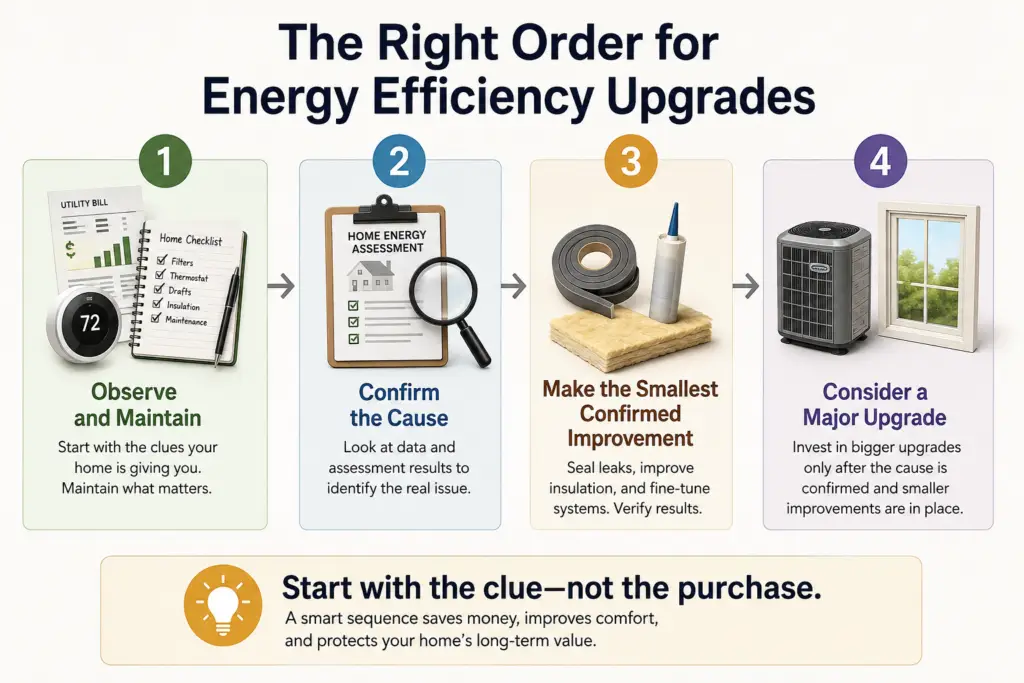
The Right Order for Energy Efficiency Upgrades
- Observe and maintain. Review bills, replace an overdue filter, clear blocked registers, and note where comfort problems occur.
- Confirm the cause. Use the AHA DIY Home Energy Audit Checklist or a home performance assessment when the answer is not obvious.
- Make the smallest confirmed improvement. Address an accessible door seal, duct connection, insulation gap, or control problem when the evidence points there.
- Consider a major upgrade. Replace equipment, windows, or larger building components when condition, safety, repeated failures, or a written assessment supports it.
Spring: Get Ready for Cooling Season
Spring is the time to make routine checks before hot weather turns a small airflow or comfort issue into an urgent purchase. Start with the equipment and rooms you already know.
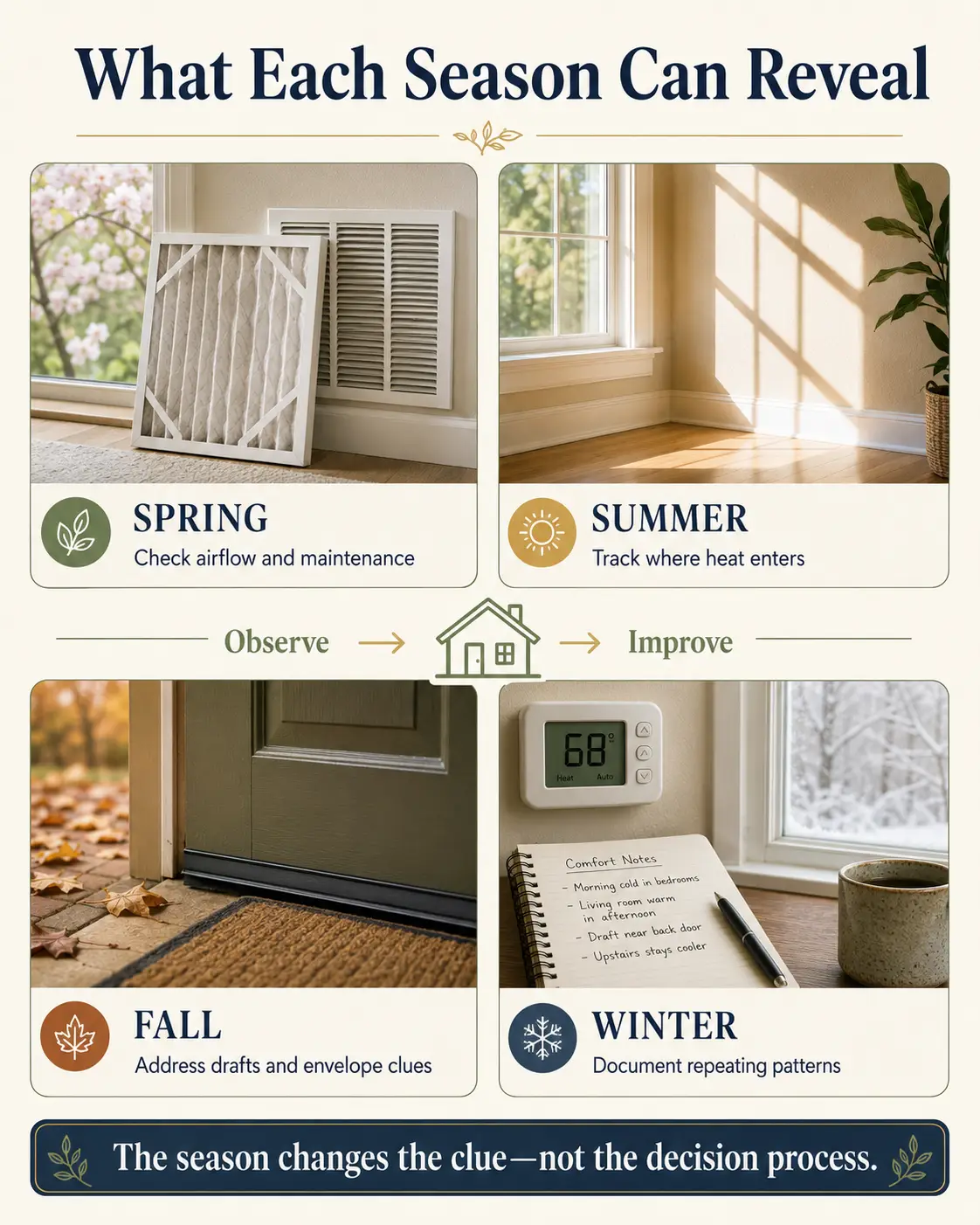
- Check routine cooling maintenance and airflow. Replace an overdue filter, make sure supply and return registers are not blocked, and note rooms with consistently weak airflow or uneven temperatures.
- Use accessible ducts and attic clues to decide whether to look closer. Disconnected or damaged ductwork, visible gaps, and strong temperature differences can justify a closer look. ENERGY STAR notes that the typical forced-air system loses 20% to 30% of the air that moves through it because of leaks, holes, and poorly connected ducts; that is a reason to inspect, not a promise of the same savings in every home. Learn about duct sealing.
Summer: Focus on Heat Gain Before Big Purchases
Summer makes heat gain easier to see. Notice whether the problem follows afternoon sun, one side of the house, one upper-floor room, or the whole home. That pattern can help you avoid treating every comfort issue as an equipment problem.
- Manage direct sunlight first. Close appropriate window coverings during the hottest part of the day and look for rooms that heat up mainly because of sun exposure. If a simple shading change improves comfort, it is useful evidence before considering a larger project.
- Use fans and controls after the basics. Ceiling fans cool people, not rooms; use them only in occupied rooms and set the direction for the season. A programmable or smart thermostat can help manage a schedule, but it cannot correct poor airflow, duct leaks, or inadequate insulation. See ENERGY STAR’s ceiling-fan guidance.
Fall: Seal, Insulate, and Prepare for Heating Season
Fall is the best time to address accessible air leaks and insulation clues before winter discomfort makes every option feel immediate. Work from visible, safe-to-reach conditions toward more complex diagnosis.
- Address obvious, accessible drafts. Check weatherstripping and door sweeps, and look for gaps around penetrations, attic hatches, and accessible rim areas. If a repair is beyond your comfort level or involves wiring, moisture, or combustion equipment, bring in a qualified professional.
- Evaluate air sealing and insulation together. ENERGY STAR’s modeling estimates that a typical existing home completing an air-sealing and insulation package can reduce heating and cooling energy use by about 15% and total energy use by about 11%. Results vary with climate, fuel, construction, and the home’s starting condition, so use the figures as directional context—not a personal savings guarantee. Read the methodology.
Watch Out: Before attic air sealing, stop and get help if insulation is damp, framing is moldy or rotted, access is difficult, ventilation is poor, or knob-and-tube wiring is present. Homes with oil- or gas-burning appliances may need combustion testing before and after sealing. Review ENERGY STAR’s attic-air-sealing precautions.
Winter: Learn From the Home’s Cold-Weather Clues
Winter is a useful diagnostic season. A cold room, drafty floor, or system that runs for long periods is a clue to document, not automatic proof that you need new equipment.
- Document repeating patterns. Note the rooms affected, outdoor conditions, thermostat setting, and whether the issue changes when doors are closed or vents are blocked. This gives an assessor or contractor a better starting point than a single complaint on the coldest day.
- Use temporary measures safely while you investigate. Keep combustible items well away from portable heaters and use them only as directed; do not let a temporary heating solution replace a needed repair. See CPSC space-heater safety guidance.
When a Larger Energy Efficiency Upgrade Makes Sense
A larger project may make sense when equipment is near the end of its useful life, a safety or moisture issue needs correction, comfort problems keep returning after smaller repairs, or a written assessment identifies a specific cause. The goal is not to avoid major work; it is to make sure the scope fits the evidence.
Pro Tip: Before approving new equipment, ask what evidence points to the equipment itself—not the ducts, insulation, airflow, or controls—as the cause. Get the diagnosis in writing.
Year-Round: Use Cost Ranges as a Scope Check
Cost expectations are most useful when they help you compare the scale of the work, not when they stand in for a diagnosis. Local labor, home layout, access, materials, repairs discovered during the job, and regional conditions can all change the final price. The U.S. Department of Energy’s measure database is one place to explore why installed costs vary by measure and location. Explore DOE’s efficiency-measures database.
Relative Cost Scale for Sealing and Insulation Projects
ENERGY STAR’s project-effort guide offers directional cost bands for the sealing and insulation work shown below: `$` is under $100 and `$$$$$` is more than $2,000. These bands are not installed-price quotes and do not apply to HVAC replacement, windows, heat pumps, solar, or other major projects.
| Project area | DIY scale | Contractor scale | What can change the scope |
|---|---|---|---|
| Doors, windows, and accessible wall leaks | $$ | $$$ | Number of openings, access, trim repair, and hidden water damage |
| Accessible duct sealing | $$$ | $$$ | Duct condition, access, disconnections, and whether repairs are needed |
| Basement or crawlspace air sealing | $$$ | $$$$ | Clearance, moisture, pests, insulation removal, and foundation conditions |
| Attic air sealing and insulation | $$$$ | $$$$$ | Access, existing insulation, wiring, ventilation, moisture, and roof details |
See ENERGY STAR’s relative project-effort guide.
Compare Scope Before You Hire
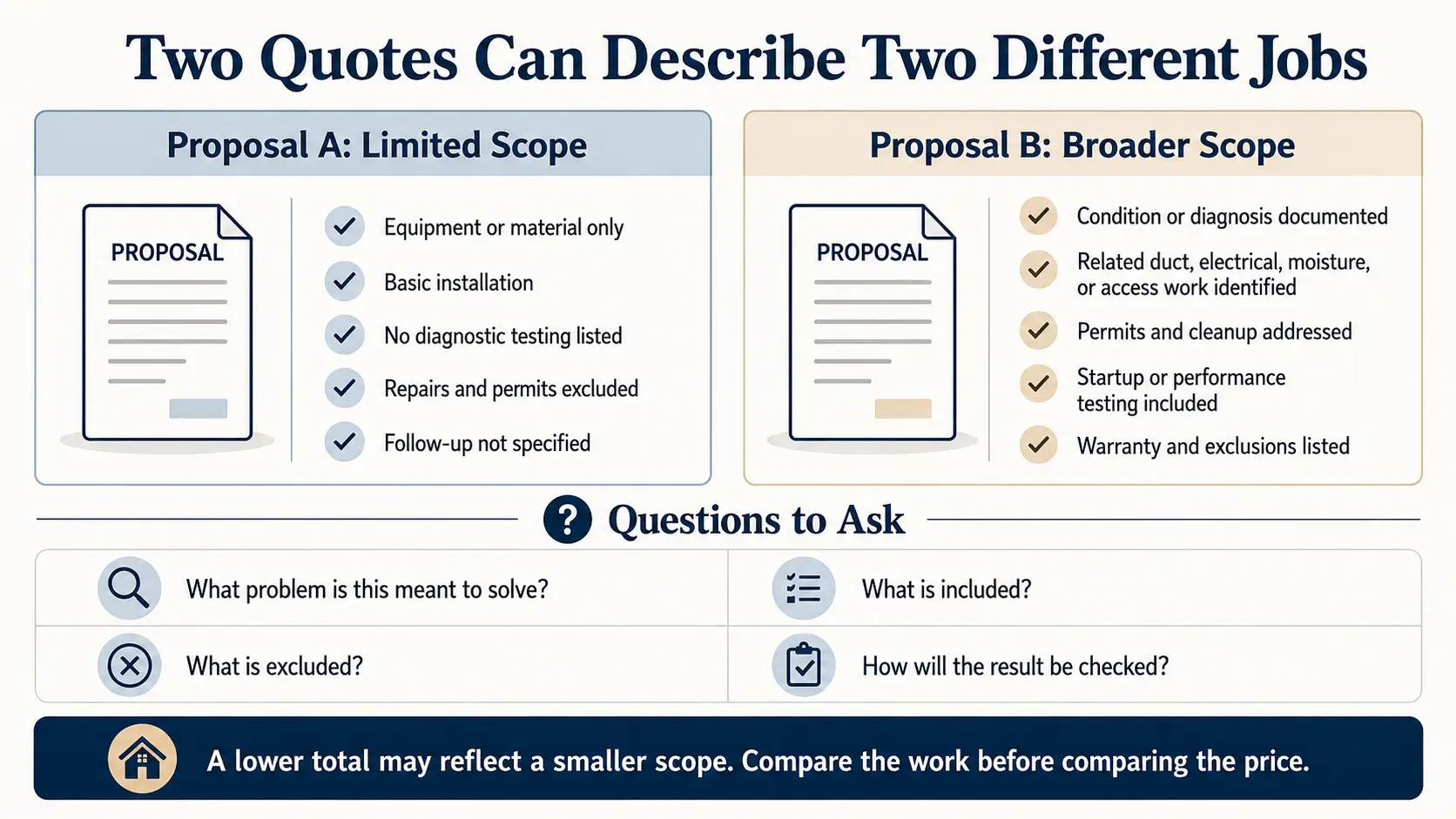
For work beyond a straightforward, accessible repair, get written scopes that identify the condition found, the work proposed, what is excluded, and any testing or follow-up recommended. A low bid may be appropriate for a smaller scope; it is not automatically comparable to a bid that includes repairs, access work, insulation removal, or diagnostics.
Use the AHA SmartHire Contractor Kit to organize questions and compare what each contractor is actually proposing before you decide.
Incentives: Check the Current Program Before You Count On It
Incentive note—reviewed August 30, 2026: Federal tax-credit rules and rebate availability can change. The IRS says the Energy Efficient Home Improvement Credit generally does not apply to property placed in service after December 31, 2025, and the Residential Clean Energy Credit generally does not apply to expenditures after that date. State and utility programs may still be available, but eligibility, funding, and timing vary. Confirm the current rules with the official program administrator before you sign a contract or build an incentive into your budget. Read the IRS FAQs. Check DOE’s Home Energy Rebates information.
Start With the Next Decision, Not the Biggest Project
The best energy efficiency upgrade is the one that addresses a confirmed problem at the right scale. Start with the season’s clues, handle routine maintenance and accessible improvements, then use an assessment or a written scope when the cause is unclear or the work is larger.
For a broader annual planning view, AHA HomeCheckup can help you think through what needs attention now, what can wait, and what to plan next.
Use the AHA Seasonal Home Maintenance Planner to keep those observations and small tasks visible through the year.