

Most home improvement projects start with excitement. You’re picturing the finished kitchen, the safer deck, the bathroom that finally feels clean and functional, or the roof repair that lets you stop worrying every time it rains.
Homeowners usually try to do things right. They ask questions, compare estimates, read reviews, and may even verify a license or request proof of insurance before work begins.
But sometimes, even after you’ve done your due diligence, things still go sideways.
The work looks wrong. The project stalls. The contractor stops responding. A new invoice shows up with charges you don’t understand. Or you’re being asked for more money before the original work is finished.
When a contractor did bad work, it’s hard to know what to do next. Before you pay more, send an angry text, or hire someone else to tear everything out, pause. Your smartest first move is usually the least dramatic one: get organized.
Most contractor problems come down to a few practical questions. What did the contract say? How much work was actually completed? What proof do you have? And what does your state allow you to do next?
Let’s walk through the calm, practical steps that can help protect your home, your money, and your sanity.
The First 24 Hours: What To Do Before You Pay More

When something goes wrong, two instincts tend to kick in. One says, “Just pay so this goes away.” The other says, “Stop everything right now.”
Neither should be automatic.
In the first day or so, your goal is to preserve your options. Pull out the contract or written estimate and check the scope of work, payment schedule, change-order terms, timeline, permit responsibilities, and warranty language.
Next, document the condition of the work. Take wide photos that show the whole room or project area, then take close-up photos of the specific problems. Save texts, emails, voicemails, invoices, receipts, and payment confirmations in one place.
It also helps to write a simple timeline. Nothing fancy. Just dates, what happened, who was there, and what was promised.
Avoid approving new charges verbally. Any change in price, scope, or timeline should be in writing before more work moves forward. And unless there’s an urgent safety issue, don’t let someone tear out the disputed work until you’ve documented it clearly.
Watch Out: Don’t Rush These Moves
For safety-sensitive work — electrical, gas, structural, roofing, major plumbing, mold, water intrusion, or failed inspections — consider getting a qualified second opinion before anything is covered up or demolished.
First, Separate Annoying From Serious
Not every contractor problem belongs in the same bucket.
A delayed material order is annoying. A missed text is frustrating. A messy jobsite can make you want to scream into a pillow.
Unsafe wiring, active leaks, structural shortcuts, failed inspections, abandoned work, property damage, or unpermitted work are different. Those problems may affect your safety, insurance, resale value, or legal position.
A simple way to sort the issue is to ask what kind of problem you’re dealing with.
A cosmetic concern means something looks different than expected. The grout color may be off, the cabinet spacing may feel awkward, or the paint finish may not match what you pictured.
A contract concern means the work does not match the written scope, materials, timeline, approved change orders, or payment milestones.
A safety or code concern means the work may be unsafe, defective, unpermitted, or out of step with local building requirements.
That distinction matters. Cosmetic issues may need a correction request. Safety or code concerns may call for a building inspector, licensed specialist, or second opinion.
Start With the Contract, Not the Argument
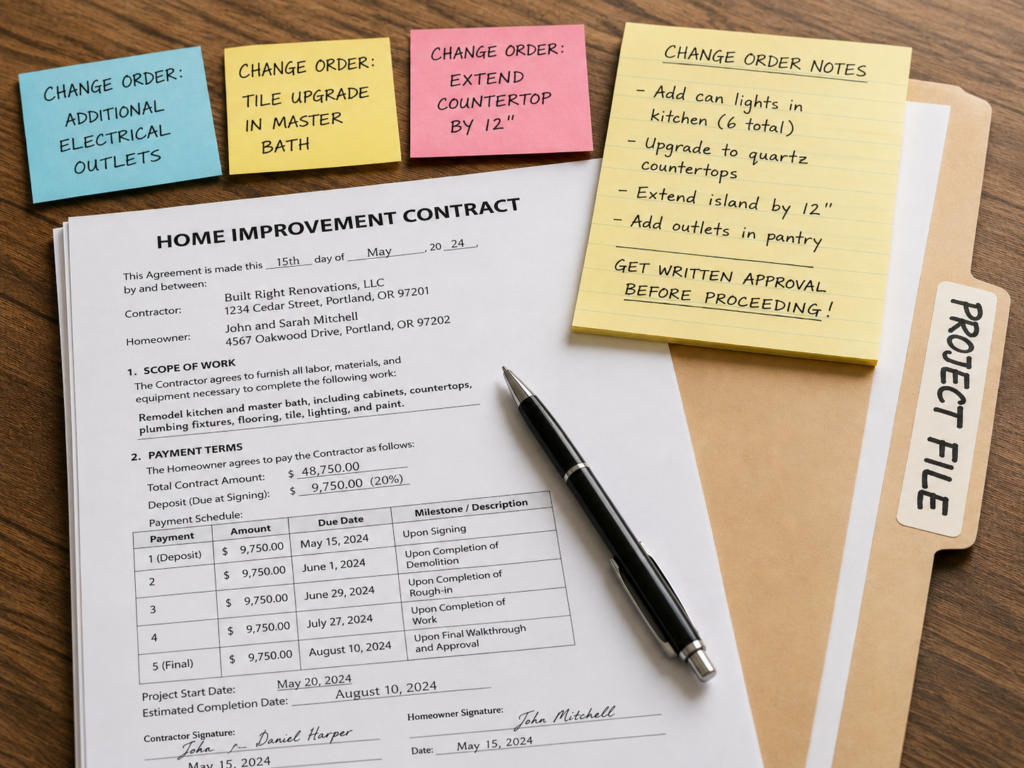
When a contractor problem gets tense, it’s easy to focus on the latest text, the surprise invoice, or the fact that nobody has shown up in four days.
The contract is a better starting point.
Your home improvement contract should explain what work was promised, what materials were included, when payments were due, how changes had to be approved, who handled permits, and what counts as completion.
Look for the scope of work, payment schedule, change-order language, material specifications, start date, estimated timeline, permit responsibilities, warranty terms, termination rules, dispute language, and any cancellation notice.
A vague agreement doesn’t mean you have no rights. It does mean your documentation becomes more important.
The AHA SmartHire Contractor Kit is built around this same idea: a clear paper trail helps homeowners compare bids, verify credentials, track payments, manage change orders, document permits, and organize final punch-list items before small problems turn into expensive disputes.
Build a Paper Trail Before You Escalate
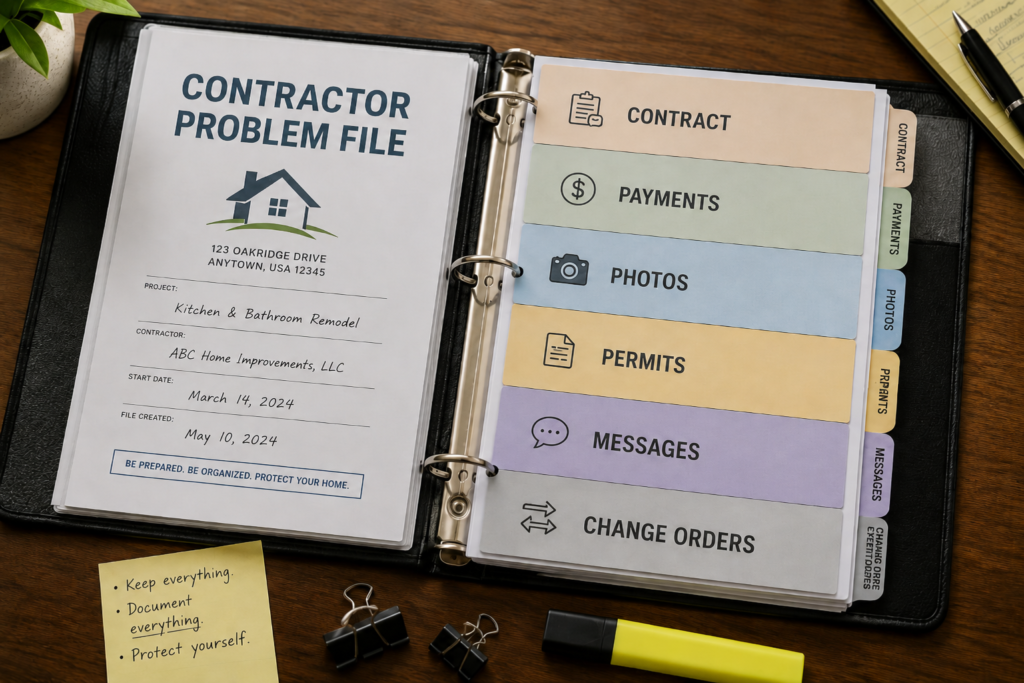
This is the part almost no one feels like doing.
You’re tired. There’s dust everywhere. You may have a toilet in your hallway. Nobody dreams of spending their evening organizing contractor receipts.
Do it anyway.
Before you pay more, pause payment, terminate the contractor, file a complaint, or bring in another pro, gather your records. Your contractor problem file should include the contract or written estimate, invoices, receipts, proof of payments, photos, videos, texts, emails, voicemails, change orders, permit records, inspection notes, warranty information, lien waivers or releases, and a simple timeline of events.
The SmartHire Kit recommends keeping a job file with the contract, change orders, photos, permits, receipts, lien waivers, warranties, weekly notes, and contractor communications. That advice is useful before you hire, but it becomes even more valuable when a project starts going sideways.
Think of this like gathering receipts before returning something expensive. You don’t need a novel. You need clean, dated proof.
Pro Tip: Use SmartHire as Your Project Binder
Already using the AHA SmartHire Contractor Kit? Pull together your contract, change orders, payment tracker, lien waivers, permit records, photos, and punch-list notes. The same tools that help you hire wisely can also help you get organized when a project starts going wrong.
Can You Pause Payment If the Work Is Bad?
Maybe — but withholding payment is not a simple pause button.
You may be able to delay or dispute a payment, especially when your contract ties that payment to a milestone that has not been completed. For example, if the next payment is due after rough plumbing passes inspection and that inspection hasn’t happened, your position may be stronger than if you simply dislike the pace of the job.
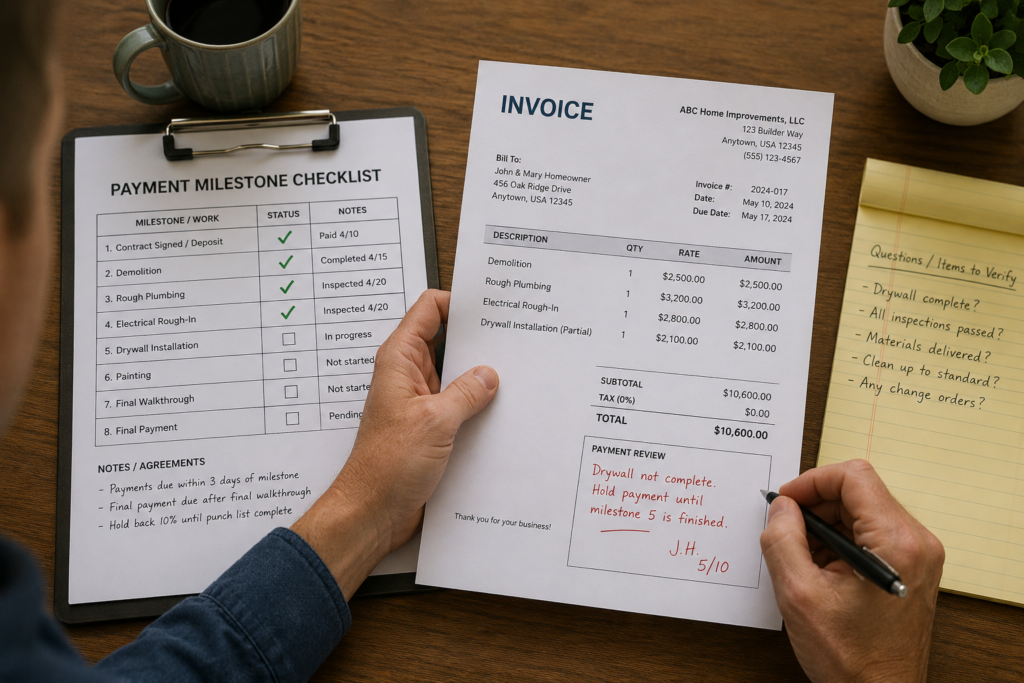
Payment disputes can get complicated quickly.
Your rights depend on the contract, state law, the type of work, the amount of work completed, and whether subcontractors or suppliers are involved. The FTC recommends checking with your state or local consumer agency to understand local rules. It also advises homeowners not to pay the full project amount upfront and not to make final payment until the work is complete and you’re satisfied. (consumer.ftc.gov)
A safer path is to review the payment milestone, document the incomplete or disputed work, keep the disputed funds available if possible, request a written explanation of new charges, and put your concerns in writing before refusing payment. For larger disputes or lien threats, local legal guidance may be worth the cost.
Watch Out: Don’t pay cash without a receipt. The FTC flags cash-only payment, full upfront payment, pressure to decide immediately, and requests for the homeowner to pull required permits as warning signs in home improvement scams. (consumer.ftc.gov)
Copy-and-Paste Message to Your Contractor
Stay calm, stick to the facts, and keep the message short.
You want a written record that makes you look organized and reasonable, not furious and scattered.
Subject: Follow-Up on Project Items at [Property Address]
Hi [Contractor Name],
I’m following up on the work at [property address]. Under our agreement, the next payment is tied to [milestone or scope item]. As of today, these items appear incomplete or need correction: [brief list].
Please respond in writing by [date] with your plan and timeline to complete or correct these items. I’m happy to review next steps once we have that in writing.
Thank you,
[Your Name]
Avoid insults, threats, or legal language unless an attorney has advised you to use it.
What If the Contractor Ghosts You?
Contractor ghosting is maddening because it leaves you stuck in limbo.
The house is still torn apart, but you don’t know whether to wait, pay, complain, or start over.
Instead of sending scattered texts every few hours, send one clear written notice. Include the project address, agreement date, unfinished work, last date they were on-site or responsive, what you are requesting, and a reasonable deadline.
Subject: Written Confirmation Requested for Unfinished Work
Hi [Contractor Name],
I’m requesting written confirmation by [date/time] on whether you intend to return and complete the contracted work at [property address].
As of today, the following work remains unfinished: [brief list]. If I do not hear from you by that deadline, I will review my options under our agreement and local consumer protection rules.
Thank you,
[Your Name]
This creates a cleaner record if you later need to file a complaint, contact a licensing board, bring in another contractor, or speak with an attorney.
What If the Work Is Unsafe, Unpermitted, or Failed Inspection?
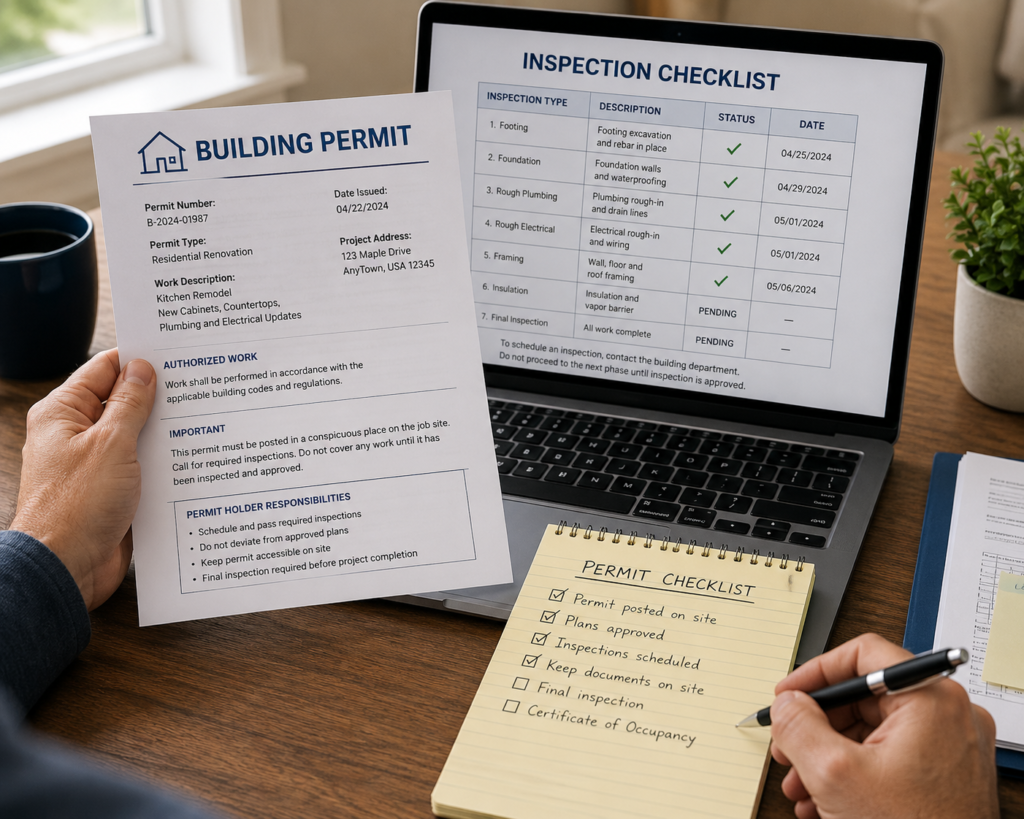
Slow down when the issue involves possible code violations, failed inspections, or work that could affect safety.
Your local building department may be the right next call if electrical work looks unsafe, plumbing was altered without required inspection, structural framing was changed, roofing or HVAC work was done without permits, the contractor asked you to pull the permit, required inspections were avoided, or failed work still hasn’t been corrected.
The FTC lists asking the homeowner to obtain required building permits as a warning sign in home improvement scams. (consumer.ftc.gov)
That doesn’t mean every permit mistake is fraud. Rules can be misunderstood. Homeowners and contractors can also disagree about what was required.
Still, permits are not just paperwork. They create accountability and help confirm that work meets local safety standards. The SmartHire Kit makes this point clearly: a qualified contractor should treat permits and inspections as a normal part of the job, not an obstacle to avoid.
Can a Contractor Put a Lien on Your Home?
Possibly. That’s why payment disputes deserve care.
A mechanics lien is a legal claim against a property for unpaid labor, materials, or services. Lien rules vary by state, and in many places, lien rights may apply not only to the main contractor but also to subcontractors or suppliers who contributed labor or materials to the project.
A lien threat does not automatically mean the contractor is right. It also doesn’t mean you should panic-pay every demand. But lien notices should never be ignored.
Keep any preliminary lien notice, notice of intent to lien, mechanics lien, or similar document with your project file. Local legal guidance is especially wise if the amount is large, you already paid the main contractor, or subcontractors and suppliers are contacting you directly.
The SmartHire Kit includes payment and lien tracking tools to help homeowners record payment stages, dates, amounts, lien waivers, and subcontractor or supplier releases.
Pro Tip: Before final payment, ask for final lien releases or waivers from the contractor and, when applicable, subcontractors or suppliers. Requirements vary by state, but the paper trail can help protect you.
Where To File a Complaint About a Contractor
If the contractor won’t respond, refuses to correct serious problems, or you believe you were misled, you may have complaint options.
Depending on your state and the type of work, possible places to start include your state contractor licensing board, state consumer protection office, attorney general, local building department, Better Business Bureau, small claims court, civil court, or an attorney for larger disputes.
USA.gov maintains a directory of state consumer protection offices, which can help with complaints against businesses, scams, fraud, and related consumer issues. (usa.gov)
For suspected scams or deceptive business practices, homeowners can also report concerns to the FTC. (consumer.ftc.gov)
A complaint does not guarantee you’ll get your money back. Frustrating, but true. What it can do is create an official record, trigger review, and point you toward state-specific options.
Be Careful With the “Three-Day Cancellation” Myth
Many homeowners have heard that they can cancel any contract within three days.
Not always.
The FTC’s Cooling-Off Rule gives consumers three days to cancel certain sales made at a home, workplace, dormitory, or seller’s temporary location. But not all sales are covered. The formal rule applies to certain door-to-door sales valued above $25 and requires sellers to provide cancellation disclosures. (ftc.gov)
So if you signed a contract and now regret it, check where the sale happened, what the contract says, and what your state law provides.
Some states have their own home improvement contract rules, cancellation rights, deposit limits, or required notices. National advice can only go so far here. Your local rules matter.
Red Flags Before You Pay More
When a project is already going badly, pay attention to signs that the contractor may be shifting risk onto you.
Be cautious with large additional payment demands that come without a clear explanation. The same goes for verbal change orders, cash-only requests, permit avoidance, missing receipts, refused lien waivers, vague “unexpected condition” claims, or pressure to cover up work before inspection.
Communication patterns matter too. A contractor who disappears except when asking for money is creating risk for you.
The FTC warns homeowners not to pay the full amount upfront and identifies pressure tactics, cash-only payment, and permit-shifting as signs of possible home improvement scams. (consumer.ftc.gov)
A good contractor may have a bad week. A bad communicator may still do decent work. But a contractor who avoids documentation while asking for more money is telling you something.
Listen.
When To Bring in a Second Opinion

Sometimes another qualified professional needs to look at the work.
Not your cousin who “knows houses.” Not a neighbor with strong opinions and a flashlight. A qualified pro.
A second opinion may be worth it when the work involves safety or code concerns, you suspect water or mold damage, electrical or gas work seems questionable, structural or roofing issues are involved, the job failed inspection, or you need a written repair estimate for insurance, mediation, a licensing board, or court.
If you use HomeAssist or HomeOS, the built-in Contractor Finder tools can help you find a qualified professional for a second opinion, corrective work, or a future project.
Just don’t rush into the cheapest rescue bid because you’re upset. That’s how one contractor problem becomes two.
How the SmartHire Contractor Kit Helps You Stay Organized
The AHA SmartHire Contractor Kit is primarily designed for the “before you hire” stage. That’s still where it shines.
But when contractor problems have already started, parts of the kit can help you rebuild your paper trail. Use it to organize your contract, scope, payment records, change orders, lien waivers, photos, notes, permit documents, punch-list items, final completion issues, and contractor communication.
The kit also includes templates for comparing contractors, planning a project, interviewing contractors, tracking change orders, tracking payments and lien waivers, and documenting punch-list items.
For an active dispute, AHA may also want to create a shorter companion tool: a Contractor Problem Organizer. That would give homeowners a fast way to collect the facts when something has already gone wrong.
The Calm Next Step
Contractor problems feel personal because your home is personal. You trusted someone with your money, your time, and your space. When that trust cracks, it’s easy to react fast.
Fast is not always protective.
Before you pay more, pause. Review the contract. Take photos. Gather messages, invoices, permits, payment records, lien waivers, and inspection notes. Put your concerns in writing. Be firm, but calm. When safety, code, lien, or significant money issues are involved, get local guidance before making a hard move.
Planning another project? Use the AHA SmartHire Contractor Kit before you sign. Need a qualified second opinion or repair help now? HomeAssist and HomeOS include Contractor Finder tools to help you find your next pro more confidently.