

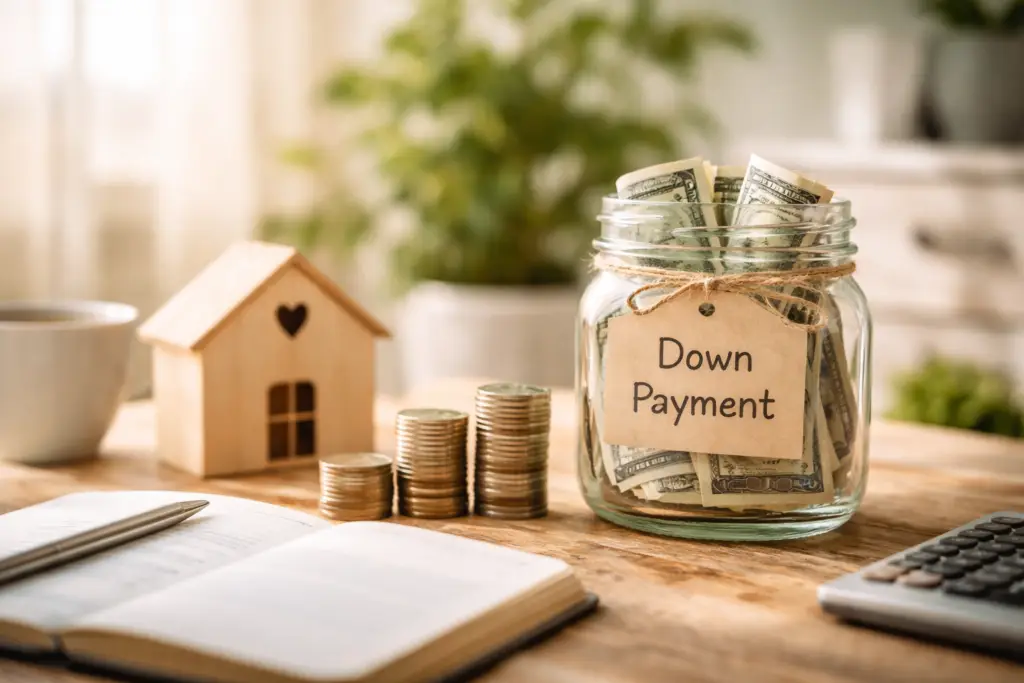
You’ve probably heard it before: “You’ll need a down payment.” But that phrase can feel heavy when you’re juggling rent, rising prices, and a budget that already feels spoken for.
For most homeowners, the down payment is the first real turning point. It’s where a loose idea of “someday” starts to become a plan. Not overnight. Not perfectly. But intentionally.
Your down payment isn’t just a number on a mortgage calculator. It shapes what kind of home you can afford, how comfortable your monthly payments feel, and which loan options are available to you. Just as importantly, it shapes how you feel on the journey: hopeful, cautious, motivated, sometimes overwhelmed. That mix is normal.
What Is a Down Payment, and Why Is It Necessary?
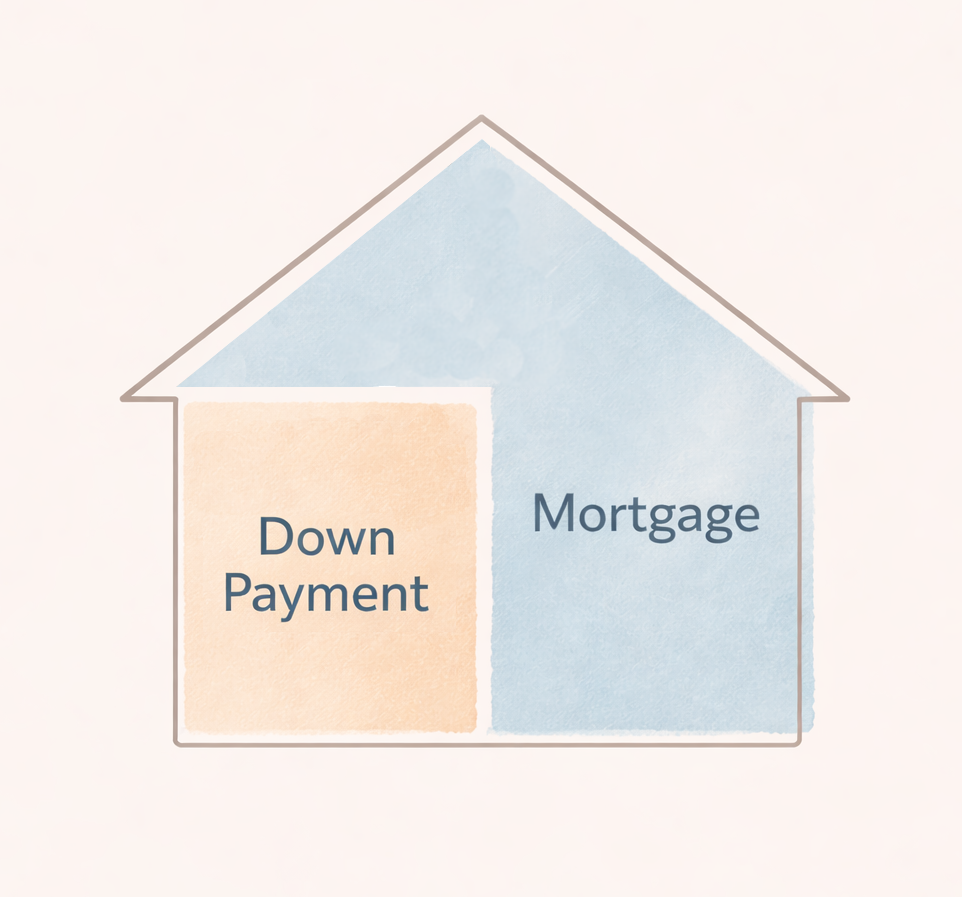
Featured answer: A down payment is the upfront cash you pay when buying a home. It lowers how much you borrow, affects your monthly mortgage payment, and can help you qualify for better loan terms.
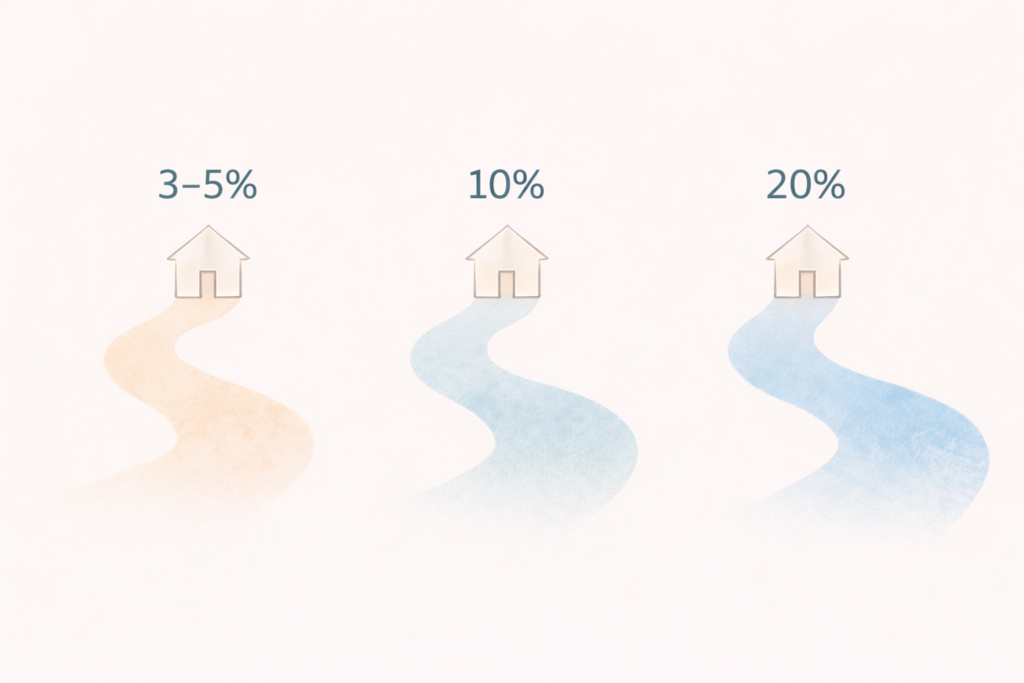
A down payment is usually expressed as a percentage, like 5%, 10%, or 20%. It’s your first stake in the home.
From a lender’s perspective, a down payment shows commitment and reduces risk. From your perspective, it reduces how much you borrow and often leads to better loan terms, lower monthly payments, and avoiding private mortgage insurance (PMI). PMI is a monthly fee that protects the lender, not you, and is commonly required when you put less than 20% down. The cost and duration of PMI vary based on the loan type, credit profile, and lender.
How Much Should You Really Save for a Down Payment?
You’ve likely heard the old rule: 20% down. It’s a helpful benchmark, but it’s not the only path, and for many buyers today, it’s not the starting point.
Here’s how the options usually shake out:
20% Down, the Traditional Benchmark
This approach lowers your loan amount, keeps monthly payments more manageable, and helps you avoid PMI altogether. It offers flexibility and long-term savings, but it also takes time.
Lower Down Payments, More Common Than You Think
Many conventional loans allow as little as 3% down, depending on credit score, income, and lender guidelines. FHA loans often require 3.5%, and VA or USDA loans may offer zero-down options for eligible buyers who meet specific service, location, and income requirements.
Lower down payments can open doors sooner, especially for first-time buyers, but they often come with tradeoffs like higher monthly payments or added insurance costs. The right choice is less about the “best” percentage and more about what fits your life.
Why Your Down Payment Size Matters for Your Mortgage
Your down payment quietly influences several parts of your financial picture:
Monthly Comfort
A larger down payment means borrowing less, which usually translates to a calmer, more manageable monthly payment.
Insurance Costs
Smaller down payments often trigger PMI, which can add a noticeable amount to your monthly bill.
Loan Terms
Lenders often offer better interest rates to buyers who put more money down, saving you money over time.
Saving Smarter: How to Build Your Down Payment Savings
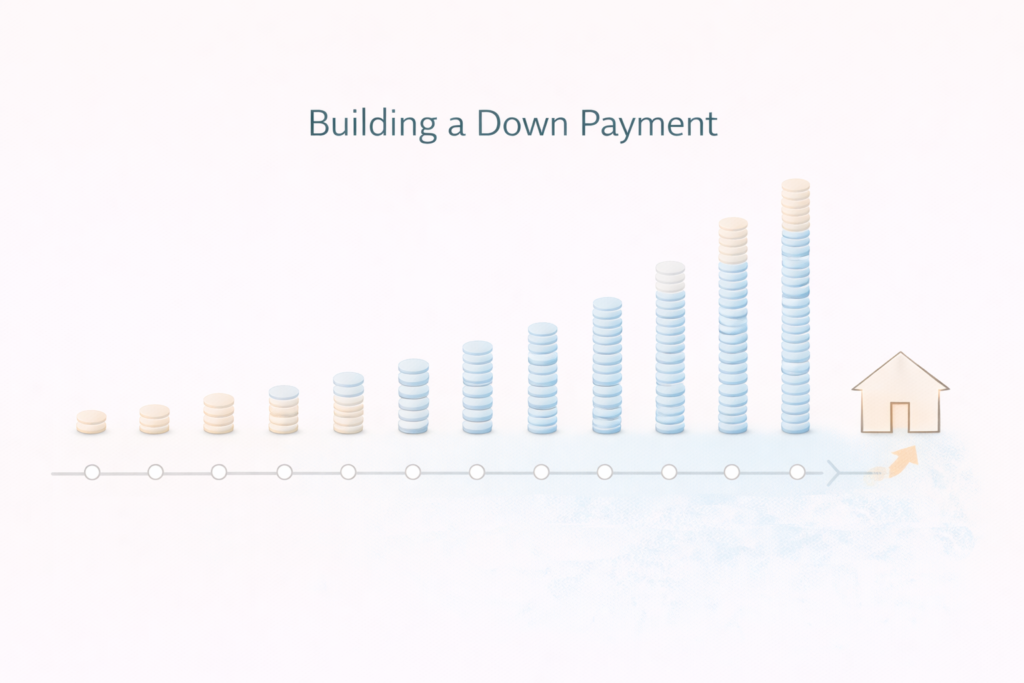
Saving for a down payment doesn’t happen all at once. It happens in seasons, and it’s okay if yours looks slower than you hoped.
Set a Range, Not a Finish Line
Aim for a realistic minimum based on loan options, with a longer-term stretch goal if avoiding PMI or lowering payments matters to you.
Plan for the Whole Picture
Closing costs often run 2–5% of the purchase price. Factoring them in early helps prevent last-minute stress.
Make It Automatic
Automated transfers, even small ones, remove decision fatigue and build momentum over time.
AHA Insight: Homeownership isn’t built in big leaps. It’s built in quiet, repeatable habits, the kind that don’t make headlines but do change futures.
What First-Time Buyers Should Know
If you’re buying your first home, you may have more support available than you realize.
Many states and cities offer down payment assistance programs, often structured as grants or forgivable loans. Some programs help cover part of the down payment, others help with closing costs, and many can be combined. Availability, income limits, and repayment terms vary by location and program.
Low-down-payment loan options can also help you get started sooner. The key is understanding the long-term tradeoffs and making sure you still have breathing room after closing.
In some cases, assistance comes as a second loan rather than free money, with terms that vary by program and lender. That’s not a downside, just something to understand clearly upfront.
Beyond Savings: Options That Keep the Door Open
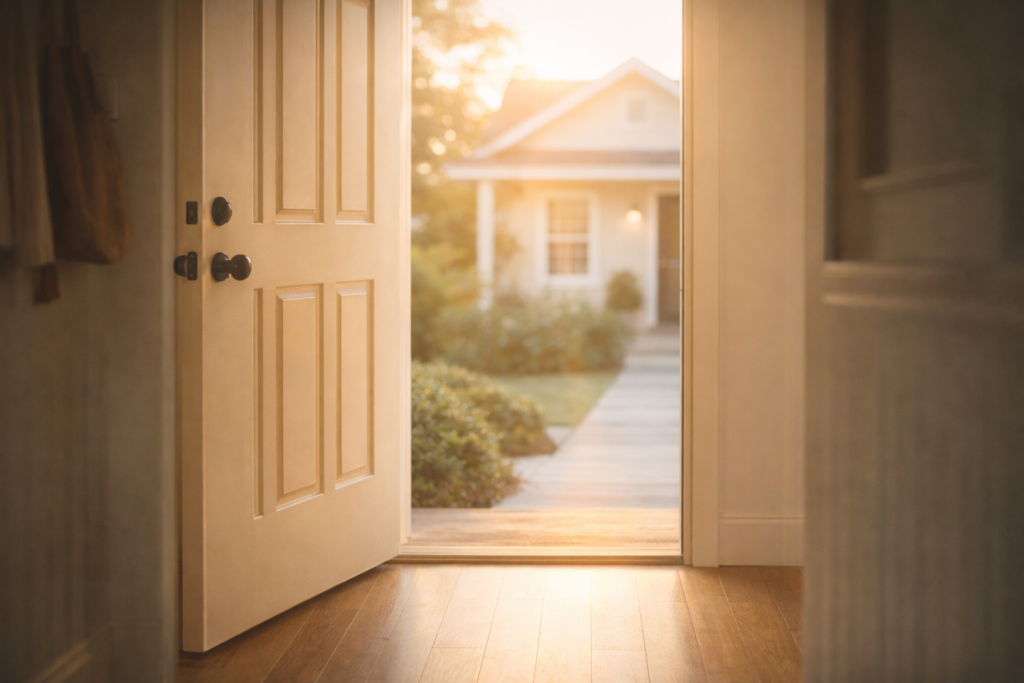
Not everyone starts with family help or years of runway, and that doesn’t mean homeownership is off the table.
Down payment assistance is no longer a niche solution. Today, there are thousands of programs across the United States, offered by cities, states, nonprofits, and even private companies. As affordability has worsened, these programs have expanded quietly, often faster than public awareness has kept up.
For many buyers, the challenge isn’t whether help exists. It’s knowing where to look and how to navigate the process.
Rent-to-own arrangements can work in limited cases, but they require caution, clear contracts, and professional review. Terms, pricing, and buyer protections vary widely, which is why legal guidance matters. These arrangements are best viewed as a bridge, not a shortcut.
When the Numbers Feel Too Big

There’s a quiet truth many buyers don’t talk about. When homeownership starts to feel impossible, motivation slips. Saving feels pointless. Spending feels easier. Over time, hope erodes.
Research and real-world experience suggest something powerful: simply believing homeownership is possible changes behavior. People save more intentionally, spend more carefully, and stay engaged with their future when the door feels open, even if the path is long.
AHA Insight: You don’t need certainty to move forward, just the willingness to keep the door open. Progress compounds, even when it feels slow.
How Your Down Payment Fits Into Affordability
Your down payment is one piece of a much larger picture, alongside income, debt, insurance, taxes, and the kind of life you want to live.
Tools like AHA’s How Much House Can I Afford? calculator can help ground your goals in reality, so your home feels like a source of stability, not stress.
Conclusion: A Steady Path Forward
Next steps: Pair your down payment savings goal with a realistic monthly budget and affordability range to avoid becoming house-poor.
A down payment isn’t about hitting a perfect number. It’s about choosing a direction.
Whether you’re saving 3% or 20%, every step you take builds clarity, confidence, and options. The journey may take longer than you hoped, but it’s still yours.
Start where you are. Keep going. And when you’re ready, AHA is here to help you take the next step with confidence.