
You’ve probably seen ads warning that someone could steal your home with a forged deed — followed quickly by an offer to monitor your title for a monthly fee. But are title monitoring services worth it? For many homeowners, the answer depends on what the service actually monitors, what help it provides after an alert, and whether your county already offers similar notifications for free. In this article, we’ll explain how title fraud works, what “title lock” services really do, and the practical steps you can take to keep an eye on your property records without paying for protection you may not need.
How Big is the Problem?
Imagine waking up one day to find your name erased from your deed — or worse, your home sold out from under you. Deed theft, also known as title fraud, is a real and rising threat. Crooks forge documents to steal homes or secure fraudulent mortgages, leaving homeowners in chaos.
According to the FBI’s 2024 IC3 Report, there were 9,359 real estate fraud complaints in the U.S., with reported losses totaling $173.6 million. That IC3 category is broader than deed theft alone, but it shows the scale of reported real-estate-related fraud. Of those complaints, 1,765 were filed by individuals aged 60 or older, whose losses amounted to $76.3 million.
Seniors represented about 19% of complaints, but they bore nearly 44% of the total losses — highlighting the disproportionate impact on older adults in this broader real-estate-fraud category. Even high-profile cases, like the attempted fraudulent sale of Graceland, show why forged property documents deserve attention. In 2025, the Justice Department said Lisa Jeanine Findley pleaded guilty to mail fraud and was sentenced to 57 months in federal prison for an unsuccessful scheme to defraud Elvis Presley’s family and steal the family’s ownership interest in Graceland. The case shows how forged filings and false foreclosure claims can create urgent legal problems even for highly visible properties.
What is Deed Theft?
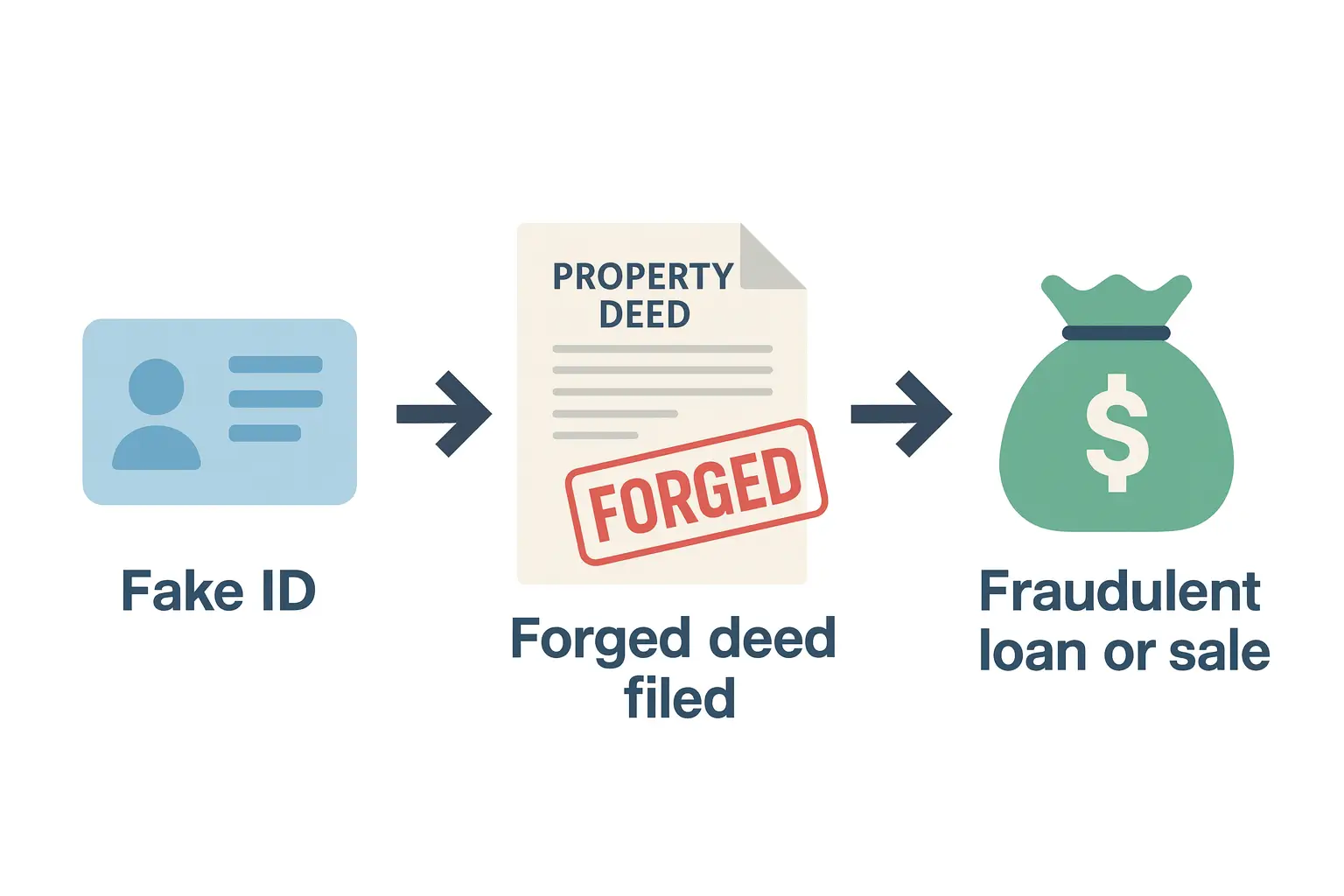
Deed fraud is a type of identity theft. A criminal identifies a target property — often a vacation home, rental, or vacant house — and forges the true owner’s signature on the deed. They may:
- Use stolen personal information to impersonate you.
- Employ fraudulent IDs and counterfeit notary seals.
- Work with unethical notaries to push filings through.
Once a forged deed is recorded, it can create a public-record problem that makes it appear as if ownership has changed. That can let a scammer try to rent, borrow against, or sell the property, while the real owner may need legal help or a court order to unwind the fraudulent record.
Why It’s So Easy
The U.S. property record system is outdated and trust-based. County clerks generally verify documents for completeness, not authenticity. That means:
- Fraudulent quitclaim deeds can be recorded without much scrutiny.
- Electronic filing in many states makes it easier for criminals to operate remotely.
- Once filed, the fraudulent document becomes part of the public record, creating costly legal disputes.
Learn how some counties are fighting back with free property fraud alert programs.
What Criminals Can Do With Your Deed
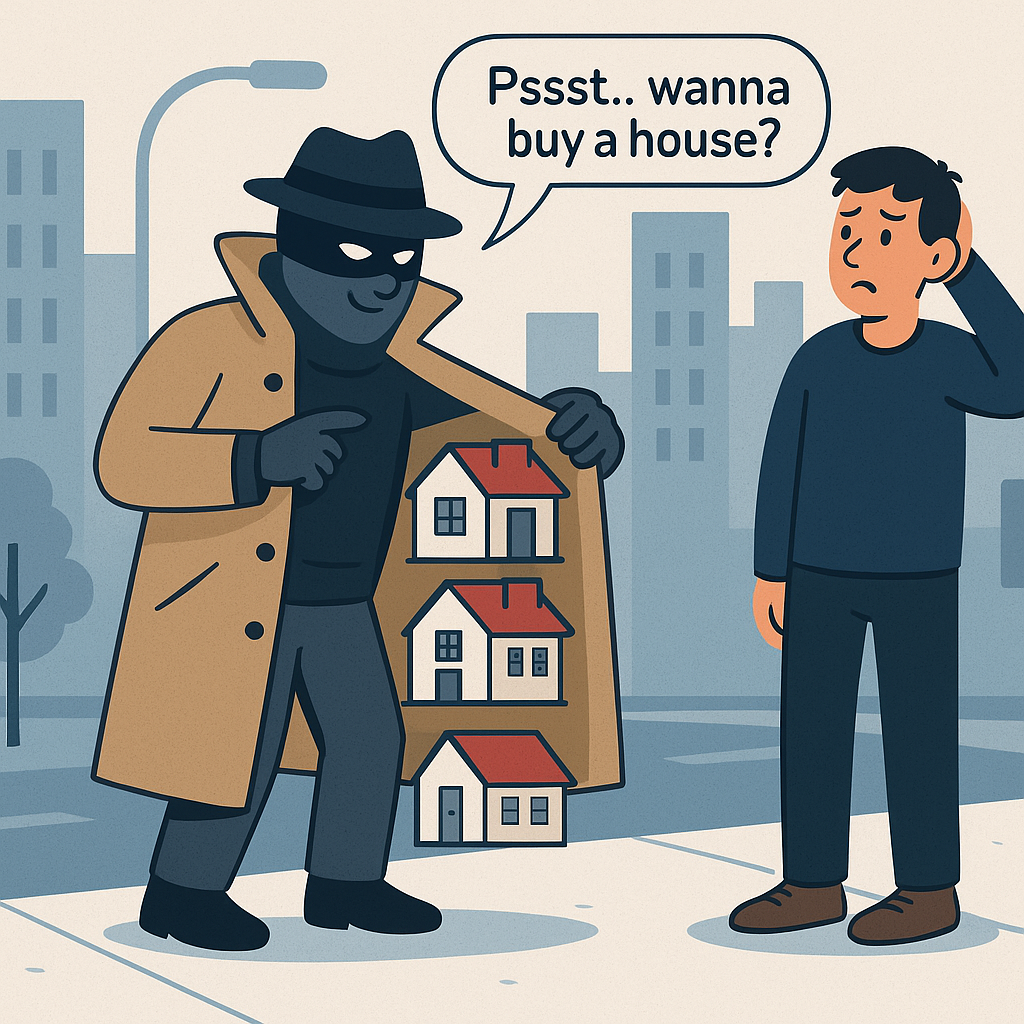
Once a fraudulent filing appears in the public record, criminals may try to:
- Illegally rent out your property.
- Open a HELOC (home equity line of credit) in your name.
- Refinance to cash out equity.
- Sell your home to a legitimate buyer and disappear with the profits.
If they default on fraudulent loans, you could face foreclosure, find yourself unable to refinance, or struggle to pass the property to heirs.
Warning Signs of Deed Theft
Look out for these red flags:
- You stop receiving property tax, mortgage, or utility bills.
- Utility usage spikes at a vacant property, or strangers move in.
- Rent payments are redirected to someone else.
- You receive loan statements from an unfamiliar lender.
- You’re suddenly in default or foreclosure on a loan you never took.
👉 Interested in AHA Membership? Learn about membership and join the early-access list for launch updates. Early-access registration does not activate property monitoring or alerts.
The Myth of “Title Lock”
Despite the name, there is no legal mechanism to actually “lock” your title in the United States. County recorder and clerk offices must accept filings that meet paperwork standards—they do not have the authority to freeze or lock deeds from changes.
What Title Lock companies sell is essentially monitoring: they notify you when certain documents are recorded against your property. They cannot stop a fraudulent deed or lien from being filed. Consumer advocate Clark Howard recommends starting with free county property alerts when they’re available and keeping your credit frozen as additional identity-theft protection. A credit freeze can make it harder for someone to open new credit in your name, while property alerts can help you spot suspicious filings quickly.
Are Title Monitoring Services Worth It?
Title monitoring can be useful, but paying for a stand-alone monitoring service isn’t always necessary. The real question is what you’re getting beyond a simple alert.
If your county already offers free property-record notifications, a paid service that only tells you when a deed, lien, or other document has been recorded may not add much value. A paid service may be more worthwhile when it monitors more types of records, covers multiple properties, or provides meaningful help if something suspicious appears.
Before paying, look at what the service actually monitors, how quickly it alerts you, and what help you receive after an alert. Monitoring can give you an earlier warning that something has changed, but it does not “lock” your title or prevent fraudulent paperwork from being filed.
Pro Tip: Check with your county recorder, clerk, or register of deeds first. If free property-record alerts are available, you may already have access to the most important basic monitoring at no cost.
Is Title Lock a Scam?
Many homeowners wonder if Title Lock is a scam. The answer: it’s not an outright scam, but it is misleading. The name implies your title can be locked and protected, when in reality that’s impossible. What you’re usually paying for is monitoring, and some paid services also advertise restoration support if verified title fraud occurs. For example, Home Title Lock says its service includes monitoring, alerts, and restoration help of up to $1 million, subject to its warranty and terms and exclusions. That is different from preventing a fraudulent filing, replacing title insurance, or guaranteeing that every fraud-related cost will be paid.
What Experts Recommend
Consumer advocates and the FBI recommend:
- Freeze your credit with all three major credit bureaus.
- Register for free county property alerts if available.
- Check your deed status regularly. Many county records are accessible online.
- Monitor your credit reports weekly at AnnualCreditReport.com.
- Consider enhanced title insurance (e.g. ALTA Homeowner’s Policy) if you’re refinancing — it can cover impersonation or forgery.
Real Life Examples
- Boston / FBI Warning — The FBI’s Boston division warned of rising quitclaim deed fraud, where criminals forge documents to record a phony transfer of property ownership. Read more on FBI.gov
- Raleigh, NC — A complete stranger was able to obtain a deed for a $4 million home without the homeowner’s knowledge because the clerk only checks paperwork completeness, not identity. See the ABC11 investigation
- Houston, TX — A couple was ordered to repay over $1.2 million after being accused of stealing nearly 40 properties with forged documents, often targeting inheritance disputes. Coverage in the Houston Chronicle
These stories prove that title fraud isn’t just theoretical — it happens in cities across the country.
Why Older Homeowners Can Be Targets

Older homeowners can be targets in deed-fraud schemes because:
- They’re more likely to own homes outright with high equity.
- They may own vacation or second homes that sit vacant.
- They may have fewer routine property-record check-ins, especially when they are not actively buying, selling, or refinancing.
- They can miss mail or digital notices, giving criminals more time.
- The emotional and financial impact is greater later in life, with fewer options to recover losses.
For more, see the National Center on Elder Abuse resources on elder financial exploitation.
AHA Membership: Early Access
AHA Membership is in development. Learn about membership and join the early-access list to receive launch updates and be notified when enrollment opens. Joining the list does not activate property monitoring or alerts.
AHA’s role for now is educational: helping homeowners understand what title-monitoring services can and cannot do, what free public alert options may exist, and what to ask before paying for a private service.
For now, use the steps available without a membership: sign up for free county property-record alerts where offered, freeze your credit, review unfamiliar filings or notices, and keep key property documents together.
FAQ: Common Questions About Title Theft and Protection
Can someone really steal my house?
Yes — through deed fraud, a criminal can forge documents that make the public record appear to show an ownership change or that support attempted loans against your home. It does not mean you will lose your home overnight, but it can create costly legal battles and may require legal help or a court order to unwind the fraudulent record.
Does title insurance protect me from title theft?
Not always. Standard owner’s title insurance usually focuses on defects that existed when you bought the home, but some homeowner policies or endorsements may provide limited post-policy forgery or impersonation coverage. ALTA describes newer forgery endorsements for certain deed or mortgage forgery risks, subject to the policy, endorsement, state availability, and exclusions. If you are worried about this risk, ask your title insurer or real estate attorney what your actual policy covers.
Is Title Lock a scam?
Not exactly, but it is misleading. There’s no way to legally “lock” your title. Title-lock services primarily monitor records and alert you after changes occur, and some paid services may also advertise restoration support if verified title fraud occurs. That still does not prevent a fraudulent document from being filed, and many counties already provide basic property-record alerts for free.
What’s the best protection?
Start with what is available today: freeze your credit, sign up for free county property alerts where offered, check your property records periodically, keep important property documents together, and contact your county recorder, title insurer, or a qualified attorney quickly if an unfamiliar filing appears. AHA can help homeowners understand those steps, but membership-based monitoring or guided defense is not live today.
Are Title Monitoring Services Worth It?
Title monitoring services can be useful, but paying for one isn’t always necessary. Many counties offer free property-record alerts that notify you when certain documents are recorded in your name or against your property. A paid service may be worth considering if it monitors more records, covers multiple properties, or provides meaningful help if suspicious activity appears. Just remember: title monitoring can alert you to a change, but it cannot prevent a fraudulent deed or lien from being filed.
Why can older homeowners be targets?
Older homeowners can be attractive targets when they own homes outright, have substantial equity, own vacant or second homes, or miss mailed or digital notices. In the FBI’s broader real-estate-fraud category, older adults reported fewer complaints than the overall total but a large share of reported losses, which is why extra monitoring can be useful.
Bottom Line
- Deed theft is real, but you can reduce your risk.
- Title Lock alone isn’t enough. Monitoring can alert you to a recorded change, and some paid services may offer restoration support, but it cannot prevent a fraudulent filing.
- Use the available basics first. Freeze your credit, register for free county alerts where available, check your deed status periodically, and keep property documents where you can find them.