


There’s a quiet tension that lives in the background of homeownership.
Not panic. Not fear. Just awareness.
You know your home won’t remain exactly as it is forever. Over time, roofs weather and mechanical systems wear down. Water heaters corrode slowly from the inside out. Nothing dramatic happens at first. Time simply moves forward.
And then one day, a number appears.
Five figures for a roof.
Four figures for a water heater.
A quote that feels sudden — even though the system was decades old.
The disruption isn’t usually caused by unpredictability. It’s caused by the absence of orientation.
Most homeowners are never shown how to plan for major home repairs in a way that feels steady and rational.
They’re given maintenance checklists.
Many are told to save “around 1% of the home’s value.”
Others are advised to build an emergency fund.
All of that has merit.
But none of it explains the rhythm.
Homes operate on a rhythm. Once you recognize that pattern, major repairs stop feeling like financial ambushes. Instead, they begin to look like lifecycle transitions.
And transitions can be managed.
The Blind Spot Most Homeowners Carry
When you purchased your home, affordability was evaluated carefully.
Your lender analyzed monthly payments.
The agent discussed market value.
Meanwhile, the inspector focused on present defects.
What no one handed you was a long-term aging map of the house itself.
That omission matters.
Major home repairs are rarely random events. They are systems reaching maturity. But without context, maturity feels like malfunction.
A 22-year-old roof reaching end-of-life is not a crisis. It is a cycle completing itself. Yet without lifecycle awareness, it feels like something went wrong.
The shift from “something went wrong” to “this is the natural phase” is subtle — and powerful.
Your Home Is a Collection of Timelines
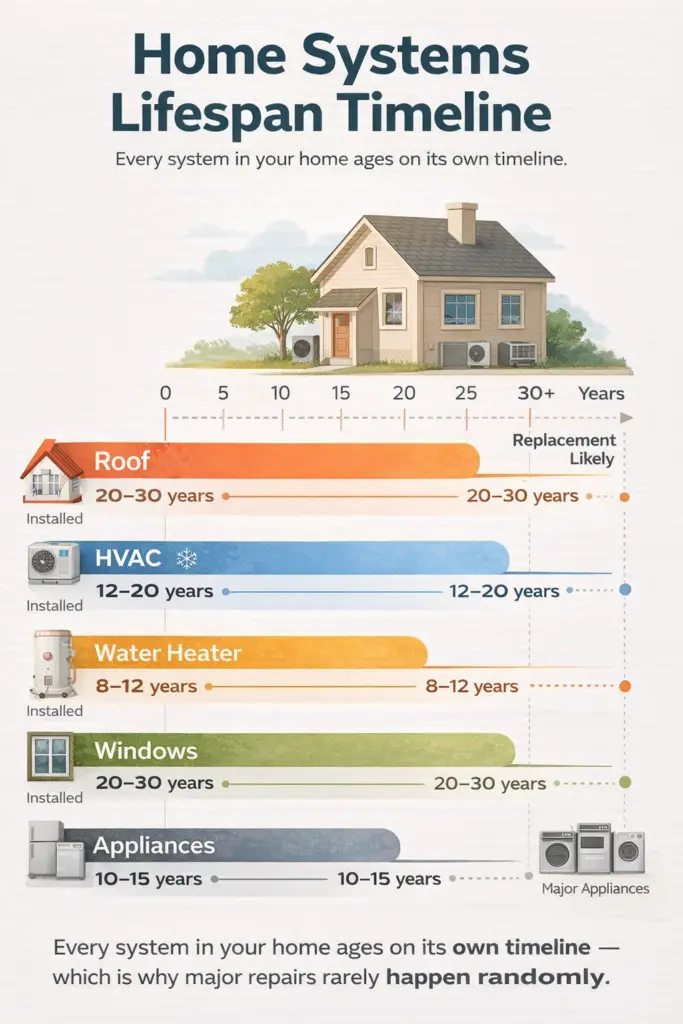
One of the most stabilizing mental adjustments you can make is this:
Your home is not one thing.
It is a collection of systems, each aging on its own timeline.
The roof has its arc.
The HVAC system has its arc.
The water heater has its arc.
The plumbing lines, electrical infrastructure, windows, siding — each moving quietly through time.
When you see your home as a portfolio of timelines rather than a single static asset, aging becomes visible.
Visible aging is manageable aging.
Seasoned Advice: Homes don’t suddenly become expensive. They move through phases. Stress begins when homeowners don’t recognize which phase they’ve entered.
Maintenance Is Not the Same as Planning
Maintenance feels responsible — and it is. Servicing your HVAC system, clearing gutters, sealing windows — all of that extends performance and reduces volatility.
But maintenance does not stop time.
A well-maintained furnace still reaches the end of its internal lifespan. A carefully inspected roof still cycles out. Materials fatigue. Components age.
Maintenance protects performance.
But planning protects stability.
If you want to understand how to plan for major home repairs intelligently, separating those two ideas is foundational.
The Comfort — and Limits — of the 1% Rule
You’ve likely heard the advice to save 1% to 4% of your home’s value each year for repairs and maintenance.
As a starting point, that rule isn’t unreasonable. It creates forward motion. But it lacks context.
It doesn’t tell you whether your roof is in year five or year twenty-two.
Nor does it reveal whether three major systems were installed within the same two-year window.
And it doesn’t account for climate, installation quality, or material grade.
Percentage rules are averages.
By contrast, lifecycle awareness is specific.
Seasoned Advice: Rules of thumb are helpful when you don’t yet know your systems. Once you do, the conversation becomes calmer — and more precise.
Planning Bands, Not Predictions
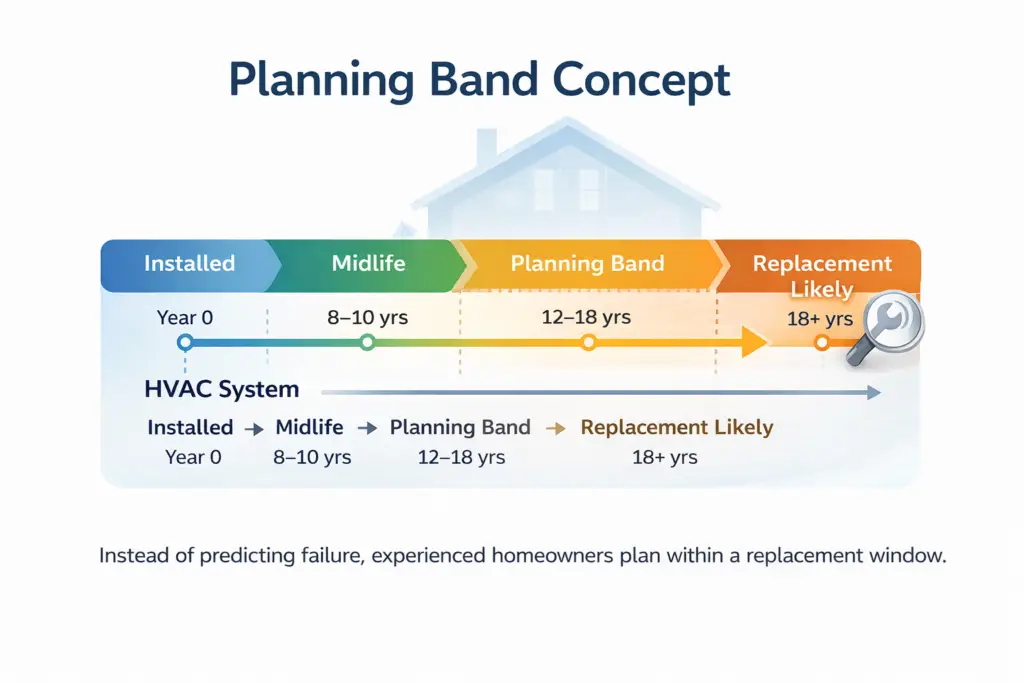
You do not need to predict the exact year a system will fail.
Instead, think in planning bands.
A planning band is a window during which replacement becomes increasingly likely. Not guaranteed. Not urgent. Simply approaching.
If your HVAC system is nearing the upper end of its typical lifespan, that’s not a warning siren. It’s a signal to prepare gradually. The same applies to roofs, water heaters, and exterior systems.
Awareness creates space.
Space allows you to gather bids, evaluate options, and adjust savings rhythm without panic.
AHA Pro Tip: When a system enters its planning band, request estimates even if you’re not ready to replace it. Pricing clarity removes anxiety and prevents rushed decisions later.
Forecasting isn’t about certainty. It’s about narrowing the range of surprise.
Why Major Repairs Often Arrive in Waves
Here’s where many homeowners feel blindsided: cluster risk.
Homes are typically built with multiple systems installed at roughly the same time. Which means they often age together.
Consider a home built in 2006 with original systems. By 2023–2028, the roof may be entering its final stage, the HVAC system approaching replacement, and the water heater already cycling out. Nothing unusual has happened. No disaster. Just time.
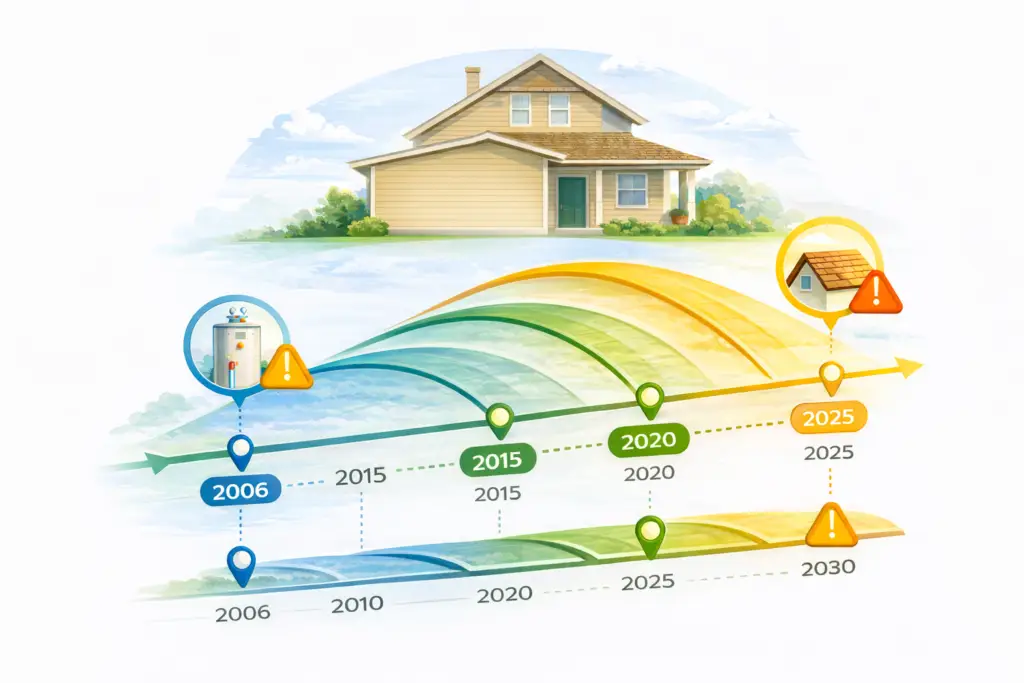
Individually, each event is manageable.
However, when they occur together, the costs compress.
Without awareness, that compression feels chaotic. With awareness, it becomes schedulable.
You might replace one system slightly early to spread the financial impact.
In some cases, homeowners increase savings temporarily during that window.
Others schedule projects during off-peak installation seasons.
Seasoned Advice: Cluster risk is rarely misfortune. It is original construction timing revealing itself later.
We’ve seen homeowners refinance under pressure for a roof that was predictable five years earlier. The cost wasn’t the problem. The compression was.
Timing Is Leverage
Unfortunately, emergency replacements narrow your options.
When a system fails suddenly, your ability to compare bids and negotiate pricing shrinks quickly. Contractors price urgency.
When you choose timing instead of reacting to it, you regain leverage.
AHA Pro Tip: HVAC installations are often more competitively priced during spring and fall shoulder seasons. Roofing and exterior projects may also be more negotiable outside peak demand periods in moderate climates.
When urgency drops, leverage rises.
Understanding how to plan for major home repairs gives you that leverage.
Capital Reserves Are Not Emergency Funds
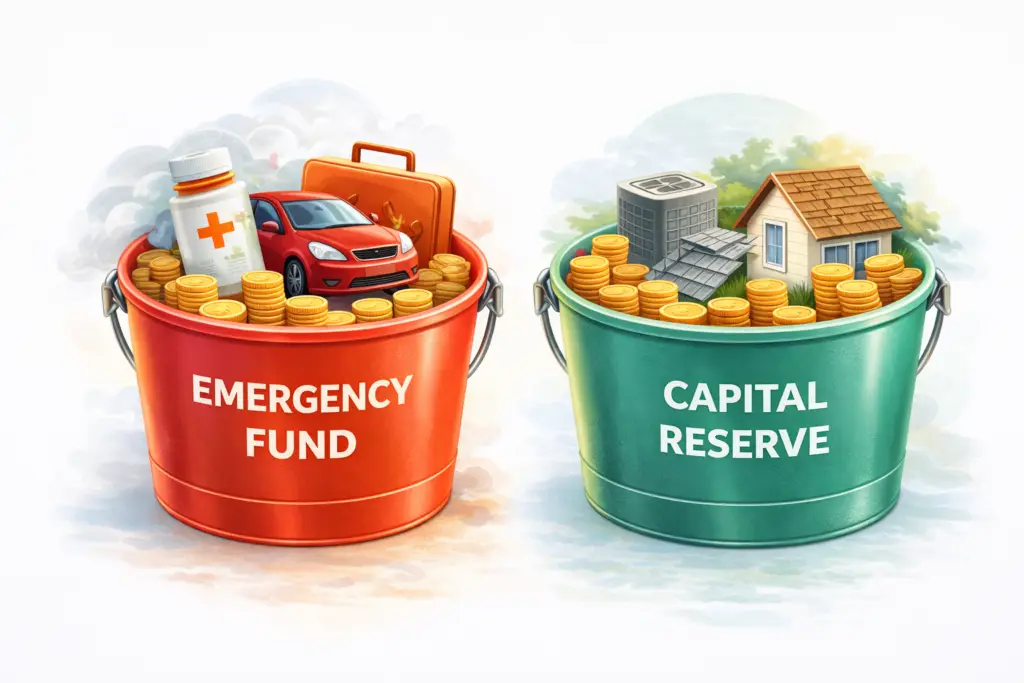
An emergency fund protects against unpredictable life events.
Major system aging is not unpredictable. It is cyclical.
If you rely solely on emergency savings for predictable replacements, you destabilize both categories.
Separating capital reserves from emergency funds creates steadiness.
There isn’t one correct planning style. Some homeowners prefer conservative pacing with larger reserves. Others take a moderate approach and adjust gradually. Some smooth cluster risk through timing strategy.
What matters is intentionality.
Seasoned Advice: Financial calm comes from rhythm, not from reactive swings.
Insurance, Equity, and Selling — Viewed Differently
Lifecycle awareness influences decisions beyond repairs.
When you understand where your roof sits in its lifecycle, insurance conversations sharpen. You recognize that wear and tear isn’t covered. You review replacement cost provisions more thoughtfully.
When cluster windows are visible, refinancing decisions become calmer. Borrowing under pressure is expensive. Borrowing with foresight is optional.
When preparing to sell, aging systems become negotiation variables rather than surprises.
AHA Pro Tip: Keep installation dates, service records, and warranty documentation organized. Buyers and insurers fear uncertainty more than aging.
Capital awareness improves positioning.
Where Even Thoughtful Homeowners Get Caught
Even diligent homeowners anchor to past pricing.
They assume a roof that cost $12,000 fifteen years ago will feel similar today.
Many maintain systems carefully and assume replacement remains distant.
Others treat each repair as isolated.
None of this reflects irresponsibility. It reflects how people process gradual change.
We respond to urgency. Homes age gradually.
Without a framework, gradual aging becomes urgent all at once.
With a framework, it becomes paced.
The Real Objective

You cannot eliminate major home repair costs.
What you can eliminate is surprise.
You don’t need perfect projections.
What you need is orientation.
Specifically, you need to know which systems are early, which are entering planning bands, and whether clustering is forming.
From there, ownership steadies.
Savings feel purposeful.
Decisions feel measured.
Negotiations feel balanced.
And when your home feels steady, the rest of your financial life tends to feel steadier too.
Homes age. That is normal.
What changes everything is whether that aging feels chaotic — or scheduled.
When you understand how to plan for major home repairs with lifecycle awareness instead of guesswork, you don’t eliminate cost.
You eliminate shock.
And that is often the difference between stress and stability.
Frequently Asked Questions About Planning for Major Home Repairs
How much should I save for major home repairs?
A common starting point is 1%–4% of your home’s value annually. However, system-based planning that accounts for age and lifecycle timing is more accurate and stabilizing.
What qualifies as a major home repair?
Major repairs typically involve full system replacement — such as roof replacement, HVAC replacement, plumbing line updates, electrical panel upgrades, or structural work.
Does homeowners insurance cover aging systems?
Insurance generally covers sudden and accidental damage, not normal wear and tear or end-of-life replacement.
How do I know when to replace my roof or HVAC system?
Rather than predicting an exact year, identify a planning band near the upper end of the system’s expected lifespan and begin preparing in advance.
What is cluster risk?
Cluster risk occurs when multiple major systems approach replacement within the same few years because they were installed around the same time.
Is a capital reserve different from an emergency fund?
Yes. A capital reserve prepares for predictable system aging. An emergency fund protects against unexpected life disruptions.