
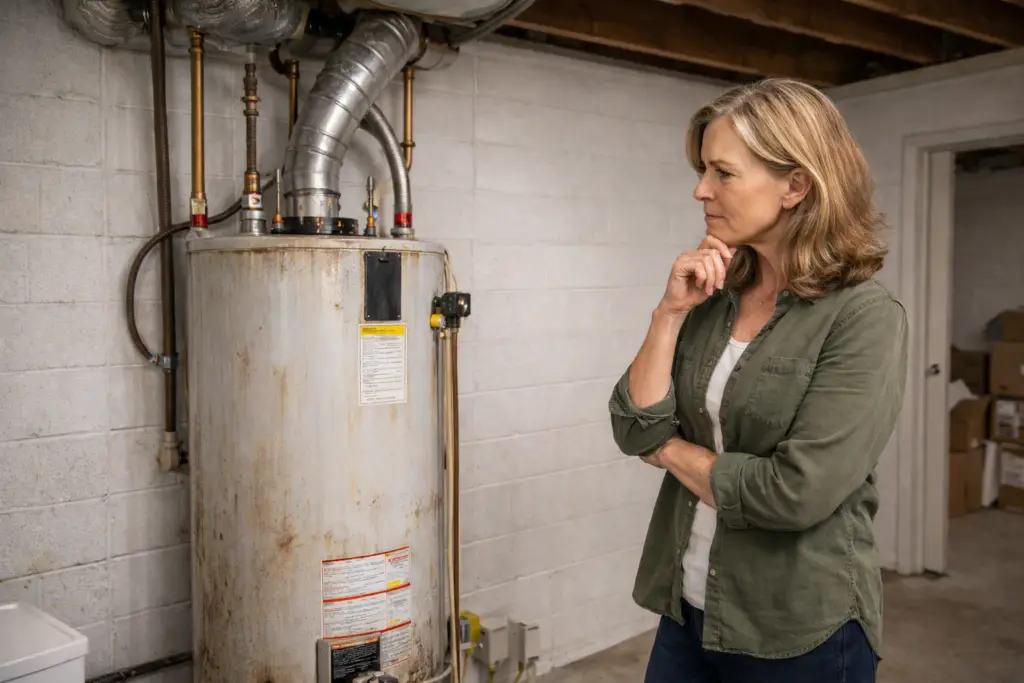
You probably don’t think about your water heater very often.
Until the shower turns cold halfway through.
Or you hear a strange rumble in the utility closet.
Or you realize the unit is 11 years old and quietly wonder:
Is this thing about to fail?
Understanding the water heater lifespan isn’t just about comfort. It’s about preventing water damage, protecting your budget, and replacing the system on your terms — not during an emergency.
Let’s walk through what happens inside a water heater over time, what shortens its life, how to choose the right size, and how to decide when replacement makes sense.
How Long Do Water Heaters Last?
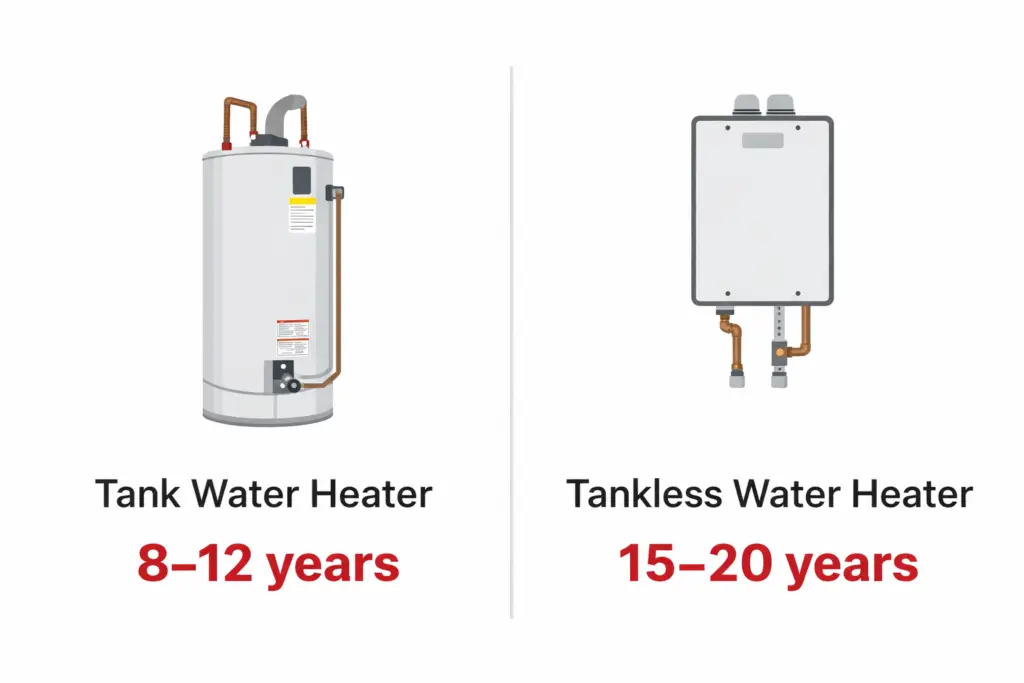
Average lifespan depends on type:
Traditional Tank Water Heater
- 8–12 years
- Lower upfront cost
- Most common in U.S. homes
- Gradual internal corrosion over time
Tankless Water Heater
- 15–20 years
- Higher upfront cost
- Requires consistent maintenance
- Lower risk of catastrophic flooding
But lifespan isn’t really about age.
It’s about corrosion. And corrosion always wins eventually.
Stage 1: Years 0–5 — The Stable Years
This is the quiet phase. Everything works.
Your system:
- Heats efficiently
- Delivers steady hot water
- Shows no leaks or rust
- Runs quietly
Most homeowners ignore their water heater at this stage — which is understandable.
But this is when simple maintenance habits can extend its life significantly.
What’s Happening Inside
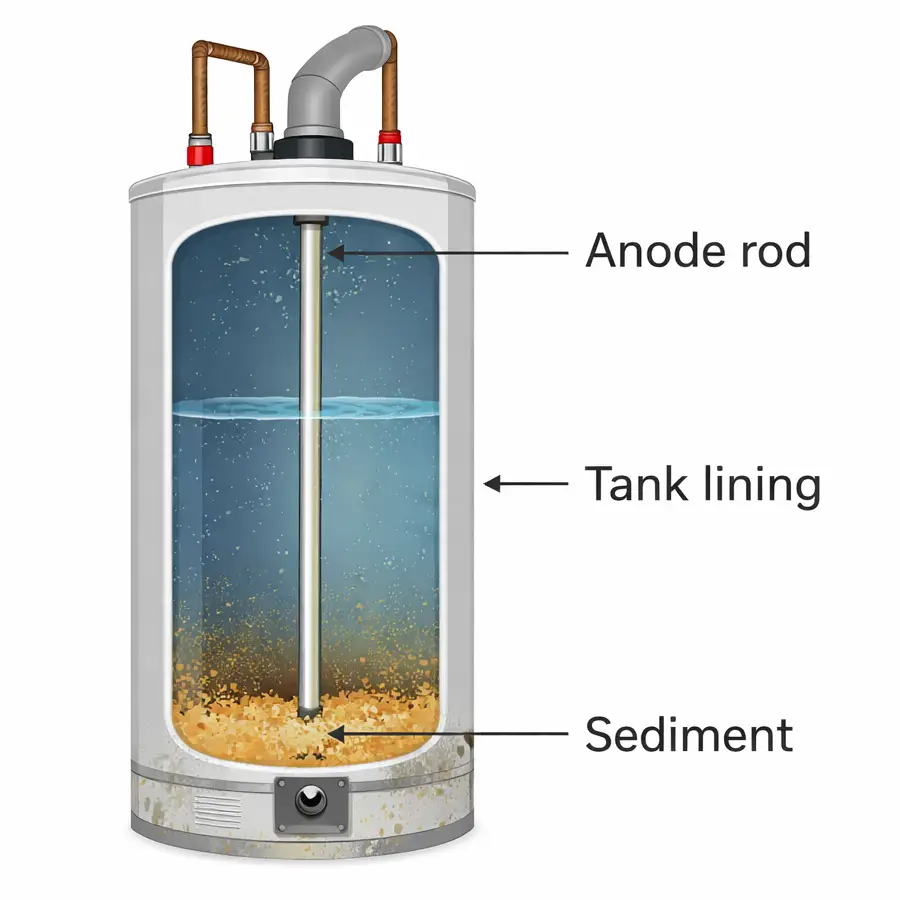
Minerals begin settling at the bottom of tank systems almost immediately. Over time, that sediment layer forces the heating element or burner to work harder.
More strain means more wear.
Pro Tip
Flush your tank once a year — especially if you live in a hard water area. This one habit can add years to a system’s life.
🛡️ AHA Property Defender Tip
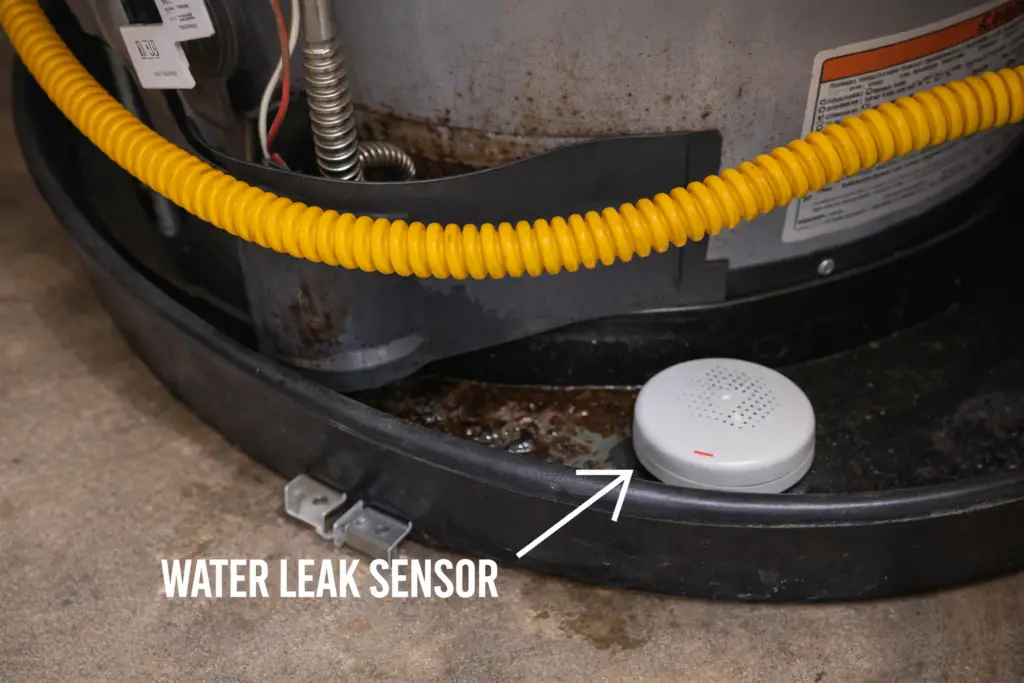
Place a water leak detector near your water heater — especially if it’s in an attic, closet, or finished basement. A small, inexpensive sensor can alert you before a minor leak turns into major damage.
Water damage is one of the most common homeowner insurance claims. Early detection protects both your home and your deductible.
Stage 2: Years 6–9 — Early Wear Signals
Subtle changes may begin:
- Hot water runs out faster
- Light rumbling or popping sounds
- Minor temperature fluctuations
- Slightly higher energy bills
These aren’t emergencies. They’re signals.
What’s Happening Inside
The anode rod — designed to attract corrosion — is likely nearing depletion.
Once it wears out, the steel tank becomes the corrosion target.
Replacing the anode rod every 3–5 years can meaningfully extend tank lifespan.
Watch Out
If rust-colored water appears from hot taps only, internal corrosion may already be advancing.
Stage 3: Years 10–12 — The Decision Window (Tank Systems)
Most tank systems reach end-of-life risk during this stage.
Warning signs include:
- Visible rust at the base
- Moisture or pooling near fittings
- Discolored hot water
- Inconsistent heating
- Higher energy bills
What’s Happening Inside
The tank walls are thinning. Sediment reduces effective capacity. You may think the tank is “too small,” when it’s actually aging.
When a tank fails, it can release 40–80 gallons of water quickly. In many homes, the water damage costs more than the replacement itself.
🏠 AHA Protection Note
Some insurance carriers ask about the age of major systems like water heaters. Units well beyond their typical lifespan may be viewed as higher risk. Knowing your system’s age — and replacing it proactively — can protect both your home and your coverage.
If your system is 10+ years old and showing symptoms, proactive replacement is often the smarter move.
Stage 4: 13+ Years — High-Risk Territory
Some tank water heaters reach 15 years.
Many don’t.
At this point, even if it seems fine, internal corrosion may be advanced.
If your water heater sits in:
- An attic
- A finished basement
- An interior closet
- An upper floor
The cost of waiting rises.
Replacing before failure becomes a risk-management decision — not just a mechanical one.
Is It Time to Replace? (Quick Decision Chart)
Walk through this calmly:
| Question | Yes | No |
| Is your tank water heater over 10 years old? | Lean toward replacement | Continue monitoring |
| Is the tank itself leaking? | Replace immediately | Continue evaluating |
| Are repair costs above 30–40% of replacement cost? | Replace | Repair likely makes sense |
| Is hot water running out faster than it used to? | Consider replacement | Monitor |
| Is the unit located in a finished space or attic? | Proactive replacement safer | Risk lower |
If you answer Yes to two or more, begin planning.
The goal isn’t squeezing every last month out of it — it’s avoiding preventable damage.
Traditional Tank Water Heaters: Good, Better, Best
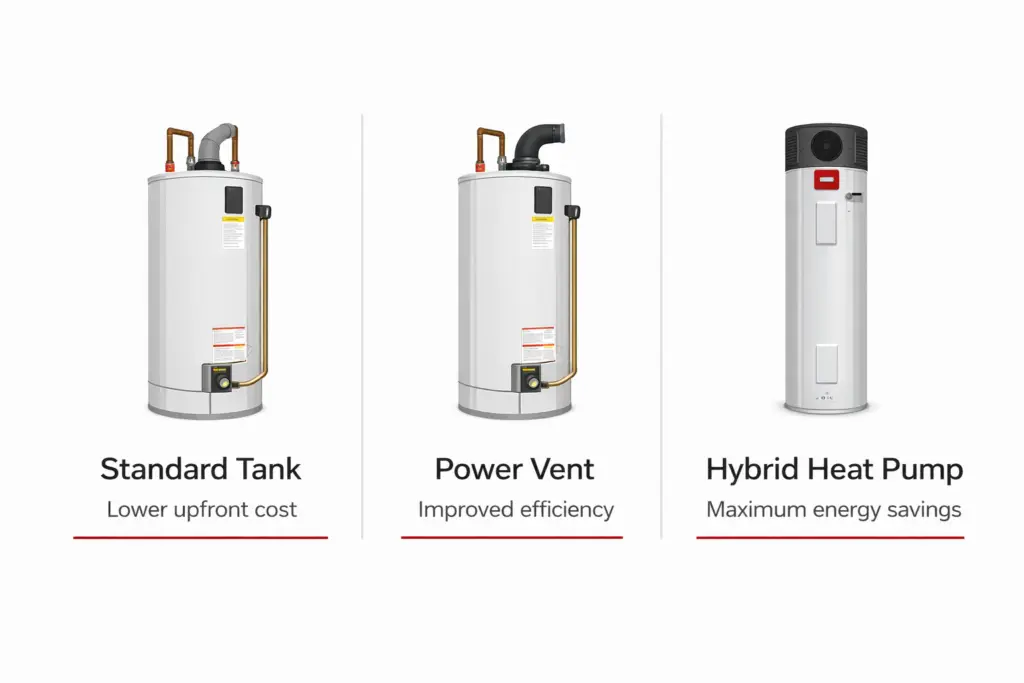
Not all tank systems are equal.
🟢 Good: Standard Gas or Electric Tank
- Basic efficiency
- 6–9 year warranty typical
- Lowest upfront cost
Reliable and affordable. Best for tight budgets or short-term ownership.
🔵 Better: High-Efficiency / Power Vent Models
- Improved insulation
- Higher efficiency rating
- 9–12 year warranty common
- Sealed combustion in many models
Higher upfront cost, lower operating expense.
🟣 Best: Hybrid (Heat Pump) Electric Water Heater
- Uses ambient air to heat water
- 2–3x more efficient than standard electric
- May qualify for rebates
- Lower long-term energy cost
Higher upfront investment. Strong long-term savings.
⚡ AHA Efficiency Insight
If your unit is over 10 years old, it’s likely far less efficient than today’s models. Even if it hasn’t failed, upgrading may reduce operating costs — especially in high-utility regions.
What Size Water Heater Does My Family Need?
Sizing mistakes are a common comfort issue.
Tank systems are measured in gallons, but what matters most is First Hour Rating (FHR) — how much hot water the unit can deliver during peak use.
General Sizing Guidelines
| Household Size | Tank Size |
| 1–2 people | 30–40 gallons |
| 3–4 people | 40–50 gallons |
| 5+ people | 50–80 gallons |
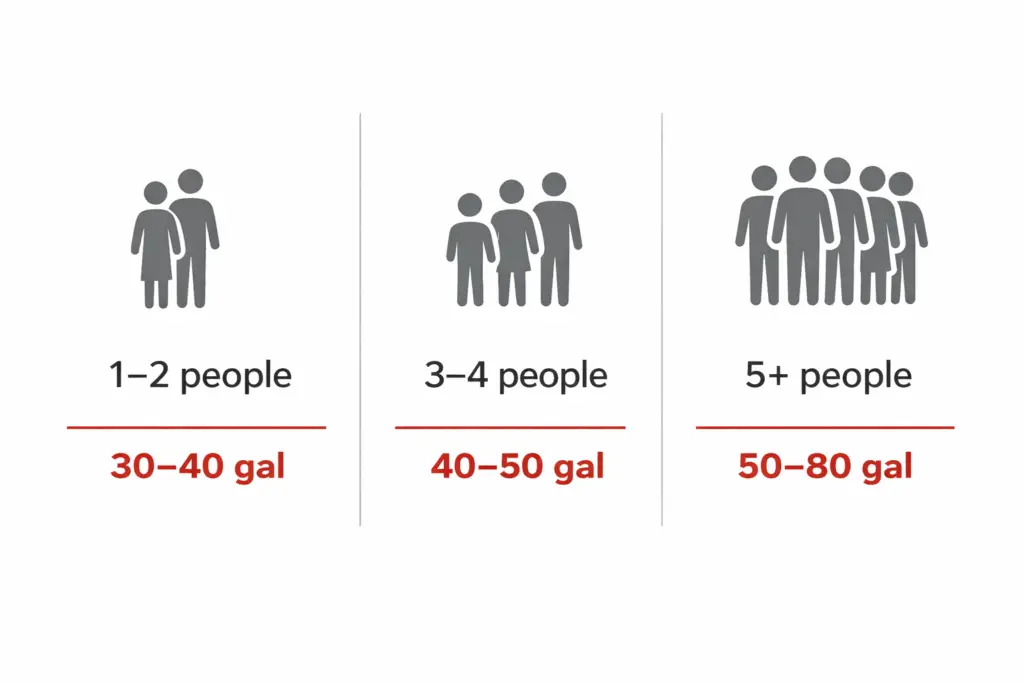
Lifestyle matters more than headcount.
If multiple showers run back-to-back or you use large soaking tubs, lean toward higher capacity.
Why You Might Be Running Out of Hot Water
Often it’s not tank size — it’s age.
Common causes:
- Sediment buildup reducing usable capacity
- Worn heating elements
- Failing dip tube
- Thermostat issues
Before upsizing, evaluate condition.
What Shortens a Water Heater’s Life?
- Hard water
- Skipping annual flushes
- High water pressure
- No expansion tank where required
- Ignoring small leaks
- Poor installation
Water chemistry alone can shorten lifespan by several years.
Safety Factors That Matter
Water heaters are fuel-burning or high-voltage systems.
Lifecycle-related safety considerations include:
- Proper venting for gas units
- Functional pressure relief valve
- Drain pan where appropriate
- Temperature set to 120°F to reduce scald risk and strain
- Clear space around the unit
When replacing, permits and inspections may be required depending on your location. Proper installation protects your home, safety, and insurance coverage.
What Does Replacement Cost?
The cost to replace a water heater depends on the type of system, venting requirements, and installation complexity. Here’s what most homeowners can expect:
Tank Water Heater
$1,000 – $2,500 installed
The most common and affordable option. Best for straightforward replacements where existing plumbing and venting are already in place.
- Unit: $400 – $1,200
- Installation: $600 – $1,500
- Typical scenario: Like-for-like replacement
Power Vent Water Heater
$2,000 – $4,500 installed
Uses a built-in fan to push exhaust gases through a sidewall instead of a chimney. Required when vertical venting isn’t available.
- Unit: $900 – $2,000
- Installation: $1,000 – $2,500
- Requires electrical outlet and PVC venting
- Typical scenario: Basement installs or homes without a chimney
Tankless Water Heater
$2,500 – $5,000+ installed
Heats water on demand with higher efficiency and unlimited hot water, but requires more extensive installation.
- Unit: $1,000 – $3,000
- Installation: $1,500 – $3,500+
- May require gas line upgrades or electrical changes
- Typical scenario: Upgrade from tank system
What impacts the cost:
- Fuel type (electric vs gas)
- Venting requirements (standard vs power vent)
- Location of the unit (garage, attic, closet)
- Electrical or gas line upgrades
- Local code requirements and permits
💰 AHA SmartSaver Tip
If your water heater is 8+ years old, begin setting aside $30–$50 per month into a “Major Systems Fund.” By the time replacement is needed, you’ll likely have most or all of the cost covered.
Planning ahead turns a surprise into a strategy.
Selling Soon? Timing Matters
If your water heater is 12+ years old and you plan to sell within the next year, replacing it proactively can:
- Improve inspection results
- Reduce buyer negotiation leverage
- Prevent last-minute deal stress
Sometimes replacing before listing protects both your timeline and your sale price.
The Bigger Picture
Water heaters rarely demand attention — until they do.
Understanding the water heater lifecycle helps you:
- Maintain it wisely
- Size it correctly
- Budget proactively
- Protect your insurance coverage
- Replace it before damage occurs
📋 AHA Organization Tip
Document your water heater’s install date, model number, warranty length, and last maintenance date.
Because confident homeownership isn’t about reacting.
It’s about planning.
And hot water should be boring.
Boring is good.