

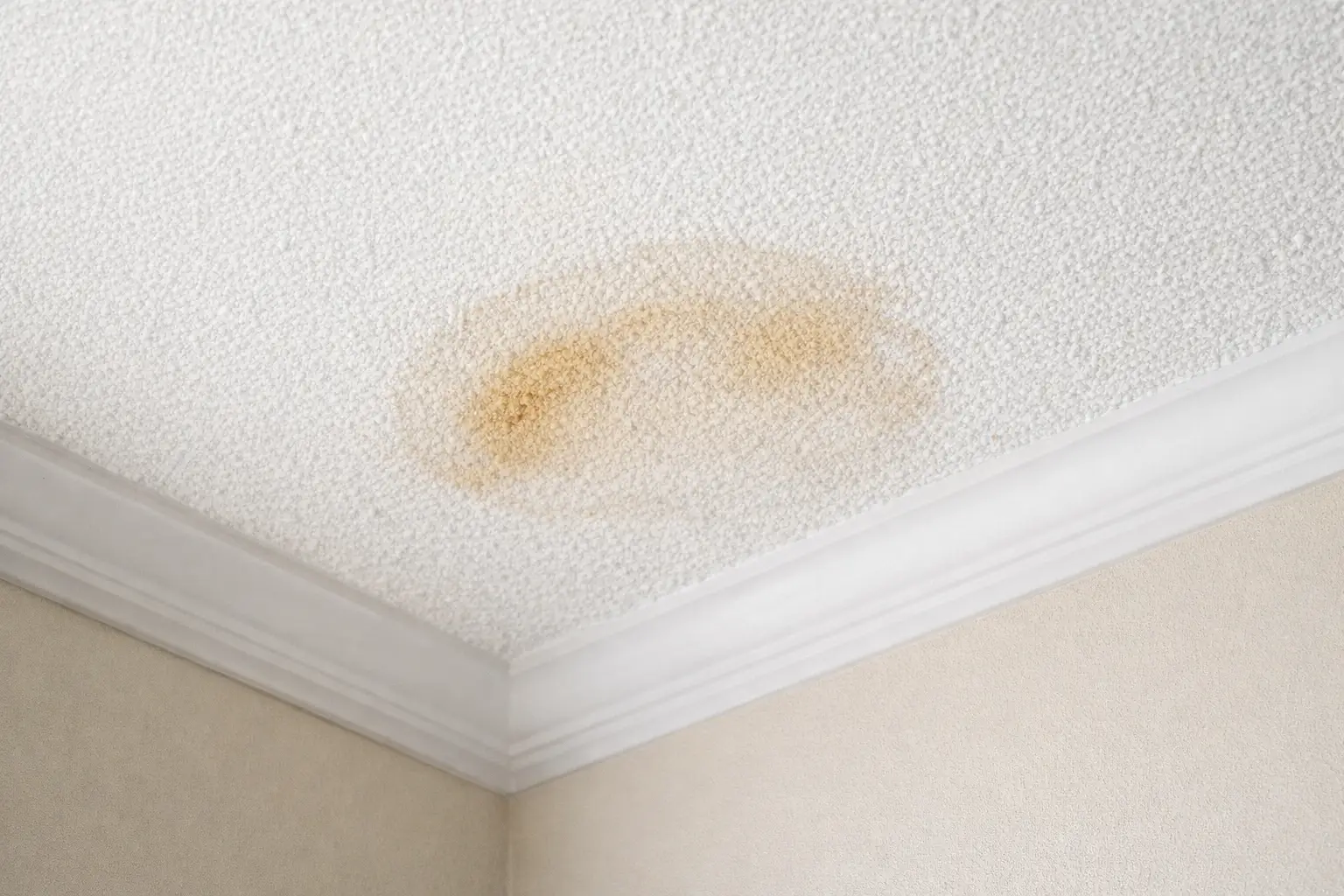
A stain near the ceiling. A slow drain. A water heater that is getting older. A crack you do not remember seeing before.
Homeownership has a way of turning small observations into a surprisingly long mental to-do list. And when several things need attention at once, the hardest question often is not How do I fix this? It is What should I deal with first?
That is where a simple way to prioritize home repairs can help.

AHA’s Protect–Prevent–Improve (PPI) Framework gives you three starting categories for organizing what you are seeing, what questions to ask, and what kind of next step may make sense. It is not a diagnosis, and it cannot tell you whether a specific condition is safe. Think of it as a filter for the decisions around a repair—not a substitute for qualified professional judgment.
When everything in your home starts competing for attention
The maintenance list rarely arrives one item at a time.
Maybe the gutters need work, one room never seems to heat evenly, the deck is looking tired, and a plumber has mentioned that your water heater is getting older. None of those observations comes with a neat label telling you what deserves your money first.
That uncertainty can make home decisions feel harder than they need to.
The goal is not to convince yourself that every issue is minor. It is also not to treat every imperfection as an emergency. The useful middle ground is to gather enough information to understand what you are dealing with and then make the next decision from there.
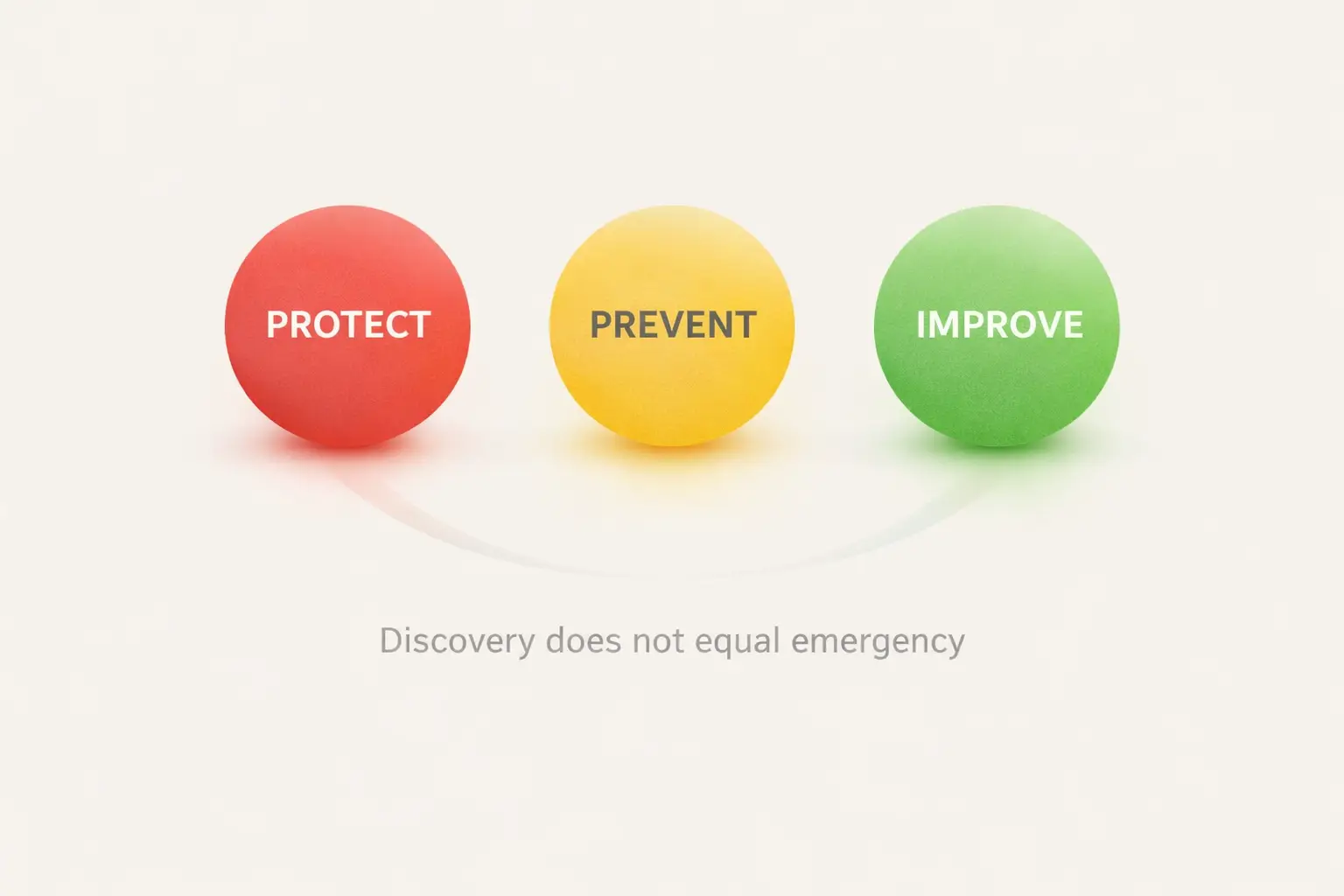
Protect–Prevent–Improve: three starting categories
The PPI Framework organizes home decisions around three questions:
Protect: Could this involve an immediate safety concern, active damage, or a condition that needs qualified evaluation?
Prevent: Is this something that should be monitored, maintained, repaired, or planned for before the condition changes?
Improve: Is this primarily about comfort, efficiency, appearance, convenience, or another elective improvement?
These are starting points, not automatic labels. The same symptom can mean very different things depending on its cause, severity, location, and how quickly it is changing.
A crack is a good example. Some cracks are cosmetic. Others deserve professional evaluation. A generic checklist cannot tell you which one you have.
Organize the question first, then get the information needed to make the decision.
Protect: start with safety and active damage
Protect is the place to start when something may affect the immediate safety of people in your home or when damage appears to be actively occurring.
This does not mean you need to diagnose the problem yourself. Knowing when not to investigate on your own is part of good home judgment.
If you suspect a gas leak, fire, carbon-monoxide exposure, or another immediate danger, leave the area and contact emergency services or the appropriate utility from a safe location. Do not operate switches or electrical equipment if you smell gas. The U.S. Consumer Product Safety Commission provides specific guidance for suspected gas leaks and carbon-monoxide hazards: CPSC gas-safety guidance.
Other concerns may not be obvious emergencies but can still warrant qualified evaluation. That can include possible structural movement, electrical problems, recurring water intrusion, plumbing conditions, or health and safety concerns you cannot confidently assess. Questions about insurance coverage are separate from assessing the condition; see Understanding water-damage coverage for related guidance.
The useful Protect question is not, “Can I prove this is dangerous?” It is: “Is there enough potential safety or active-damage concern that I should not make this call alone?”
Prevent: plan before a manageable issue gets harder
A large share of homeownership is neither emergency response nor renovation. It is planning.
Prevent is for issues that do not appear to require an emergency response but deserve attention, monitoring, maintenance, or professional input because waiting indefinitely could change the situation.
Picture a gutter that repeatedly overflows near the foundation. An aging home system that is still operating. Caulk beginning to fail around an exterior opening. A small plumbing issue whose cause you have not identified.
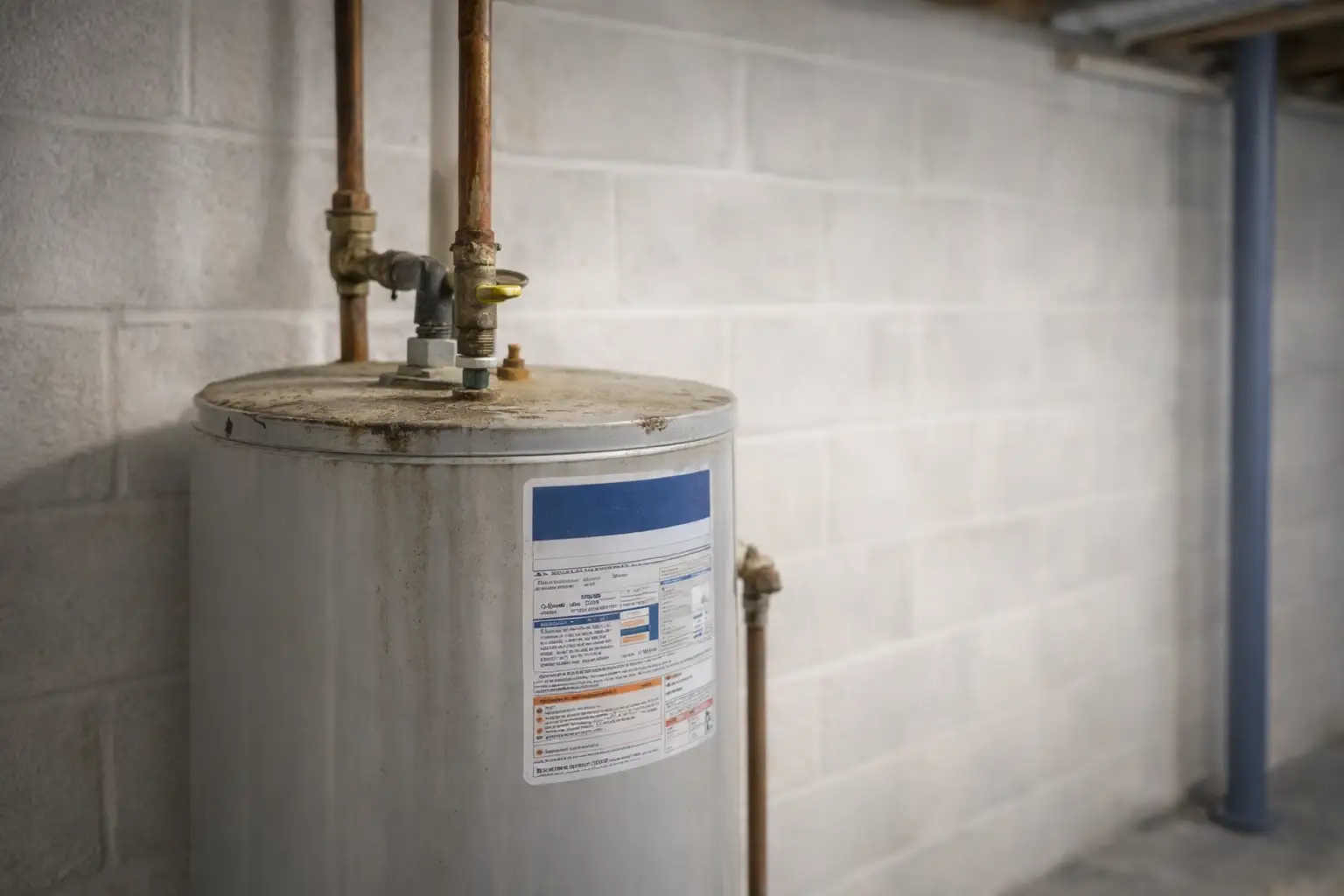
The right timeframe depends on the actual condition. Instead of assigning a universal deadline, ask what could change if you wait.
A qualified professional can help answer practical questions: Is the condition stable? What signs would indicate that it is getting worse? Is maintenance appropriate, or is a repair needed? What are the reasonable options? What could happen if the work is postponed?
Those answers are more useful than a generic lifespan or a rule based only on age. Installation, use, maintenance, climate, materials, and the actual condition all matter. For maintenance planning, see AHA’s Seasonal Home Maintenance Checklist. For equipment-planning context, see the HVAC lifespan guide; the actual condition of your system still controls the decision.
When a repair is not clearly an emergency, ask the professional evaluating it to separate three things: what needs attention now, what can be monitored, and what is an optional upgrade. That makes estimates easier to compare.
Improve: separate “would be nice” from “needs repair”
Home projects have a way of blending together. You start by looking at insulation because one room feels uncomfortable. Then you are discussing new windows. The window conversation leads to siding. Suddenly, a comfort issue has become a much larger renovation decision.
Improve gives elective projects their own lane.
Energy-efficiency projects, cosmetic changes, comfort upgrades, remodeling, and similar work may be worthwhile. But their priority should be evaluated differently from a suspected safety problem or active damage.
Ask why you are considering the project. Are you correcting a known problem? Preventing deterioration? Improving comfort? Reducing energy use? Changing how the house looks or functions?
Once the goal is clear, it becomes easier to compare the improvement against other demands on your budget.
Do not let the symptom pick the category for you
Specific symptoms do not automatically belong in a particular PPI category.
Take uneven heating. It might turn out to be something relatively straightforward, such as a blocked register or a maintenance issue. Or it could point toward a problem that requires professional assessment. Until you know more, uneven heating is an observation—not a diagnosis and not automatically a Prevent item.
The same is true of cracks, stains, slow drains, odors, moisture, noises, aging equipment, and many other things homeowners notice. First ask: What information am I missing?
Sometimes the next step is observation. Sometimes it is maintenance. Sometimes it is a qualified inspection or service call. The framework helps you organize that next question.
Ask better questions before approving major work
Different professionals may evaluate the same part of your home through different specialties. That can be useful: a roofer knows roofs, an electrician knows electrical systems, and a heating and cooling professional understands HVAC equipment.
Your job as the homeowner is not to become an expert in all of those systems. It is to understand the decision well enough to choose the next step.
Before approving significant work, ask what was observed, what is causing the concern, what needs to happen first, what alternatives exist, and what could change if you wait. When the scope or cost is substantial and the situation allows it, another qualified opinion can add useful context.
This is not about distrusting contractors. It is about understanding the problem separately from the proposed solution. If you are preparing to hire someone, the AHA SmartHire Contractor Kit can help you organize the questions, scopes, and agreement details to review before you sign.
Repair, maintain, or improve?
Maintenance helps keep a component or system working as intended. A repair addresses something that is not working properly or has deteriorated. An improvement changes or upgrades what you already have.
Those lines can overlap, but distinguishing them can keep the scope from quietly expanding. Fixing a specific source of water entry, for example, is different from replacing an entire exterior finish because you would also like to update its appearance. Both may eventually be reasonable projects. They simply answer different homeowner needs.
If you are weighing a larger repair or replacement, see AHA’s verified Repair vs. Replace guide.
Homeownership is pacing, not perfection
There will almost always be something you could do to a house. Paint ages. Equipment wears. Sealants fail. Preferences change. Materials weather. Maintenance comes around again.
A running list does not automatically mean your home is failing. It means your home requires decisions over time.
The useful question is not, “How do I get everything done?” It is, “What matters now, what should I plan for, and what information do I need before deciding?”
That is the purpose of Protect–Prevent–Improve: not to tell you from a webpage that a crack is harmless, a water heater has a precise remaining life, or a repair can safely wait. It is there to help you sort the decision clearly.
A simple PPI check when something new comes up
When you notice a new home issue, start with four questions:
- Could this involve immediate danger or active damage that requires me to get to safety or call for qualified help?
- What could change if I wait, and do I need a professional to answer that?
- Am I dealing with maintenance, a repair, or an elective improvement?
- What information am I missing before I spend money or make a larger decision?
You may not know all four answers immediately. That is fine. Identifying the unanswered question is often the most useful next step.
Know what matters. Know what can wait. Know what to ask next.
Good homeownership does not require treating every repair like a crisis or knowing how to diagnose every system yourself. It means recognizing when safety comes first, planning for the work that deserves attention, and keeping optional improvements in perspective.
That is what the Protect–Prevent–Improve Framework is designed to help you do.
Important safety note: This framework helps organize questions; it does not determine whether a condition is safe or diagnose a home problem. Leave immediately and contact emergency services or the appropriate utility for suspected gas leaks, fire, carbon monoxide, or other immediate danger. Consult a qualified professional when structural, electrical, plumbing, health, or safety concerns may be involved.
Ownership is pacing—not perfection.
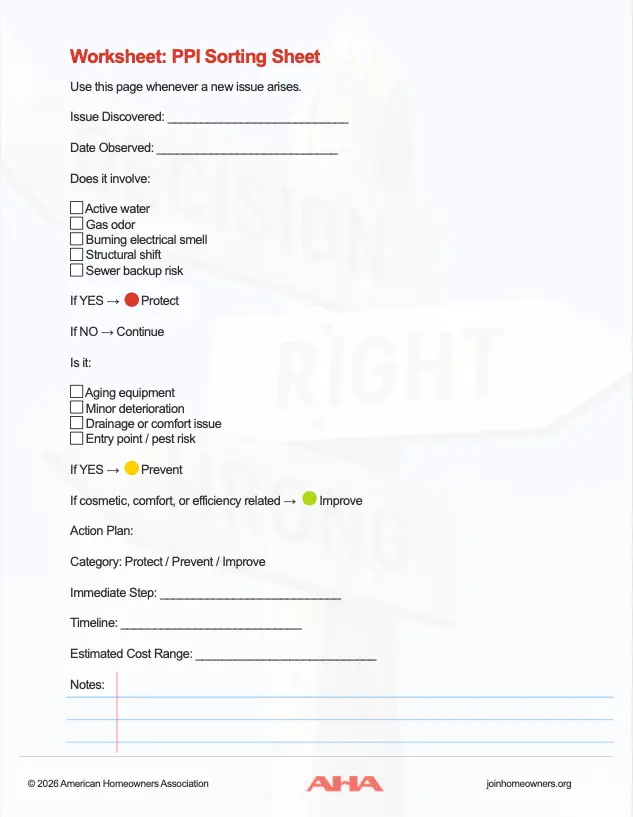
Explore the AHA Protect–Prevent–Improve Framework for the related worksheet and decision prompts.
For broader annual planning, AHA HomeCheckup asks for a few planning details and provides an Annual Snapshot with priority items and a maintenance rhythm.
AHA is the national membership that guides and protects homeowners.
Explore more homeowner tools and resources
For checklists, playbooks, and tools for maintenance, repairs, emergencies, insurance, and other homeownership decisions, explore AHA’s Checklists, Playbooks & Tools.