
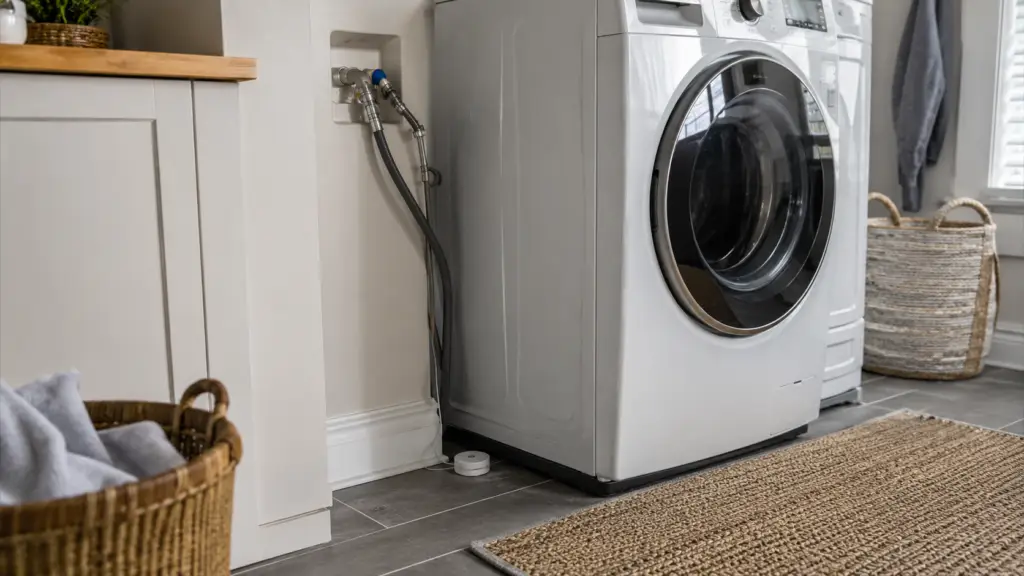
You leave home Friday afternoon for a weekend away. Sometime Saturday, a washing-machine hose starts leaking. Water begins spreading across the laundry-room floor, and no one is there to see it.
That is exactly where a smart water leak detector can help.
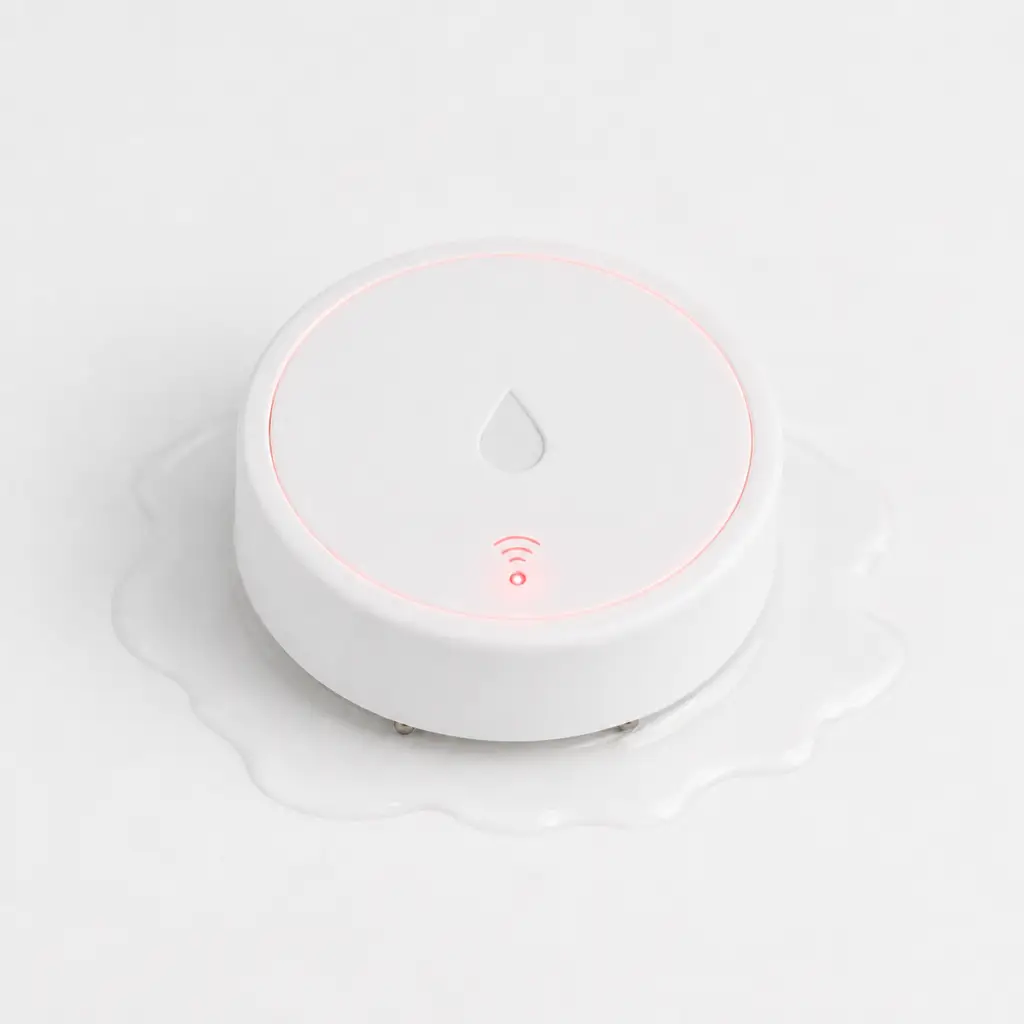
A basic leak sensor can be a smart first step, especially near a washing machine, water heater, sink, or another spot where a leak could go unnoticed. Even a simple alarm can help you catch a problem sooner.
From there, homeowners can choose additional levels of protection depending on their budget, the layout of the home, and how quickly someone could respond to a leak. Some systems add phone notifications. Others monitor water use across the whole house. More comprehensive setups can combine remote leak sensors with whole-home monitoring and an automatic shutoff valve.
Those added capabilities generally come with higher equipment and installation costs. The goal is not to buy the most advanced system available. It is to choose the level of protection that makes sense for your home and the potential consequences of an unnoticed leak.
Before you buy, it is also worth checking with your homeowners insurance company. Some insurers may offer discounts or other incentives for qualifying leak-detection or automatic shutoff systems, and requirements can vary.
Do Smart Water Leak Detectors Really Work?
Yes, but what they can accomplish depends on the type of protection you choose.
The U.S. Environmental Protection Agency (EPA) says leak-detection and flow-monitoring devices can help identify leaks or irregular water use (EPA.gov). Depending on the device, the system may alert the homeowner or activate an automatic shutoff valve.
A leak detector cannot keep a washing-machine hose from splitting or stop a plumbing fitting from failing.
What it can do is help you discover the problem sooner.
Add automatic shutoff, and some systems can also stop the home’s incoming water supply when certain conditions are detected.
That distinction matters because water damage and freezing remain common causes of homeowners property claims. Insurance Information Institute data for 2019 through 2023 shows water damage and freezing claims occurred at a frequency of about 1.5 claims per 100 insured house-years (iii).
Early detection cannot guarantee that you will avoid damage. But the sooner you know something is wrong, the sooner you or the system may be able to respond.
How Leak Sensors and Automatic Shutoff Systems Work Together
As with any smart-home upgrade, start with the problem you want to solve, not the gadget.
There are several ways to add leak protection to a home, and they do not have to be all-or-nothing.
Point sensors are the simplest place to start. You put them near likely leak locations such as a washing machine, water heater, sink, toilet, dishwasher, or refrigerator water line. When water reaches the sensor, it can sound an alarm. Connected versions can also send a notification to your phone.
Whole-home monitors watch what is happening within the plumbing system. Depending on the technology, they may monitor water flow, pressure, or water-use patterns and look for behavior that could indicate a leak.
Automatic shutoff valves add another level of protection. Installed on the home’s water supply, they can close the line when the connected system determines that the water should be stopped.
Some systems bring these components together.
EPA consumer guidance notes that point-of-use moisture sensors can be paired with an in-line automatic shutoff valve. That means water detected near a washing machine or water heater may be able to trigger a response at the main water supply, depending on the system and its settings.
Current products illustrate how this works. Moen’s system allows remote leak detectors to work with its main-line Flo Smart Water Monitor and Shutoff. A remote detector can be configured to trigger the shutoff, while the main-line device also monitors water pressure and flow.
Resideo offers a similar arrangement in which remote L1 leak detectors can work with its L5 automatic shutoff valve. Phyn uses whole-home plumbing monitoring and offers automatic shutoff through its Phyn Plus system.
These examples are useful because they show that a leak sensor and an automatic shutoff do not necessarily represent competing choices.
A homeowner might start with a few targeted sensors. Another might want remote alerts. Someone who travels frequently or has a second home might decide that whole-home monitoring and automatic shutoff justify the additional cost.
The useful question is:
How much protection does your particular home need?
Why Different Types of Detection Can Work Together
Point sensors and whole-home monitors look for different signs of trouble.
A sensor behind your washing machine has a simple advantage. It knows when water has physically reached that location.
If a hose connection begins leaking onto the floor, the sensor does not need to determine whether your household water use looks unusual. It detects moisture where moisture should not be.
But it only knows what is happening near that sensor.
A whole-home monitor takes a broader view. Instead of waiting for water to reach a particular spot, it watches characteristics of the plumbing system, such as flow or pressure, for patterns that may indicate a leak.
Combining those approaches can give an integrated system more than one way to recognize a potential problem.
That does not make a basic sensor inadequate. A well-placed sensor may be exactly what a homeowner needs for a particular risk.
The additional technologies simply expand the area being monitored or add another type of response.
Pro Tip: When comparing leak protection, ask two questions: How will it know there is a problem? And what happens when it finds one? Those answers are more useful than the word “smart” on the box.
Where Should You Put Water Leak Sensors?
You do not necessarily need a sensor next to every pipe.
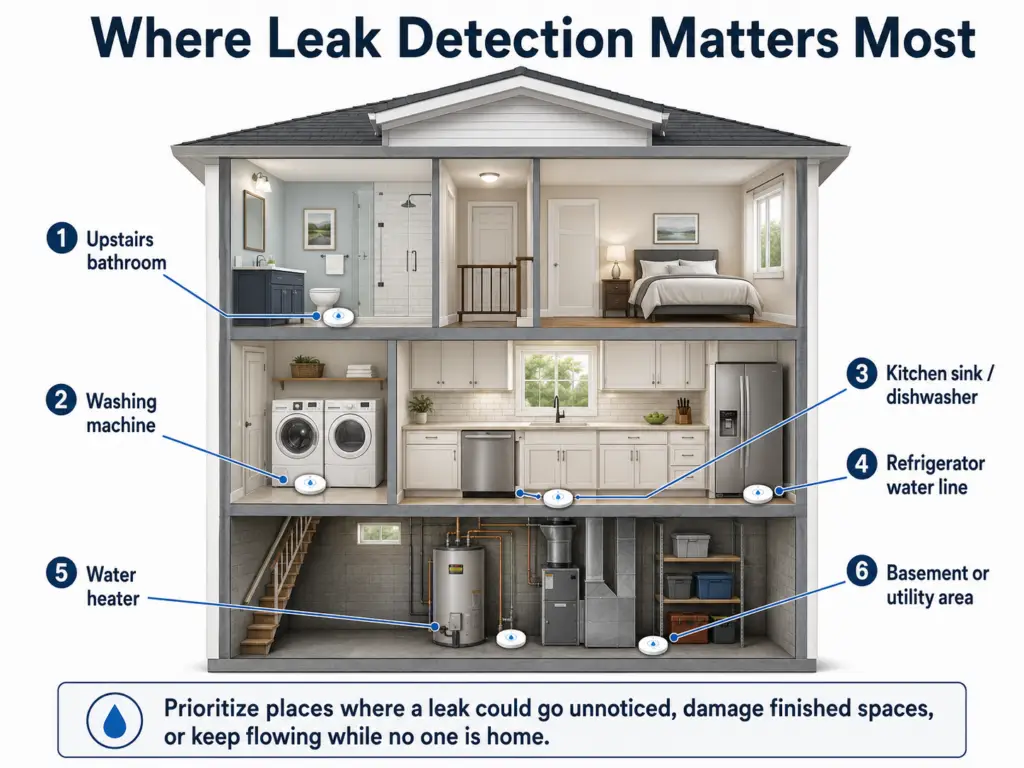
Start with the places where a leak could go unnoticed, where water could reach expensive finishes or belongings, or where you might not be able to respond quickly.
A washing machine is a good example because its supply hoses and connections usually sit out of sight. A water heater in a basement or utility room is another.
Depending on your home’s layout, sensors may also make sense near dishwashers, sinks, toilets, refrigerators with water lines, and other fixtures.
Location still matters if you have whole-home monitoring.
A main-line system may watch water behavior throughout the plumbing network, while a point sensor provides direct moisture detection in a particularly vulnerable location. Some integrated systems allow those remote sensors to communicate with the same automatic shutoff.
Consider two similar leaks.
One reaches unfinished concrete in a utility room you enter every morning. The other starts behind an upstairs washing machine while you are away, with finished rooms below it.
The plumbing failure may be similar. The potential consequences are not.
If you are starting with only a few sensors, put them where early warning would matter most.
What Automatic Water Shutoff Adds
A phone alert can be extremely useful when you can act on it.
Suppose a sensor tells you there is water behind the washing machine while you are home. You may be able to shut off the supply valves within minutes.
Now suppose the same alert arrives while you are several hours away.
Knowing about the leak gives you a chance to call a neighbor, family member, property manager, or plumber. But if the leak is connected to a pressurized supply line, water may continue flowing until someone can reach the house.
An automatic shutoff system adds the ability to intervene without waiting for someone to get there.
Depending on the equipment, shutoff might be triggered by a connected moisture detector or by abnormal water behavior identified by whole-home monitoring.
That added capability can be particularly valuable for homeowners who travel frequently, leave a second home unattended, or have plumbing above expensive finished spaces.
It also generally means more expense and complexity than placing a few standalone sensors around the house.
That tradeoff is worth considering rather than assuming every homeowner needs automatic shutoff.
Setup Matters With an Automatic Shutoff System
If you choose a more comprehensive system, installation is only part of the job.
Different products use different rules to decide when the water should be shut off. Some allow homeowners to control whether individual remote sensors can trigger the main valve.
For example, Moen allows users to link or unlink individual leak detectors from its automatic shutoff function.
That means you should understand how your particular system is configured, what conditions trigger shutoff, and what happens if internet service or power is interrupted.
Follow the manufacturer’s instructions for setup, testing, batteries, maintenance, and any recommended professional installation.
You want to know how the system will behave before the day you actually need it.
What Smart Leak Protection Cannot Prevent
Even a comprehensive leak-detection and shutoff system has boundaries.
A valve on your main domestic water supply can stop water coming through that line. It cannot stop rain entering through a roof, groundwater entering a basement, stormwater intrusion, or outside flooding.
A point sensor has limits, too. If water never reaches the sensor, that particular sensor cannot detect it.
Whole-home monitoring has different limitations because it is looking at plumbing behavior rather than physically checking every surface for moisture.
Power and connectivity requirements also vary. Some devices need Wi-Fi for alerts, software features, setup, or remote control. Others may retain certain local functions when internet service is unavailable.
Before buying a system, find out what continues to work during a Wi-Fi or power outage.
Smart leak protection should also complement regular home maintenance rather than replace it.
You still want to watch for deteriorating supply hoses, corrosion, water stains, damp cabinets, musty odors, and unexplained changes in water use.
Watch Out: Leak detection does not change what your homeowners insurance policy covers. Sudden plumbing damage, gradual leaks, sewer backup, and outside flooding may be treated differently. AHA explains those distinctions in Understanding Water Damage Coverage.
How Much Leak Protection Does Your Home Need?
There is no single answer for every house.
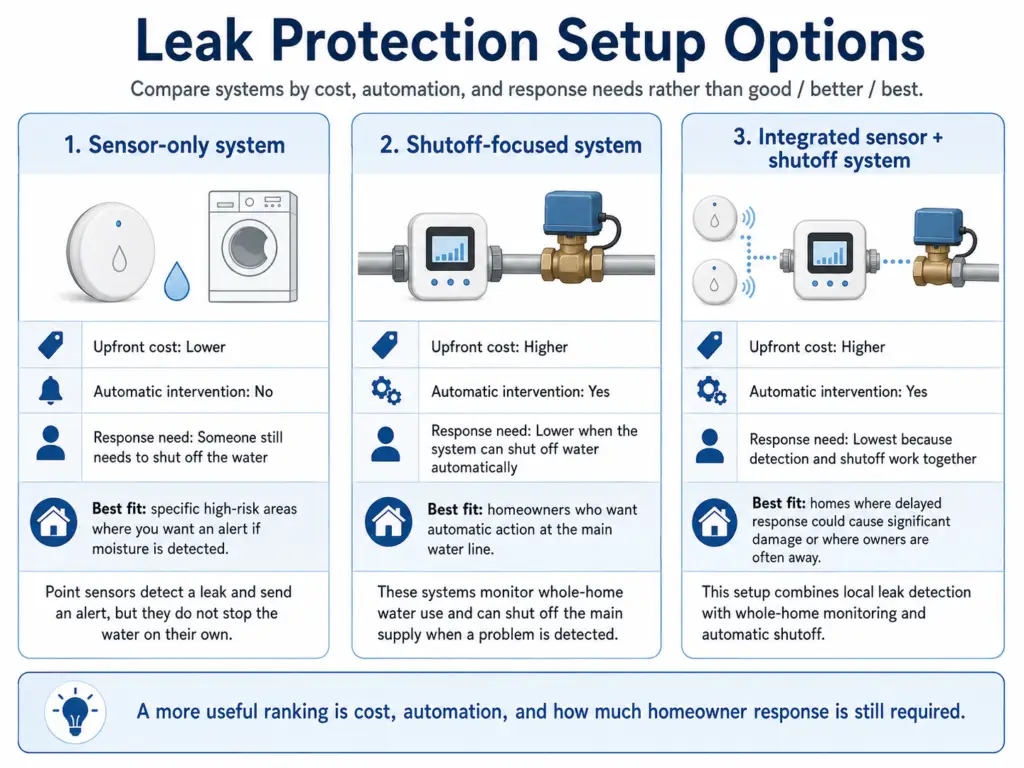
A sensor-only system can be a sensible starting point if you want lower-cost protection in specific high-risk areas, such as near a washing machine, water heater, or sink. These systems can alert you when moisture is detected, but someone still needs to shut off the water.
A shutoff-focused system may make more sense if your main concern is water continuing to flow before anyone can respond. These systems monitor water flow or other plumbing activity and can automatically shut off the main supply when a potential leak is detected.
An integrated sensor and shutoff system offers the broadest protection of these three options by combining local moisture detection with whole-home monitoring and automatic shutoff. That can be especially useful in homes where a delayed response could lead to significant damage or where the owners are often away.
The right choice comes down to cost, how much automation you want, and how much homeowner response is still required.
The question is not whether more technology is always better. It is whether the additional protection is worth the additional cost for your home.
Check With Your Insurance Company Before You Buy
There is another reason to make this phone call before choosing a system.
Some homeowners insurance companies may offer discounts or other incentives for qualifying water leak-detection or automatic shutoff equipment.
But do not assume that any leak detector qualifies.
An insurer may have requirements for the type of device, automatic shutoff capability, professional installation, monitoring, or other features. Programs also vary by insurer and location.
Ask your insurance company:
- Do you offer a discount or credit for water leak-detection equipment?
- Does the system need automatic shutoff to qualify?
- Are particular devices or certifications required?
- Do you need proof of professional installation?
If your insurer offers an incentive, that information can become part of the cost calculation before you decide which level of protection makes sense.
AHA covers this broader topic in Unlock Smart Home Savings: Rebates and Insurance Incentives.
What to Look for Before You Buy
Once you know the level of protection you want, comparing products becomes easier.
Focus on four practical questions.
- How does it detect trouble? Does it use point moisture sensors, whole-home monitoring, or both?
- How does it notify you? Does it sound an alarm, send remote alerts, or provide both?
- Can it respond automatically? If it includes shutoff, find out what triggers the valve and whether remote sensors can activate it.
- What does it require from you? Check power sources, batteries, Wi-Fi requirements, subscriptions, testing, maintenance, plumbing compatibility, and installation requirements.
A small point sensor may simply sit on the floor and run on batteries. A main-line monitoring or automatic shutoff system may involve your plumbing and require professional installation.
Do not pay for features simply because they are available.
Choose the ones that solve the problem you actually have.
Choosing the Right Leak Protection for Your Home
Smart water leak protection does not have to begin with a whole-home system.
A few well-placed sensors can provide useful early warning at a relatively accessible starting point. Connected sensors can add remote alerts. Whole-home monitoring can watch plumbing behavior beyond the locations covered by individual sensors. Automatic shutoff can add another layer when you want the system to respond without waiting for someone to reach the house.
And in some systems, those components can work together.
The right setup depends on your home, your budget, how often the house is unattended, and what an unnoticed leak could damage.
Before buying, identify the places you most want to protect. Think about how quickly someone could respond. Then check with your insurance company to see whether a qualifying system could also reduce your premium.
The goal is not the most elaborate setup.
It is enough protection to help you catch a problem sooner and, when it makes sense for your home, stop the water before more damage occurs.
For more ways to evaluate connected home technology based on the problem it actually solves, see AHA’s guide to Smart Home Upgrades That Can Actually Save Homeowners Money.
For more practical guidance to help you protect your home, manage costs, and make confident homeowner decisions, explore AHA Membership.