
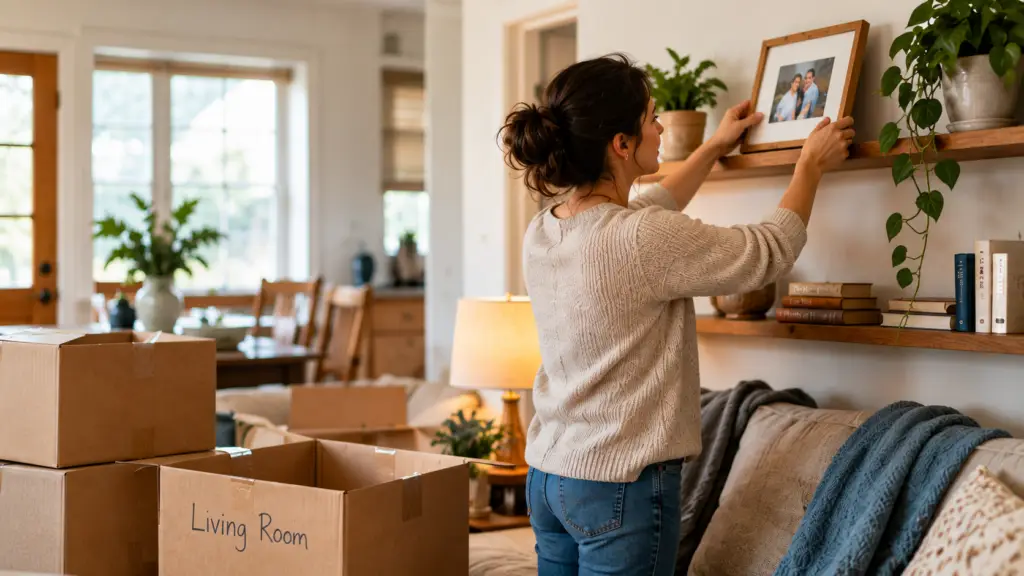
You’ve unpacked most of the boxes. The utilities are on, the kitchen works, and you finally know which light switch controls what. But the house may still feel a little like someone else’s place.
That feeling does not mean you bought the wrong house or need to finish every room right away. Learning how to make a house feel like home usually has less to do with completing a decorating plan and more to do with letting your routines, memories, and preferences take over.
You do not need to choose a style overnight. You do not need matching furniture. You definitely do not need to renovate just because the rooms still feel unfamiliar.
A house starts feeling like home through repeated, personal signals and useful routines, not through one perfect design choice or a rushed shopping list. Start where you spend time. Notice what feels awkward. Bring something familiar into view. Then live with the change long enough to learn what the house actually needs from you.
Why a New House May Not Feel Like Home Right Away
A house can be beautiful and still feel strangely neutral when you first move in. It may be clean, functional, and full of potential, while still feeling like a place you are borrowing.
Part of that is practical. You are stepping into a space shaped by someone else’s habits. Maybe the previous owners used the dining room every night, but your family naturally gathers around the kitchen island. Maybe they loved cool gray walls, while you keep gravitating toward warmer colors. Maybe the living room looks perfectly fine, but you have not figured out where you actually want to sit at the end of the day.
That mismatch between the house and your everyday life is often what makes a new place feel unfamiliar.
The first few weeks or months are useful because you are still learning the house. Where does the afternoon sun land? Which door do you actually use? Where do shoes pile up? Which room feels too dark at night? Which chair does everyone avoid even though it looks good in the room?
Those observations are not failures. They are information.
The goal is not to make the whole house feel finished. The goal is to notice where the house and your life are not quite meeting yet, then make one small adjustment at a time.
Start With Everyday Life
Before you shop for anything, pay attention to your routines.
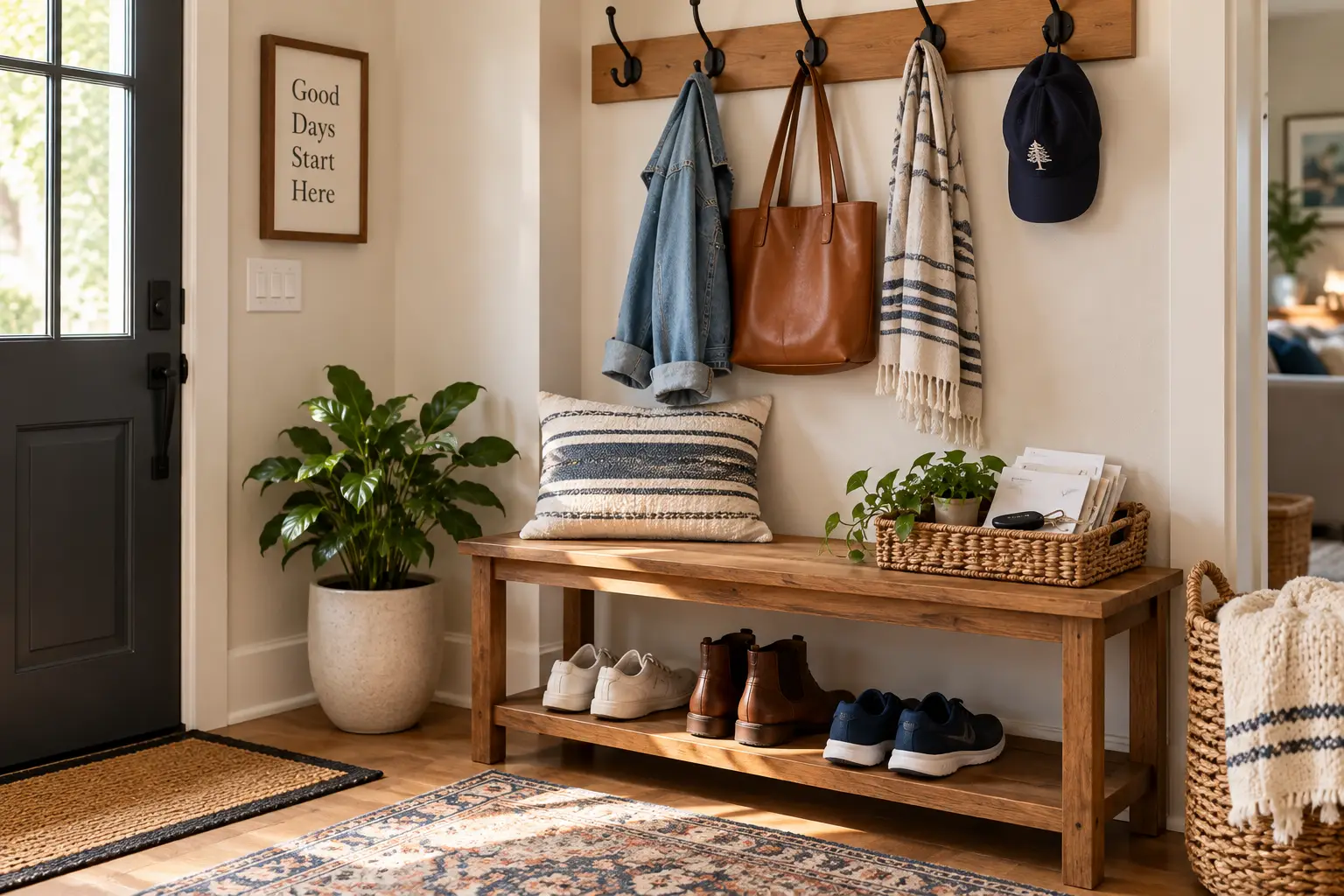
Suppose backpacks, keys, and mail keep landing on the same corner of the kitchen counter. It is easy to call that clutter. But it may also be useful information: your home needs a better landing zone.
A small tray, a few hooks, or a basket near the door might solve the problem better than an elaborate entryway makeover. The point is not to copy someone else’s entryway. The point is to create a place that matches how your household actually comes and goes.
The same idea works throughout the house.
Maybe you always carry your coffee into the room with the best morning light. Maybe everyone ends up sitting in the kitchen even though the living room has more furniture. Maybe you read in bed because the chair in the corner does not have a lamp nearby.
These little patterns are worth noticing because function is one of the most personal forms of design. A room that supports your actual habits will usually feel more like yours than a room that looks finished but asks you to work around it.
Sometimes the fastest way to make a house feel familiar is not to change the room at all. It is to restart an ordinary routine.
Make the breakfast you usually make on Saturday. Set up the coffee station the way you like it. Put the dog’s bed near the place where everyone naturally gathers. Find a regular spot for the shoes you wear every day.
Familiar habits give a new space something it does not have yet: your history in it.
Make One Everyday Room Feel Settled First
One of the easiest ways to make a new house feel overwhelming is to look at every unfinished room at once.
Narrow the job.
Choose the room that affects your day the most and make that space feel more comfortable first. It might be your bedroom, living room, kitchen, home office, or the entry you use every day. There is no rule that says you have to start with the room guests see first.
Give that room a plain-language job. “A place to read after dinner” is more useful than “a nicer living room.” “A calmer place to get ready in the morning” is more useful than “finish the bedroom.” A clear job helps you decide what actually matters.
If your bedroom still feels temporary, familiar bedding, a bedside lamp, and a real place for the laundry basket may do more for your sense of home than decorating the front hallway.
If the living room is where everyone lands after dinner, focus there. Move the chairs until conversation feels easy. Bring in the blanket everyone reaches for. Put a lamp where you actually need light. Clear enough table space for a book, a drink, or the remote.
You are not trying to finish the room. You are trying to make daily life in it feel easier.
A useful test: experience the room from the place where you actually use it, not just from the doorway. Sit in the chair. Reach for the lamp. Walk through the room with a bag in your hand. See what the room is asking you to work around.
Once one part of the house feels settled, the rest tends to feel less urgent. And once the room works better, you can start giving it some history: your history.
Bring In Things That Already Tell Your Story
You do not have to buy a roomful of new things to personalize your home. Some of the strongest signs that the house belongs to you may already be packed in a box somewhere.
Maybe it is the box of books that has been sitting unopened for two weeks. The minute those familiar spines land on a shelf, the room looks a little less borrowed. Or maybe it is a framed family photo, a quilt from a grandparent, your child’s artwork, an old side table from a first apartment, or the bowl you always pull out when people come over.
They help because you already have a history with them.
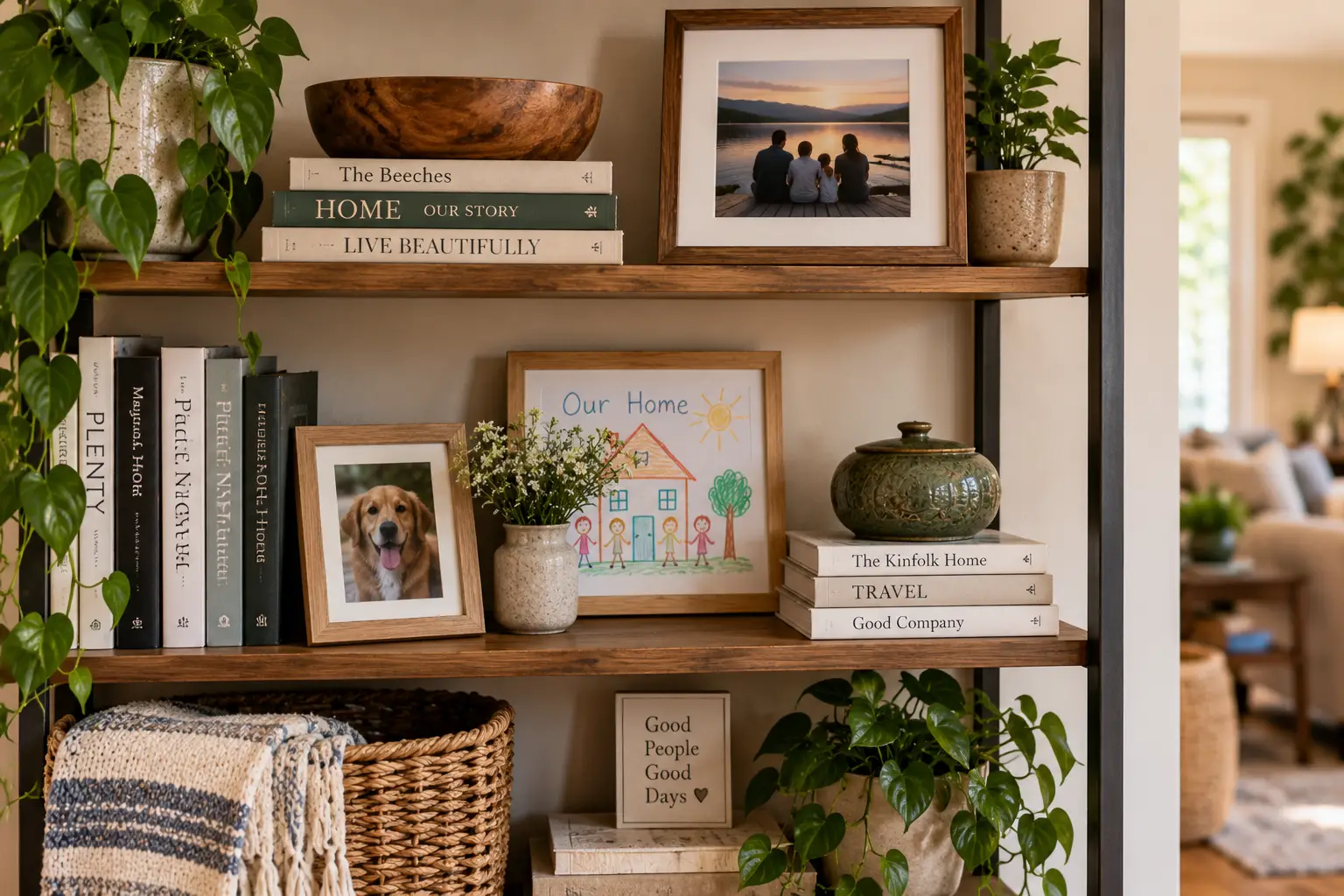
You do not need to display everything you own. A few meaningful pieces placed intentionally can have more impact than a room full of generic decor.
Try starting with one shelf, wall, or tabletop. Instead of asking, “What should go here?” ask, “What would I be happy to see here every day?”
That subtle shift keeps you from decorating for an imaginary audience. It also helps you avoid buying things simply because a room feels empty.
If you share the house, make room for more than one person’s preferences. A home can look collected and personal without looking perfectly coordinated. Sometimes the mix is what makes it feel real.
Use Light, Scent, Sound, and Texture With Restraint
Comfort is easier to judge from the place where you sit, stand, or rest than from a photo of the room. Before adding anything, pay attention to how the room feels during the hours you use it.
With light, try the options already available. Compare your lamps with the overhead lighting. Open or close the window coverings during the part of the day you actually use the room. If you are reading, check whether you can comfortably see the page. A dim room is not necessarily your preference just because it looks inviting somewhere else.
Scent is optional, not a finishing requirement. If you enjoy fragrance, start lightly and consider the people who share the space. Choosing no added scent is an equally personal choice, especially if you are also thinking about fresh air, cleaning products, or indoor air quality. The EPA’s Care for Your Air guide is a useful reference if you want to think about comfort and air quality together.
Sound deserves the same flexibility. Background music might suit you while cooking but feel distracting during dinner. A quiet bedroom might matter more than a more decorated one. Try changing what is playing, or whether anything is playing, before assuming you need to add another layer.
For texture, start with what you touch: your usual seat, bedding, a throw, a rug under your feet, or a towel you reach for every morning. If something looks right but feels unpleasant to use, that is useful information.
Change one element at a time so you can tell which adjustment you actually prefer.
Try Reversible Changes Before Permanent Ones
When a house feels impersonal, it is easy to assume something major has to change. Usually, it does not.
Before you make a permanent change, try something you can move, swap, or undo.
That might mean rearranging furniture before buying more of it, adding a lamp before changing the room’s lighting, or living with a few paint samples before committing to every wall. It might also mean moving art from one room to another, testing a rug in a different spot, or clearing a surface before deciding you need more storage.
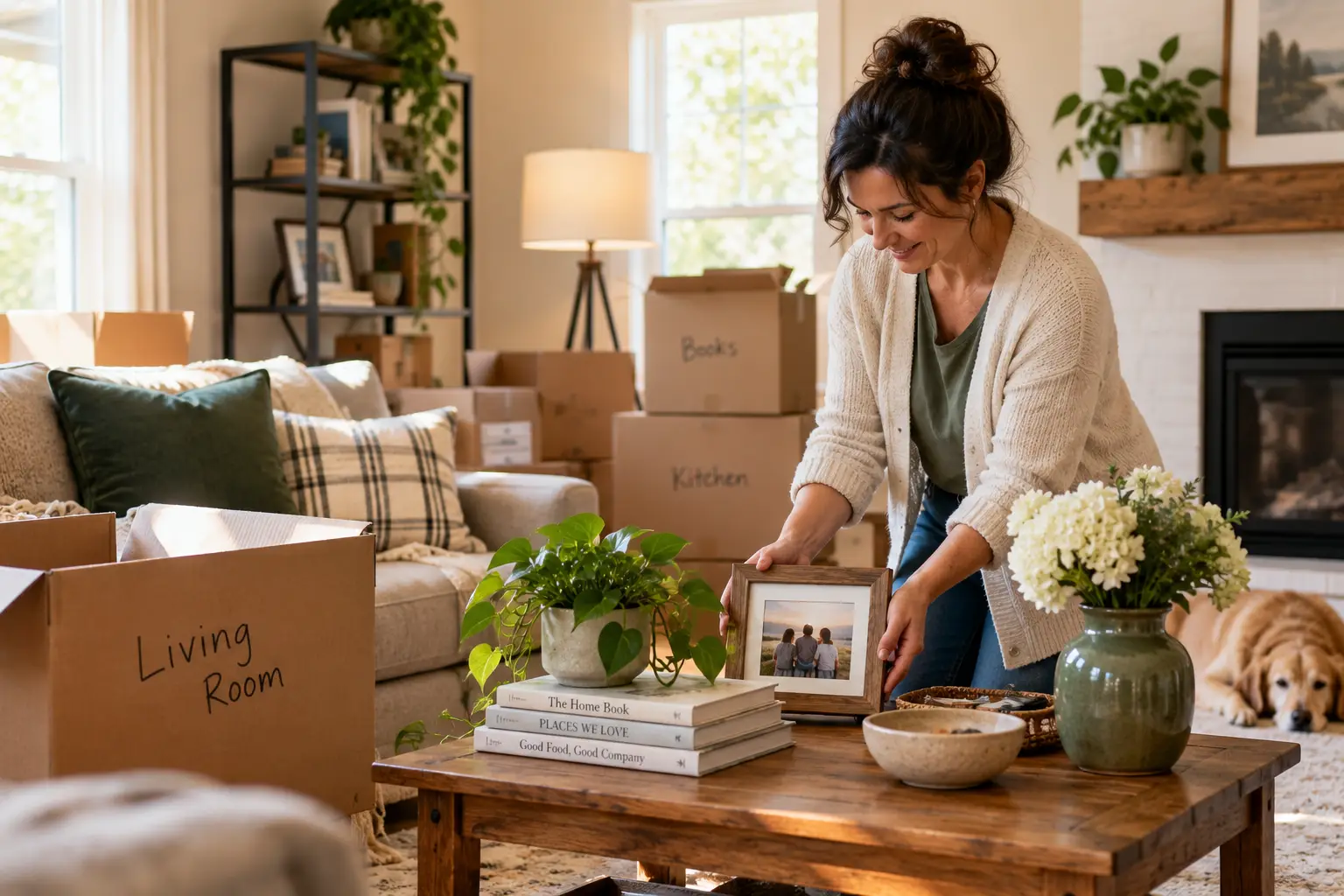
Furniture placement is a good place to start. A sofa that technically fits a room may still face the wrong direction for the way you use the space. Moving it a few feet can make conversation easier or open a walkway you did not realize you needed. If you are also moving taller furniture or televisions, the CPSC’s Anchor It guidance is a useful safety check before you call the room done.
Lighting can change the mood just as quickly. The same living room may feel different once you stop relying on one bright ceiling fixture and turn on a lamp beside the sofa.
Then there are curtains, rugs, pillows, blankets, bedding, artwork, and removable hardware. These are relatively easy to change later, which makes them useful while you are still learning what feels right.
The goal is not to make every room fit someone else’s definition of cozy. It is to make the house comfortable to you.
Decide What to Change Now and What Can Wait
Some choices are easy to undo. Others are expensive, disruptive, or difficult to reverse. Knowing which decisions can wait can protect you from spending money twice.
Waiting on a bigger project does not mean you are being indecisive. It gives you time to learn how the home behaves. The U.S. Department of Energy’s Energy Saver guidance takes a similar approach to home improvements: understand how the home works as a whole, then plan projects for now, the near future, and the longer term.
You may discover that a room you planned to redo works well once the furniture changes. You might realize the storage problem you wanted to solve with built-ins is really a traffic-flow problem. Or the paint color you disliked on move-in day may bother you much less once your own furniture and artwork are in the room.
Do not feel obligated to fill every blank wall, shelf, or corner. Empty space is not automatically a problem. A half-empty bookshelf, open wall, or unfinished corner gives you room to discover what the house actually needs.
That breathing room can also protect your budget from a string of purchases made simply because the house feels incomplete.
Watch out: filling an empty room and making a room feel finished are not the same thing. Buying everything at once can leave you with pieces that do not fit the way you eventually use the space.
There is one practical exception to taking your time: if you already know there is an active repair, maintenance, or damage issue, put that ahead of decorative upgrades. Making a room feel personal matters, but it should not distract from a problem that affects how the home functions. If the work involves older painted surfaces, especially in a pre-1978 home, check EPA guidance on lead-safe renovations for DIYers before sanding, scraping, or disturbing paint. AHA’s Protect-Prevent-Improve Framework can help you sort what deserves attention now, what should be planned, and what is primarily an elective improvement. If you are still learning what your home may need, AHA HomeCheckup can help you build a clearer picture of maintenance priorities and next steps.
Let Your Home Develop in Layers
Homes become personal in layers.
First comes basic comfort: figuring out where things belong and what makes everyday routines easier. Then familiarity starts to settle in. Your books find a shelf. Your favorite mug ends up beside the coffee maker. The dog claims one patch of afternoon sun. Everyone starts dropping shoes in the same place whether you planned for it or not.
After a while, your preferences become clearer too.
Maybe you realize you want more color. Maybe less. You may discover that comfortable seating matters much more to you than matching furniture. Maybe the old table you almost donated becomes the piece that makes the room feel right.
That is useful information.
Larger improvements are easier to think through when you have lived in the house long enough to understand what actually needs to change.
Sometimes the sense of home also starts spreading beyond your front door. The walking route you take after dinner becomes familiar. You recognize a neighbor across the street. You figure out the grocery store you like, the park you keep returning to, or the quiet block that is perfect for an evening walk.
Those small routines become part of feeling settled too. Home is not only what is inside the walls. It is also the little piece of the world that starts becoming familiar around them.
When Two People Have Different Ideas of Home
Making a house your own can get trickier when “your” means more than one person.
One person wants color. The other wants calm neutrals. One loves open shelves. The other sees dust. One is ready to replace the sofa immediately, while the other thinks it is perfectly fine.
You do not have to solve those disagreements by choosing one decorating style.
Start with shared priorities instead. How should the room feel? Comfortable? Easy to clean? Good for hosting? Quiet at the end of the day? Durable enough for children, pets, projects, or daily mess?
Those questions are often easier to answer together than whether your style is modern, traditional, rustic, minimal, collected, or something else entirely.
Then give each person room to contribute. Maybe one person chooses the artwork while the other cares more about furniture layout. Maybe you agree on the big pieces together but leave smaller areas, such as a reading corner, office, workshop, or hobby space, to individual taste.
A shared home does not have to look like one person designed every inch of it. In many cases, the mix is what makes it feel honest.
The Bottom Line
You do not need to make the whole house feel finished to make it feel more like yours.
Pick one room you use every day and notice one thing that would make life there more comfortable. Move the chair. Hang the photograph. Add the lamp. Give the keys a home. Put the old quilt on the bed.
These are not dramatic transformations, but that is the point.
A home becomes yours through hundreds of ordinary choices and through the mornings, celebrations, messy weekends, quiet evenings, and ordinary Tuesdays that happen there.
You do not need to finish making your house a home. You just need to start living in it like it is yours.
If you are still getting settled, the AHA New Homeowner Resource Kit can help you organize the care-and-maintenance side of homeownership while the rest of your home takes shape. You can also explore more practical homeowner guidance in the AHA Resource Center.