
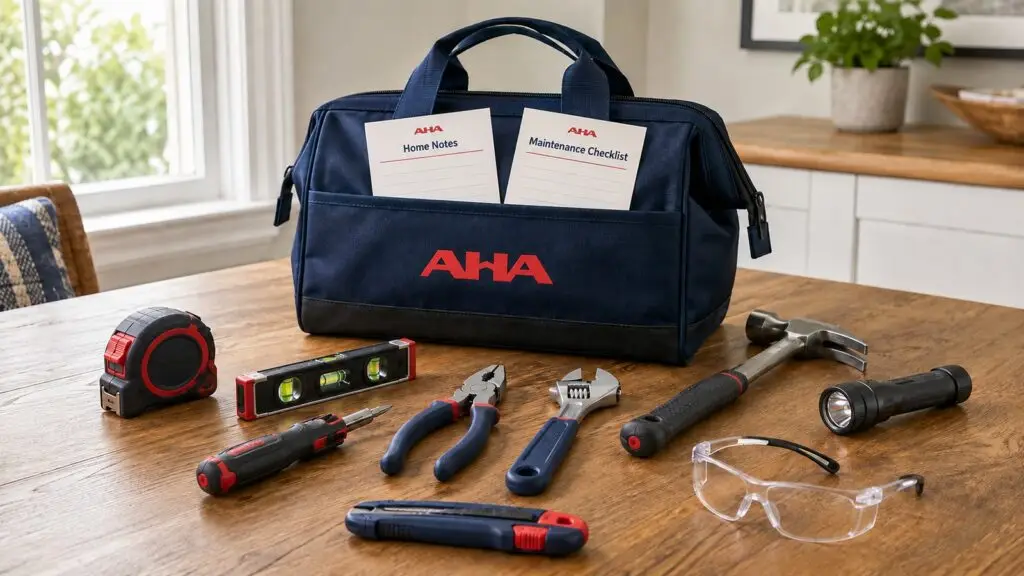
The first time you need a screwdriver in a new home, you usually need it right now. A cabinet pull is wobbling. A delivery box won’t open. You want to measure for a bookcase, but the tape measure could be in any of three moving boxes.
You don’t need to outfit a workshop to feel prepared. The tools every homeowner should have are best chosen around the small jobs in front of them, with room to add equipment as real projects come along.
Start with a manageable kit for measuring, tightening, gripping, opening, and seeing what you’re doing. This guide will help you choose those basics, compare a packaged set with individual tools, and decide when the next purchase—or the job itself—can wait.
Just getting started in your first home? Start with the AHA New Homeowner Resource Kit for move-in priorities and first-year basics. This article takes a closer look at choosing tools for the everyday tasks that come with settling into your first home.
What Belongs in a Homeowner Starter Toolkit
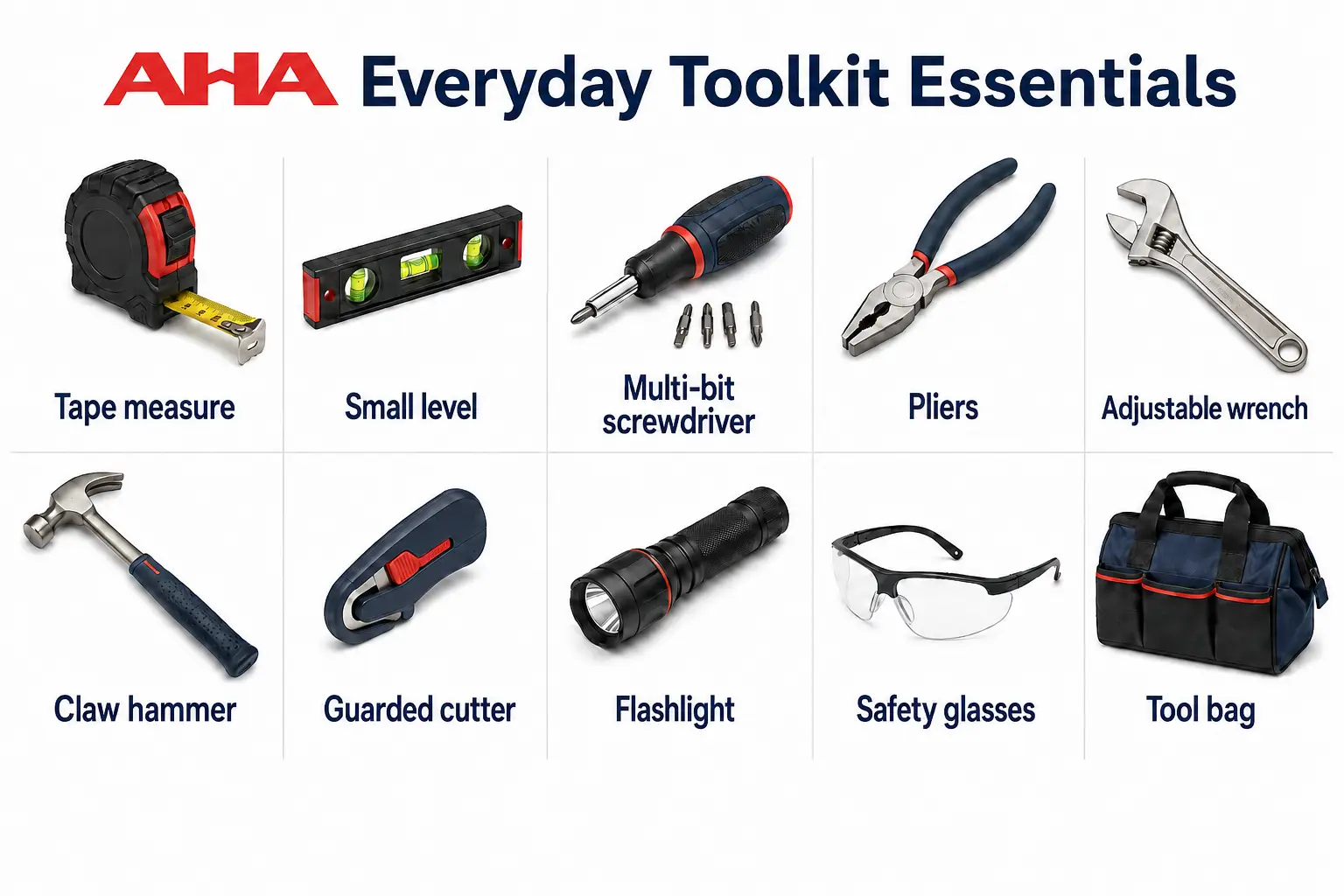
We chose these tools for the small, everyday tasks that come with owning a home: tightening a loose cabinet pull, opening a delivery box, or measuring for furniture. The goal is to help you handle those minor jobs as they come up, not equip you for an entire renovation.
The table below connects common household tasks with tools worth considering and what to look for when choosing them. You don’t need to buy everything at once. Start with what you expect to use, then add tools as your home’s needs and your skills grow.
| Everyday Need | Tool to Consider | What Matters When Choosing |
|---|---|---|
| Measure a furniture space | Tape measure | Readable markings and a length suited to what you measure |
| Check whether something sits straight | Small level | A size that fits the objects you check; a level doesn’t establish attachment strength |
| Tighten ordinary hardware | Screwdrivers or multi-bit driver | Tips that match the type and size of your screws |
| Grip small parts | Pliers | A type suited to the job; long-nose pliers help with small objects in awkward spaces |
| Turn flat-sided nuts and bolts | Adjustable wrench | A size and opening range that fit the fastener |
| Drive or remove nails | Claw hammer | Comfortable weight and an undamaged head and handle |
| Open cartons and packaging | Suitable cutter | Consider a guarded design or an option that avoids an exposed blade |
| See inside a dim cupboard | Flashlight | Controls and a grip you can use comfortably |
| Protect your eyes | Task-appropriate eye protection | Protection matched to the hazard and tool instructions |
| Keep tools together | Small bag or box | Space for your actual tools and a manageable carrying weight |
Want a checklist you can print? Download the AHA Homeowner Tool Kit Checklist to keep track of the tools you already own and the ones you may want to add.
Choosing a Tool Bag or Box
Choose a bag or box that holds your everyday tools comfortably, with a little room for future additions. Look for a sturdy handle, a secure closure, and pockets or compartments that make smaller items easy to find. Keep the size manageable so the kit is easy to carry and put away.
Store sharp tools with their edges protected, and keep the kit somewhere dry and out of children’s reach.
Pro Tip: Check the tools you already own before shopping. For furniture assembly, check the instructions and any tools supplied with the item before adding another set to your bag.
Should You Buy a Tool Set or Individual Tools
Choose the approach that fills the gaps in your kit with tools you’ll want to use. A box that checks every item off a list is only useful if the tools inside are suited to the jobs you expect to handle.
A packaged kit offers convenience. It can gather several missing basics in one purchase, often with a case to keep them together. The tradeoff is less choice over each tool’s size, grip, and design. You may also end up with duplicates or accessories you don’t need. Compare the actual contents with your list before treating the kit as good value.
Buying individually gives you more control. You can choose each tool for its fit and purpose, and add only what you’re missing. The tradeoff is more time spent comparing options and arranging storage. Check the total cost of the tools you actually need rather than assuming either approach will be cheaper.
If you choose a kit, judge the core tools first. Look closely at the hammer, screwdriver, pliers, and wrench—not just the case or advertised piece count. When possible, handle them before buying. Check that handles feel secure and have no cracks or rough edges, that markings are readable, and that the tools feel comfortable to hold and control. For online purchases, look for clear specifications and a return policy that lets you address tools that arrive defective or don’t suit your needs.
Comfort is part of that quality check. Consider weight, balance, and fit in your hand. Hand-tool ergonomics guidance emphasizes matching the tool to the task and choosing a configuration that allows a natural wrist position.
A smaller, well-chosen kit plus a few individual additions can be a practical middle ground. Prioritize dependable basics over extra pieces added just to make the box look complete. For a housewarming gift, ask what the recipient already owns and choose useful additions they can comfortably use and store.
Let the Next Job Decide What You Add
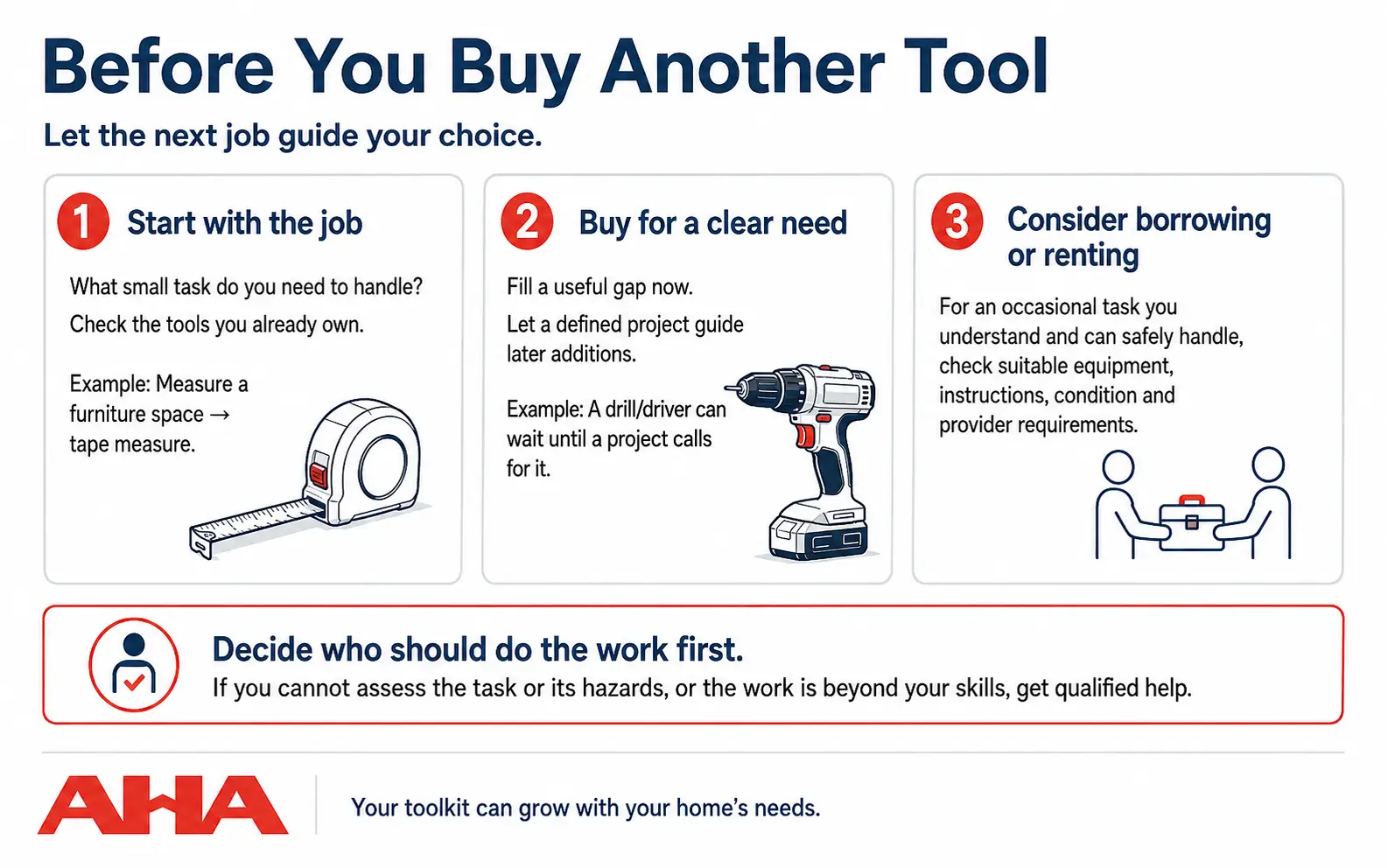
Use three decisions to keep the shopping list manageable.
Buy for a clear need now. If your immediate jobs are opening boxes and measuring furniture spaces, cover those first. You can fill other gaps as they become relevant.
Wait for a defined project. A drill/driver or a specialized hand tool should have a job attached to it. “I need to assemble this item, and its instructions call for this tool” is a better starting point than wondering what else a homeowner ought to own.
Decide who should do the work before deciding who owns the equipment. Borrowing or renting can be considered for an occasional task you understand and can safely handle. First confirm suitable equipment, operating instructions, its condition, and the provider’s requirements. Availability alone doesn’t make the job a good fit. Work beyond your skills or involving serious hazards calls for qualified help. If you decide to hire, the AHA SmartHire Contractor Kit offers project-planning and contractor-comparison resources.
Your home and storage space matter, too. Before buying outdoor or building-maintenance equipment, confirm what you’re responsible for maintaining. A small condo and a detached house with a yard may lead to different purchases, even when both owners start with the same few hand tools.
Before You Buy Another Tool
Let the next job guide your choice.
Start with the job
What small task do you need to handle?
Check the tools you already own.
Example: Measure a furniture space → tape measure.
Buy for a clear need
Fill a useful gap now.
Let a defined project guide later additions.
Example: A drill/driver can wait until a project calls for it.
Consider borrowing or renting
For an occasional task you understand and can safely handle, check suitable equipment, instructions, condition and provider requirements.
Does a Cordless Drill Belong in Your First Kit
A drill/driver can make sense early if a planned project calls for drilling or driving screws. It can also wait. Occasional adjustments to ordinary hardware may be manageable with the right hand tool, while repeated fastening can lead you to consider a powered option.
Check the project instructions before assuming a drill is needed or suitable. Choosing a tool and deciding how to attach something to a wall are separate questions; this starter list doesn’t determine what is behind the wall or what attachment a shelf needs.
If you buy a drill/driver, read its manual before use, inspect the tool and battery, and use the specified battery and charger. These precautions are covered in electric-tool safety guidance. Consider comfort and control as well as capability, since powered and manual tools present different demands.
You can make that purchase when the job gives you a reason. There’s no need to buy the rest of a cordless collection at the same time.
Use Tools Safely—and Know When to Call a Pro
Before starting, ask two questions: Do I have the right tool, and do I understand the whole task? A loose cabinet pull and an unfamiliar problem inside a wall may both bring a screwdriver to mind, but they require very different decisions.
Having the right tool also means using it for its intended purpose. Screwdriver tips should fit the screw head; a screwdriver also isn’t a substitute for a pry bar. Pliers have different intended uses, and an adjustable wrench for nuts and bolts isn’t interchangeable with a pipe wrench.
Keep electrical wiring, gas equipment, structural work, and roof access outside this starter-kit approach. Get qualified help when you cannot identify the work, assess its hazards, or judge whether it fits your skills. A tool purchase cannot resolve that uncertainty.
For a fuller set of questions about risk, tools, and time, read DIY Home Repairs: Fix It Yourself or Call a Pro?.
The materials in your home can change the decision as well. For renovation, repair, or painting in a pre-1978 home, the U.S. Environmental Protection Agency (EPA) recommends hiring a lead-safe certified contractor. Work that disturbs lead-based paint can create hazardous dust. Before scraping, sanding, or drilling painted surfaces, establish whether lead may be an issue.
You generally cannot identify asbestos-containing material by sight. If you suspect it, leave it alone and consult a trained, accredited professional when damage or planned work could disturb it. EPA’s asbestos guidance explains that boundary. An older home may need more information before it needs another tool.
Watch Out: Even opening packaging deserves care. Consider avoiding an exposed blade or using a guarded cutter. Use a stable cutting surface, keep body parts out of the cutting path, and fully retract retractable blades afterward. See the Canadian Centre for Occupational Health and Safety’s sharp-blade guidance.
Keep the Kit Ready for the Next Small Job
Choose one place for the tools you use. Keep them clean and dry, inspect them for damage, and put them away after use. Select protective equipment for the particular hazard rather than assuming one item protects against everything. These general precautions follow CCOHS hand-tool guidance.
You don’t need an inventory system. You want to be able to find the tape measure and know the screwdriver is in usable condition.
Start by checking what you already own. Identify one gap connected to a small job you understand, and fill that gap. Your toolkit can grow as you learn what your home actually asks of you.