
Watch Out: If you suspect a fire or gas leak, or a carbon monoxide alarm sounds, get everyone out and call 911 from a safe location. Do not delay for photos, shutoffs, belongings, or repair calls. If fire blocks your escape, close the door between you and the fire, call 911, and tell the dispatcher where you are.
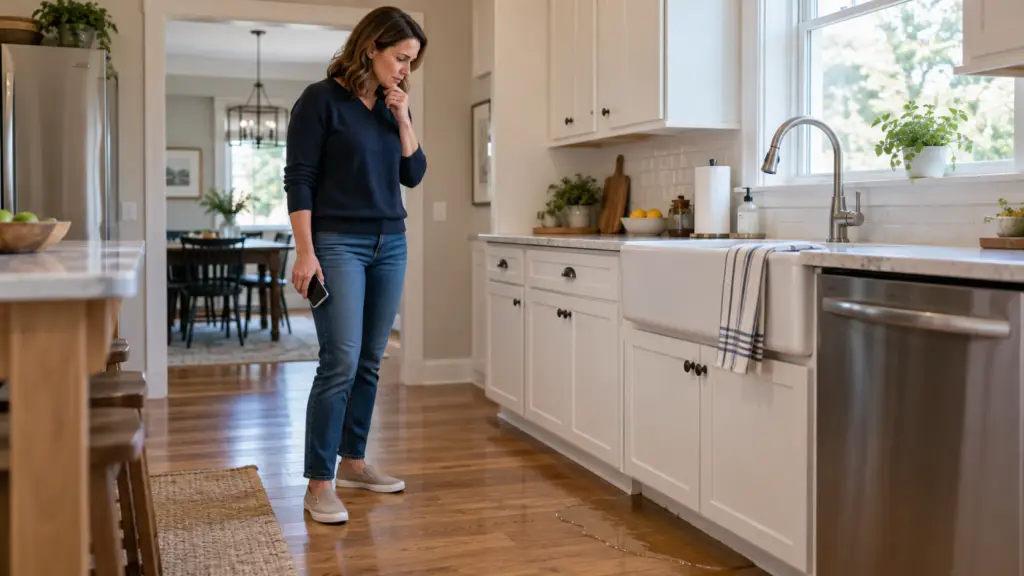
It’s 4:30 on a hot summer afternoon, and the air conditioner suddenly stops. Or you walk downstairs and find water spreading across the floor. You’re trying to work out what happened while keeping track of everyone at home.
Knowing what to do in a home emergency doesn’t require a crash course in plumbing, heating, or electrical systems. You need to know what matters right now and who can help.
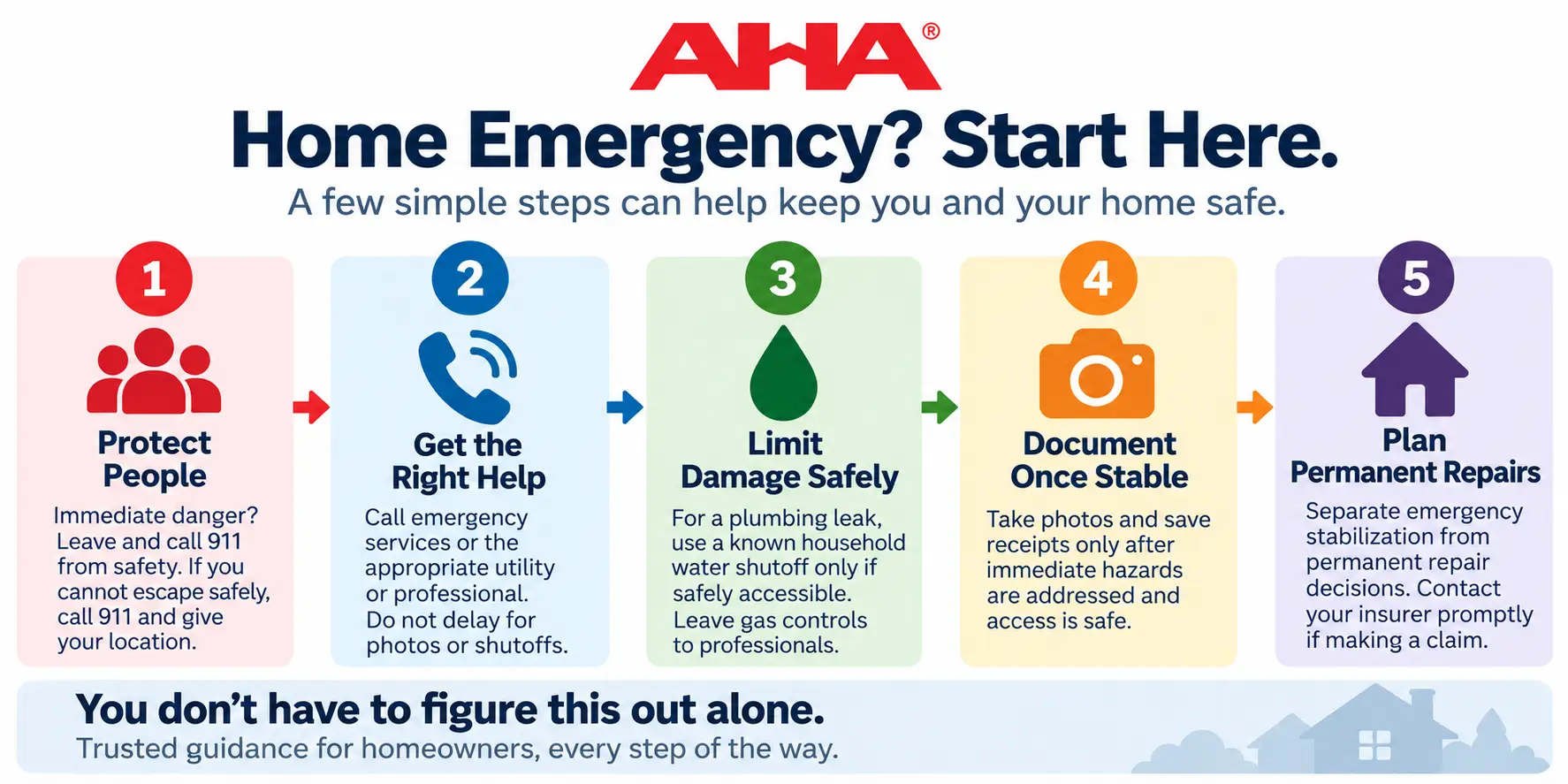
Start with people’s safety. If more than one problem is happening, protect people before trying to stop property damage. Documentation, insurance, and permanent repairs come later, once immediate danger has been addressed.
Start Here: Protect People First
Your mind may jump to the expensive questions: What broke? How much will this cost? Will insurance cover it? Those questions matter, but they don’t need to be answered before you get help.
Protect people first, then protect the house. Get emergency help when the situation calls for it; do not make that call wait behind troubleshooting or documentation.
If there is no immediate danger, the next step may be a safely accessible household water shutoff or a service call. The sections below explain those boundaries. When access is unsafe, step back and get the appropriate help. You do not have to diagnose a dangerous system to explain what you noticed.
Find Your Emergency
You don’t need to read this guide from top to bottom. Find what’s happening at your home and start there. Come back to the recovery sections once the immediate problem is under control.
- Gas Smell
- CO Alarm
- Fire or Smoke
- Electrical Burning or Sparks
- Water Pouring or Leaking
- Burst Pipe
- Basement Flooding
- Sewage Backup
- Storm Roof Leak
- Tree Impact
- AC Failure
- No Heat
- Power Outage
Gas Smell
If you smell gas or suspect a gas leak, get everyone out of the building and away from the affected area. Do not search for the leak, operate switches or appliances, use a phone inside, or start a vehicle near the suspected leak.
Once safely away, call 911, then your gas supplier. Stay away until emergency responders or the gas supplier tells you it is safe to return. Leave gas controls, system checks, and restarting equipment to the appropriate professionals; this is not the time to find or operate a meter or pipeline valve.
PHMSA’s emergency reporting guidance puts getting to safety before the call. Repairs and photographs can wait.
CO Alarm
If the carbon monoxide (CO) alarm signal sounds, get everyone outside to fresh air and call 911. Account for everyone and tell responders if someone is missing or feels ill. Do not investigate the source or wait for symptoms. Stay out until emergency responders permit reentry. A malfunctioning fuel-burning appliance must be serviced before it is used again.
A maintenance or end-of-life chirp is different from a CO emergency signal. Use the instructions for your exact alarm model to identify maintenance signals; there is no universal beep pattern to apply here. If you are unsure whether it is a CO alarm, take the leave-and-call response rather than remaining inside to troubleshoot.
The CPSC’s CO fact sheet explains alarm response and when appliances need professional service.
Fire or Smoke
If you see smoke or suspect a fire, get out immediately and call 911 from outside. Go to your outside meeting place and stay out. Tell responders if anyone is still inside. Do not reenter for people, pets, or belongings, or delay escape to investigate or use an extinguisher.
If you cannot get out, close the door between you and the fire and cover vents and door gaps with cloth to help keep smoke out. Call 911 and give your location. Signal from a window with a flashlight or light-colored cloth.
Emergency responders handle rescue and fire control. Damage assessment and repair calls belong after they have addressed the danger.
Electrical Burning or Sparks
Smoke, fire, or a burning odor that makes you suspect fire: leave and call 911 from outside. Do not wait for visible flames or try to reach the breaker panel first.
Arcing or sparking: keep away from the equipment. If it involves the incoming electrical service or utility lines, call the electric utility immediately from a safe place. Suspected fire still means 911 first. For a sparking outlet or switch without a suspected fire, stop using it and seek prompt help from a qualified electrician.
A hot outlet, damaged appliance cord, or recurring breaker trip: stop using the affected outlet or appliance and arrange qualified electrical or appliance service. Do not touch equipment to test its temperature, remove covers, investigate wiring, or repeatedly reset a breaker.
Wet equipment or water near electricity: stay away. Do not enter standing water to reach a plug or panel. Have a qualified electrician address unsafe access and assess wet electrical equipment before reuse. Repair details depend on which equipment is affected; a photo is not worth approaching it.
Once the emergency is handled: AHA’s guide to electrical warning signs and professional inspections explains what to notice during ordinary use and when to seek qualified evaluation. Use it for follow-up planning after the immediate hazard has been addressed.
Water Pouring or Leaking
Water may come from a fixture, appliance, water heater, pipe, ceiling, or an unidentified source. First, keep away from water near wiring, outlets, light fixtures, or appliances. Stay out of an area with obvious structural damage. Call 911 if someone is trapped or in immediate danger.
For water coming from household plumbing, close the household water shutoff only if you know the valve and can reach it safely. Do not cross standing water or move suspect equipment to reach it. Leave street valves, meters, and utility equipment alone.
A small leak from a known clean supply is different from sewage or outside floodwater. If the source or contamination is uncertain, avoid contact and arrange assessment. Call a plumber for plumbing leaks; roof-related entry needs roofing help once weather allows. A household shutoff will not stop rain entering the roof. Drying and cleanup come after safe access and source control.
Once the emergency is handled: Leak sensors near sinks, washing machines, or water heaters can alert you when water reaches them, helping you notice a future leak sooner. AHA’s guide to water leak sensors explains the options. A sensor provides a warning; it does not repair the leak or stop the water on its own.
Burst Pipe
If a household pipe bursts, keep people away from wet electrical equipment and standing water. Close a familiar household water shutoff only if you can reach it safely. Do not enter water to reach the valve or electrical panel, and do not operate curb stops, meters, or street-side controls.
Call a plumber for prompt repair. If you cannot safely stop the flow, explain that when you call; you do not need to find the break yourself. Call 911 for anyone trapped or in immediate danger.
After the leak is stopped and hazards are addressed, arrange thorough drying of wet walls and flooring to limit water damage and mold. Do not start thawing or repairing pipes during the emergency. Plumbing layout and shutoff access vary by home.
Once the emergency is handled: Ask your plumber what caused the pipe to fail and whether an automatic water shutoff system makes sense for your home. These systems can close the water supply when a connected sensor or monitor detects a qualifying leak, helping limit how much water escapes. AHA’s guide to automatic water shutoff systems explains how they work. They do not prevent the pipe itself from failing or replace repairs.
Basement Flooding
Stay out of standing water, especially when electrical equipment may be involved or the water source is unknown. Floodwater can contain sewage, chemicals, and other hazards. Call 911 if someone is trapped or threatened by rising water.
If you know how to turn off the main power and can do it from a dry, safe location, do so. If reaching the panel requires entering water—or you are unsure about access—call an electrician. Have the electrical system checked before power is restored.
A small, known clean-water leak does not have the same cleanup needs as deep flooding or sewage. For substantial or contaminated flooding, arrange professional assessment. Do not begin a rapid pump-out: removing several feet of water too quickly can damage walls and floors. The removal plan depends on depth, surrounding conditions, contamination, and the building. Cleanup and drying follow that assessment.
Sewage Backup
Keep people and pets away from sewage and avoid contact. For an active backup, stop household water use while you arrange help, including flushing toilets and running water-using appliances. If water is near electrical equipment, stay out; call 911 for anyone in immediate danger.
A single blocked fixture does not by itself identify a municipal sewer or septic failure. A plumber can assess household drain problems. If you are on public sewer, contact your sewer utility about its emergency reporting procedure; responsibility for private lines and public mains varies locally.
For private septic problems, contact a septic service professional or your local health department. If the drainfield is flooded or saturated, do not have the tank pumped as an automatic response. EPA warns that pumping under those conditions can damage the system. Professional assessment and local health guidance should determine service and cleanup.
Once the emergency is handled: AHA’s guide to keeping drains clear covers everyday drain care and recurring problems that need a plumber. Use it after the backup has been resolved, alongside the professional’s recommendations for its cause.
Storm Roof Leak
During dangerous weather, keep people in safe shelter and away from the leaking or damaged area. Do not go outside or climb onto a wet, storm-exposed, or damaged roof to stop a leak.
Water near light fixtures or wiring is an electrical concern. A sagging roof, leaning wall, or obvious structural damage means you should stay out of that part of the building and get qualified help. If you are in immediate danger or cannot reach safe shelter, call 911 and explain both the building damage and the weather conditions.
Once conditions allow safe work, ask a qualified roofing professional about temporary weather protection and repair. Do not puncture a ceiling or climb into a damaged space to investigate. Interior containment and moving belongings can wait if the area is unsafe.
Tree Impact
A tree or limb in the yard only: keep clear during the storm. When weather allows, arrange tree-service assessment if removal is needed; do not assume a fallen tree is safe to cut or move.
A tree on the home or obvious structural damage: keep away from the damaged area. Do not enter a damaged building to inspect it. Have a qualified professional assess safety before reentry. Call 911 if anyone is injured, trapped, or in immediate danger.
A tree involving utility lines: stay away and call 911, then the utility. Do not touch the tree, branches, or wires. Do not cross a line hazard to leave; tell the dispatcher if your exit is blocked.
Electrical and structural hazards come before removal or roof repairs. Who removes debris depends on its location, ownership, and local arrangements.
AC Failure
Start with the people at home. A failed air conditioner is not automatically a medical emergency, but hot indoor conditions and someone’s health can make cooling urgent. Pay particular attention to older adults, young children, and people with chronic health conditions.
Move to an air-conditioned place when needed. Your local health department or emergency management agency can help identify cooling locations. Do not wait for HVAC troubleshooting if someone needs cooling now.
CDC heat guidance says to use fans for indoor cooling only below 90°F; above that, a fan can increase body temperature. That is a fan-use limit, not a guarantee that any lower temperature is safe for everyone.
Confusion, slurred speech, seizures, or loss of consciousness during heat exposure can indicate heat stroke. Call 911, move the person to a cooler place, and begin cooling them while following emergency instructions. Arrange air-conditioning service after immediate cooling needs are met.
No Heat
Start with whether everyone can stay warm. Use warm layers and blankets while arranging a warmer location if needed. Children, older adults, and other vulnerable occupants may need help sooner; there is no single indoor temperature that settles every household’s situation. Follow local travel guidance during winter weather.
Confusion, slurred speech, or unusual drowsiness during cold exposure can be signs of hypothermia. Seek emergency medical help if you suspect it. If you smell gas or a CO alarm sounds, get out and call 911 from outside.
Never heat the home with a gas oven, charcoal grill, outdoor heater, or generator indoors or in a garage. Use heating equipment only as designed and directed by its manufacturer; do not improvise combustion heating. Once people’s immediate needs are covered, arrange heating service. Equipment checks and pipe protection must not delay getting someone warm.
Power Outage
If a life-sustaining medical device loses power, seek emergency services immediately. Do not wait for a restoration estimate. Follow the manufacturer’s instructions for approved backup arrangements; do not improvise a power connection.
Use battery-powered lighting, report the outage to the utility, and consider whether heat or cold makes another location necessary. Stay away from downed lines and report them. Keep refrigerator and freezer doors closed while you work out the next steps.
If using a portable generator, keep it outdoors, at least 20 feet from doors, windows, and vents. Never run it inside a home or garage, even with doors open. Use a battery-powered or battery-backup CO alarm in the home. If it alarms, get everyone outside and call 911.
The CDC’s active-outage guidance covers generator, temperature, and food-safety concerns. Equipment-specific backup planning belongs after immediate needs are addressed.
The House Is Stable. Don’t Rush the Permanent Repair Decision.
Once immediate hazards are controlled and the affected area is safe to access, start a simple record. Photograph damage from safe locations, list affected belongings, and keep receipts for emergency work. Do not delay necessary safety action to get a better picture.
If you plan to make an insurance claim, contact your insurer promptly. Ask what documentation it needs, what deadlines apply, and what to do before major cleanup or permanent repairs. Coverage and requirements depend on your policy and applicable state rules. The AHA Homeowners Insurance Claim Toolkit offers a way to organize that conversation.
Emergency stabilization and permanent repair are different decisions. Getting help quickly doesn’t mean choosing every permanent repair at the same time. Ask what the immediate work will accomplish, what remains unresolved, and which work you are authorizing. You do not need to award the permanent repair job automatically to the company that handled the emergency. When circumstances allow, compare written scopes before making that larger commitment. The AHA SmartHire Contractor Kit can help with those hiring questions.
If several repairs are competing for attention, use AHA’s Protect–Prevent–Improve repair-prioritization guide to organize the decisions after qualified assessment. It does not diagnose a problem or establish that a repair can safely wait.
Know These Before You Need Them
After the urgent work is handled, choose one preparation task: learn which water shutoff serves your home, save the utility’s emergency contact information, or agree on an outside meeting place with everyone at home. Plan for anyone who may need help leaving, and follow the manufacturer’s instructions for your alarms and medical-device backups.
Use the AHA Home Emergency Quick Reference (fillable PDF) to save household locations and contact numbers. It also has space to record what happened once everyone is safe and the situation is stable.
You do not need to build a complete emergency plan tonight. Make the next useful preparation when you have room to think. For now, protect people, get the right help, and take the remaining decisions one at a time.