
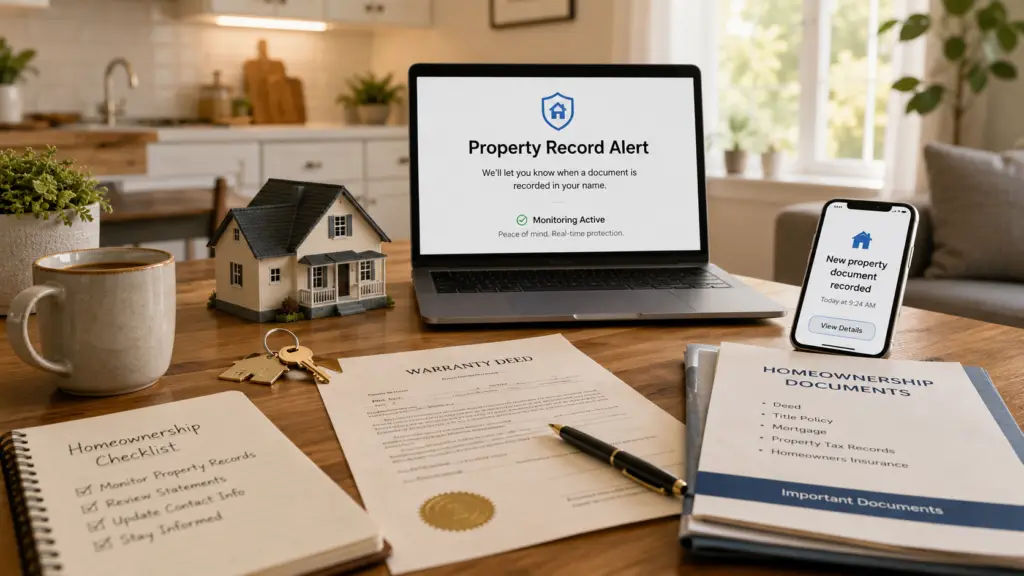
You probably have a routine for protecting the things that matter — locking the door, checking your bank account, keeping insurance paperwork somewhere safe.
But your property records? Most homeowners don’t think about those unless they’re buying, selling, refinancing, or opening a tax notice they’d rather not deal with.
That’s why property fraud feels so unsettling. The idea that someone could file a fake deed, impersonate you as the seller, place a fraudulent lien, or try to borrow against your home sounds like something that should be impossible. Unfortunately, it can happen. The good news is that you’re not helpless — and you don’t need to panic-buy every “title lock” product you see advertised.
The best protection is calmer than that. It starts with understanding how property fraud works, setting up the right alerts, keeping your records organized, and knowing what to do if something looks wrong.
What Is Property Fraud?
Property fraud is a broad term for scams or illegal actions involving ownership records, deeds, mortgages, liens, or real estate transfers.
In plain English: someone tries to interfere with the paper trail that proves who owns your property.
That can include a forged deed, a fake lien, a fraudulent mortgage, a scammer pretending to be you in a real estate sale, or someone pressuring a homeowner to sign away ownership without fully understanding what they’re signing.
New York City defines deed fraud as criminals recording fraudulent deeds, mortgages, or other liens against a property without the owner’s knowledge or consent. (NYC)
Here’s the part that surprises many homeowners: property records are public by design. That’s not a flaw by itself. Buyers, lenders, title companies, attorneys, and local governments all rely on public property records.
But scammers can use that same openness to gather details about an owner, a home, vacant land, or a property that looks lightly monitored.
Think of it like your mailbox. Mail is useful. Necessary, even. But every now and then, someone uses it to send junk, scams, or something worse. The answer isn’t to panic about having a mailbox. It’s to know what to watch for.
How Deed Fraud Usually Happens
One common type of property fraud is deed fraud, sometimes called deed theft or title fraud.
In a deed fraud scheme, someone may create or record a false document that appears to transfer ownership from the real owner to someone else. The scammer may use a forged signature, fake identification, a fraudulent notary seal, or stolen personal information.
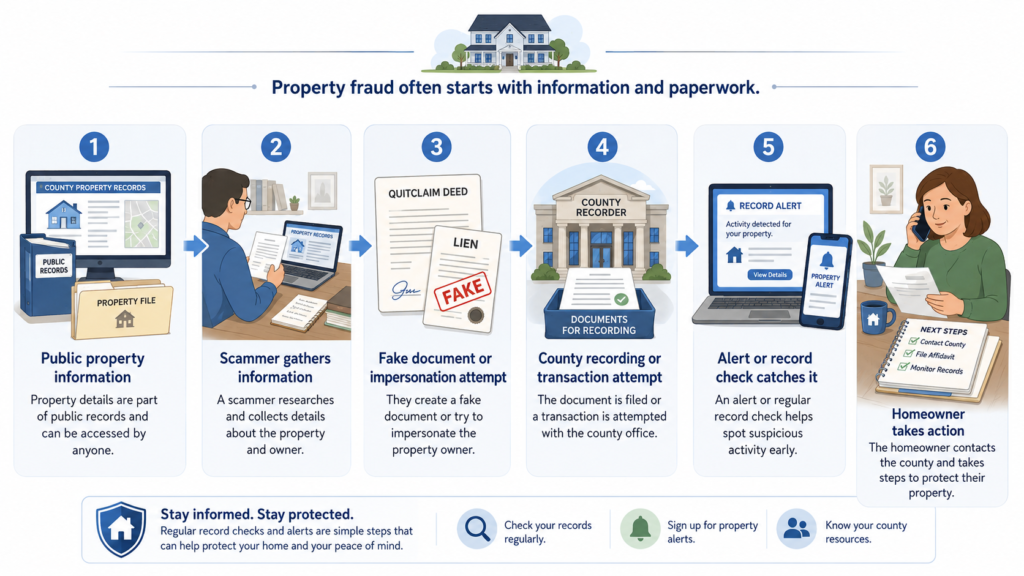
That does not mean a scammer legally owns your home just because a document gets recorded. But it can create a serious mess in the public record. And cleaning that up can be stressful, expensive, and slow.
This is where the system can feel strange. In many places, the county recorder, register of deeds, or clerk’s office records documents that meet filing requirements. They may not fully investigate every signature, identity, or legal claim before a document is accepted.
Your local records office is often more like a filing system with rules than a detective at the front counter.
That’s why early detection matters.
Seller Impersonation Fraud: When Someone Pretends to Be You
Not all property fraud starts with a fake deed filed out of nowhere.
Sometimes the scam starts when a criminal pretends to be the legitimate owner and tries to sell a property they don’t own.
The American Land Title Association warns that fraudsters are impersonating property owners to illegally sell residential or commercial property. (American Land Title Association) These scams often involve vacant land, second homes, inherited properties, rentals, or homes owned free and clear because the real owner may not be watching the property closely day to day.
A scammer may contact a real estate agent, push for a quick sale, avoid in-person meetings, use fake identification, communicate only by email or text, and try to route sale proceeds to an account they control.
It’s sneaky because the fraud may look like a normal transaction from the outside — until someone starts checking identity, signatures, notary details, ownership history, or wiring instructions more carefully.
Watch Out: Vacant land and second homes need extra attention
If you own vacant land, a vacation home, an inherited property, or a rental, don’t assume “nothing happening” means “nothing to check.” These properties can be attractive targets because no one is physically there every day.
Fraudulent Mortgages, Liens, and Loans
Sometimes the goal isn’t to “take” the house directly.
The goal is money.
A fraudster may try to borrow against the property, create a fake mortgage, record a fraudulent lien, or use false information in a loan transaction. The FBI defines mortgage fraud as a material misstatement, misrepresentation, or omission relied on by a lender or underwriter to fund, purchase, or insure a loan. (FBI)
For a homeowner, the result can be confusing and frightening: a loan statement you don’t recognize, a lien showing up in public records, or a foreclosure-related notice tied to a debt you never took out.
That’s why property fraud protection should not focus only on the deed. Your ownership record, liens, mortgages, tax records, mailing address, and identity all connect.
Homeownership has a paper trail. Fraud often attacks the trail.
Foreclosure Rescue and Equity Theft Scams
There’s another version of property fraud that doesn’t always look like fraud at first.
It can look like “help.”
A homeowner who is behind on payments, dealing with foreclosure, overwhelmed by taxes, or under financial pressure may be approached by someone promising to save the home. The pitch might sound like:
“Sign here and we’ll stop the foreclosure.”
“We’ll buy the house and let you stay.”
“This is temporary.”
“You can get the home back later.”
“Don’t call your lender — we’ll handle everything.”
That’s a dangerous moment.
Some deed theft cases involve fraud where a homeowner signs a deed without realizing they are transferring ownership or giving someone control over the property. New York’s Attorney General describes deed theft as happening through forgery or fraud, including situations where a homeowner may be deceived into signing documents. (NYC)
Never sign a deed, loan, power of attorney, transfer document, or foreclosure-related agreement under pressure without independent legal advice.
Not from the person offering the “help.” Independent help.
Why Property Fraud Can Go Unnoticed
Property fraud can sit quietly for a while.
You may not know something is wrong until you receive strange mail, see an unexpected tax change, hear from a lender, get contacted by a real estate agent, find a surprise lien, or run into a title issue while trying to sell or refinance.
That delay is what makes alerts so useful.
Many counties and states now offer free property recording alerts. These systems may notify you when a deed, mortgage, lien, or other official document is recorded under your name, parcel number, or property information. Virginia’s deed alert system, for example, sends notifications when documents containing a registered name or parcel identification number are recorded. (NYC)
New York City also recommends signing up for its Notice of Recorded Document Program and says homeowners should check property records for deed fraud. (NYC311)
At minimum, check your property record once a year. If you own vacant land, a second home, an inherited property, or a rental, check more often.
Property Alerts Are Smoke Detectors, Not Locks
This is the part homeowners really need to understand.
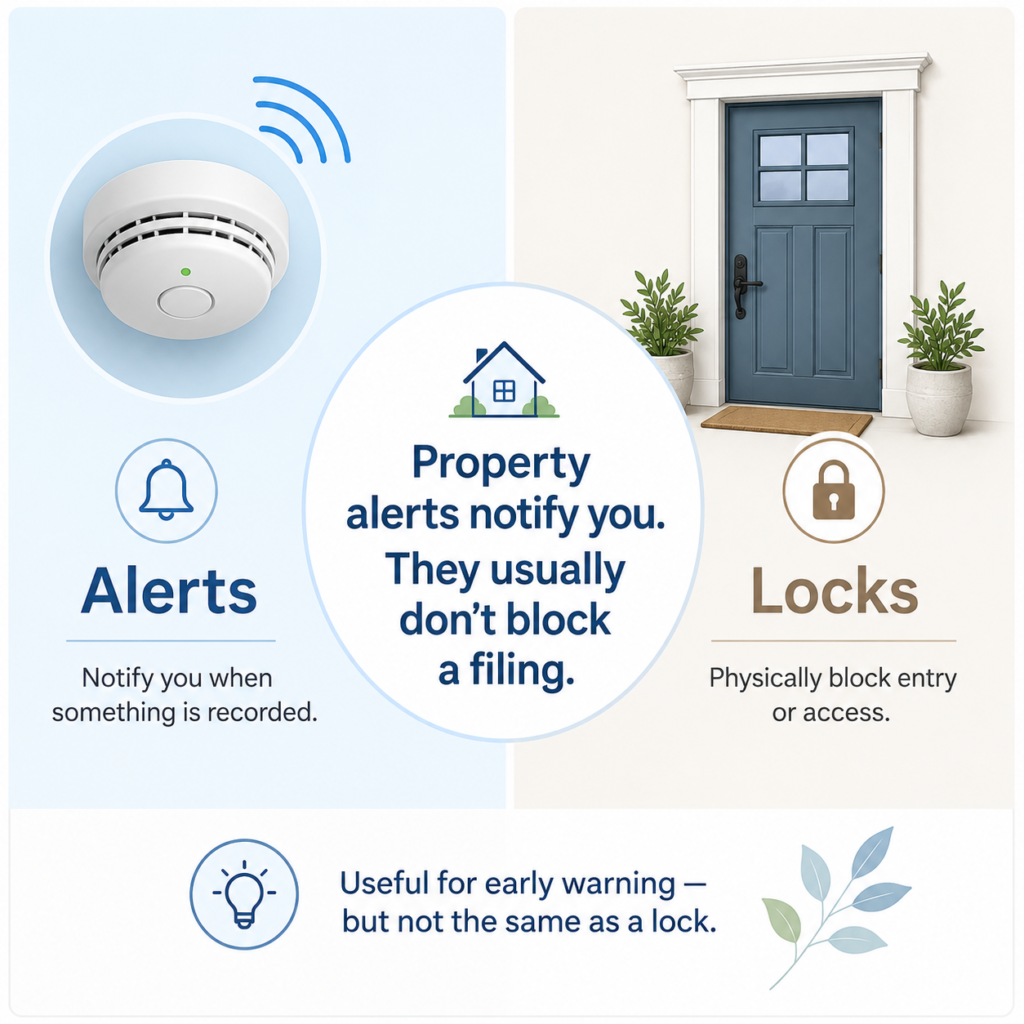
A property fraud alert usually does not block a deed, mortgage, lien, or other document from being recorded. It alerts you after something is recorded so you can look into it quickly.
That doesn’t make it useless. Far from it.
It’s just not a lock.
It’s a smoke detector.
A smoke detector doesn’t prevent a fire from starting. But it can wake you up before the situation gets worse.
The Federal Trade Commission has warned consumers that “title lock insurance” is not title insurance and is not really a lock. The FTC explains that these services typically monitor deed activity and may only alert you after an unauthorized transfer appears in the record. (Consumer Advice)
AHA has covered this issue more directly in Do Homeowners Really Need Title Lock Protection?, which explains why paid title-lock products are usually monitoring services, not true locks, and why free county alerts and credit freezes are often better first steps.
For this article, the bigger point is simple: title monitoring is only one piece of ownership protection.
A stronger plan also includes identity protection, property record checks, document organization, tax and exemption reminders, suspicious-mail awareness, and knowing what to do if something looks wrong.
Warning Signs of Property Fraud
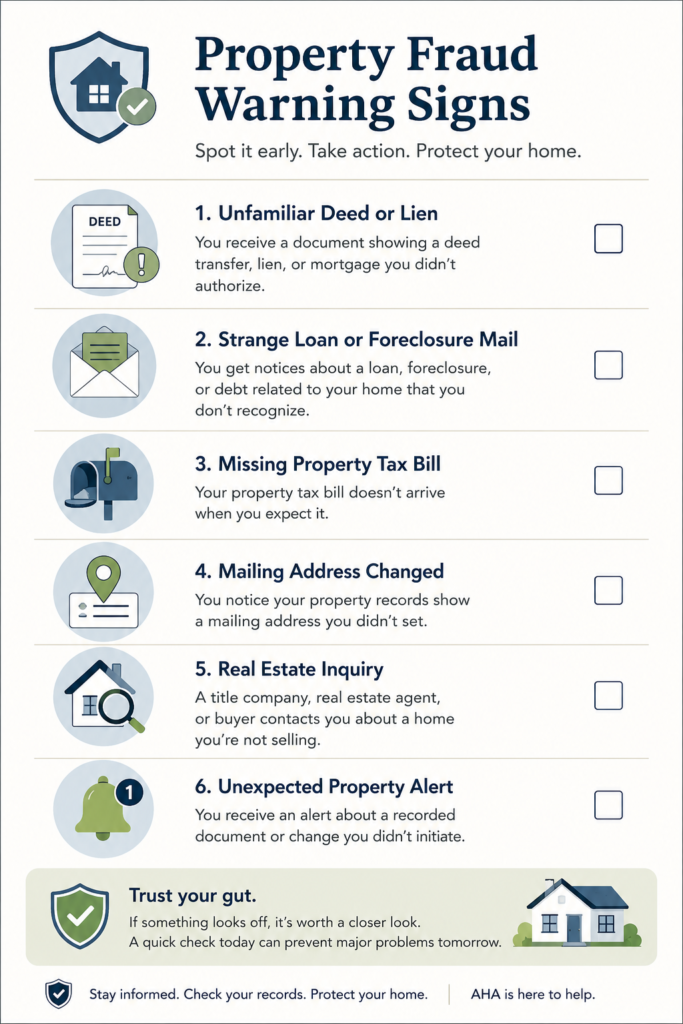
Property fraud usually leaves clues.
Some are obvious. Some are easy to toss aside because they look like junk mail or routine paperwork.
Pay attention if you notice:
- A deed, mortgage, lien, or transfer document you don’t recognize
- A property tax notice with unfamiliar owner or mailing information
- Mail about a loan, foreclosure, sale, lien, or payoff you didn’t authorize
- Missing property tax bills or official notices
- A notice that your mailing address changed when you didn’t request it
- Strangers, agents, buyers, or contractors contacting you about a property you’re not selling
- Utility activity at a vacant property
- Real estate listings for property you own but did not list
Don’t assume the worst right away. Property records can be confusing, legitimate documents may have unfamiliar names, and some notices are just poorly written. But if something feels off, it’s worth checking.
But don’t ignore the weird.
That’s the rule.
How to Protect Yourself From Property Fraud
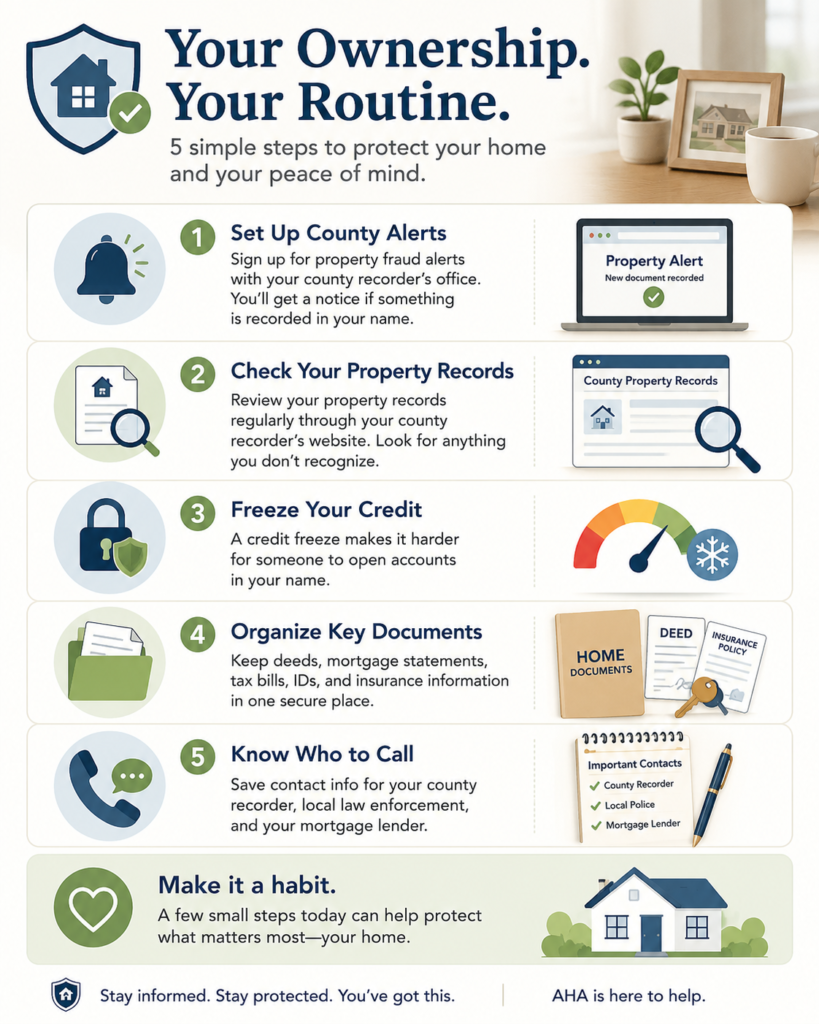
Start with your county recorder, register of deeds, clerk, or land records office. The name varies by state and county, because apparently homeownership needed one more confusing thing.
Search for your county’s official property records site and look for terms like “property fraud alert,” “recording notification,” “deed alert,” “land records alert,” or “notice of recorded document.”
Then take these steps:
Sign up for free county or state property alerts if available. Use your full legal name, common name variations, trust name, business name, parcel number, and property address if the system allows it.
Check your property record at least once a year. Look for unfamiliar deeds, mortgages, liens, ownership changes, mailing address changes, or documents you don’t recognize.
Keep your mailing address current with your property tax office, assessor, and land records office. This matters even more if you moved, inherited a home, placed property in a trust, own a rental, or use a mailing address different from the property address.
Freeze your credit with the three major credit bureaus if you are not actively applying for credit. A credit freeze will not stop every property scam, but it can make it harder for someone to open new credit in your name.
Review your credit reports. Unfamiliar loans, accounts, or inquiries can be an early sign that your identity is being misused.
Keep your deed, title insurance policy, mortgage records, payoff statements, property tax notices, homeowners insurance policy, trust documents, and closing documents together.
This doesn’t need to be fancy. A folder works. A secure digital vault works. The point is not perfection.
The point is not having to dig through old emails and kitchen drawers when you’re already stressed.
Pro Tip: Check the property, not just your name
Some alert systems monitor by owner name. Others allow parcel or address alerts. Use every option available, especially for second homes, inherited homes, rentals, vacant land, or property owned in a trust or limited liability company.
What to Do If Something Looks Wrong
If you receive an alert or find a document you don’t recognize, slow down and confirm the facts.
First, get a copy of the recorded document from your county recorder, clerk, or register of deeds. Look at the names, dates, notary information, parcel number, and document type.
Then call the recording office and ask about the local process for suspected fraud. Procedures vary by county and state. Some offices may direct you to a sheriff, district attorney, fraud unit, court process, or legal aid resource.
If your identity may have been used, file an identity theft report through the FTC’s IdentityTheft.gov, which provides recovery steps, checklists, and sample letters. (Consumer Advice)
If online communications, wire transfers, digital impersonation, or cyber-enabled fraud were involved, consider filing a report with the FBI’s Internet Crime Complaint Center. IC3 says people can file a complaint even if they are unsure whether the matter qualifies as an internet crime. (FBI)
You may also need to contact your mortgage lender, title insurance company, homeowners insurance company, local law enforcement, state attorney general’s office, and a real estate attorney.
That sounds like a lot. And yes, it can be.
But the first move is simple: get the document and confirm what happened.
Don’t try to solve the whole thing from a panic spiral at 11 p.m. Facts first. Then action.
How AHA Property Defender Helps
Property fraud protection works best when it’s not treated like a one-time task.
That’s where AHA Property Defender fits in.
Property Defender is designed to help homeowners build a practical protection routine around the records, alerts, documents, and deadlines that can affect ownership. Its framework includes free prevention tools, county registry alert guidance, education, premium title and lien monitoring, fraud and forgery detection, exemption and tax alerts, response playbooks, concierge support, and access to legal partners for more complex issues.
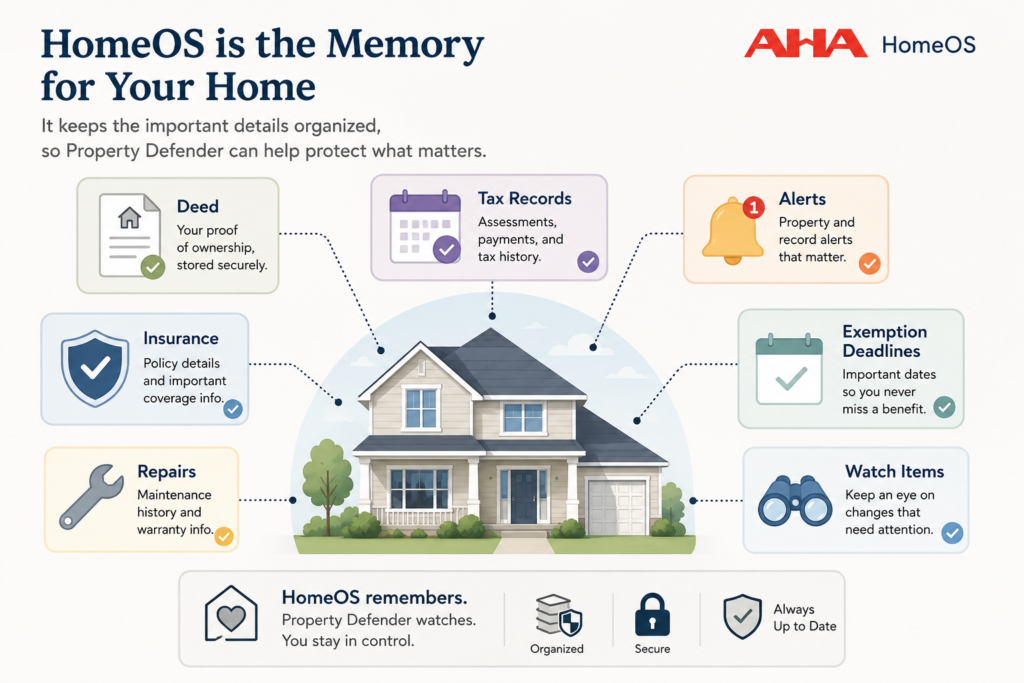
And underneath it all is AHA HomeOS — the memory for your home.
HomeOS remembers the details homeowners often lose, forget, or don’t know they’ll need later: deeds, tax records, insurance documents, warranties, contractor history, reminders, deadlines, risks, and watch items.
That matters because property protection is not just about one alert. It’s about context.
What changed?
Why does it matter?
Have we seen this before?
What document should you check?
What should you do next?
You live in the home. HomeOS remembers the details. Property Defender helps watch what matters.
The Bottom Line
Property fraud is real, but it’s not something you need to live in fear of.
Most homeowners don’t need panic. They need a simple ownership protection habit: sign up for free county alerts where available, check property records at least once a year, keep mailing addresses current, protect your identity, organize key documents, and pay attention to strange notices.
Your home is probably the biggest asset you own.
Protecting the record behind it is part of taking care of the home itself.
AHA Property Defender helps turn that protection into a calmer routine — prevention, monitoring, memory, and guidance in one place — so you’re not left figuring it out only after something goes wrong.