

You collect a few prices, but the coverage summaries don’t quite line up. What would you be getting for the money, and which differences deserve a closer look? You’re arranging new homeowners insurance, wondering whether you could pay less for the policy you have, or reviewing a renewal offer.
This homeowners insurance shopping guide supports all three situations with the AHA checklist and workbook.
The one-page checklist (PDF) outlines the shopping steps. The six-page workbook (PDF) has space to record home details, compare coverage and costs side by side, and keep questions and answers together.
Start with the one-page checklist and choose the starting point that fits you. Use the workbook when you need room to compare options or keep track of answers. You don’t need an existing policy to begin, and you don’t need to wait for renewal to explore savings. The aim is a choice you understand, with the important details in writing.
Start With Your Shopping Situation
The Insurance Shopping Checklist gives you three phases: get ready, compare the options, and finish with confidence. It is also the workbook’s first page, so you can use either copy. First, identify why you’re shopping and record the date that matters for your decision.
Arranging New Homeowners Insurance
Start with your home details, coverage needs, and desired start date. A home purchase is one reason to arrange new coverage, but you don’t need a previous policy to use these materials.
If you’re buying a home with a mortgage, ask your loan officer what coverage and proof of insurance the lender requires. You can choose your insurer; a lender’s suggestion is one option. The Consumer Financial Protection Bureau recommends sharing quotes with your loan officer to check that they meet the lender’s requirements.
Shopping to Save
You can compare options between renewals, too. Gather your current declarations page, policy and endorsements, premium information, and policy dates. An endorsement changes the policy’s terms. Use the protection you have as a starting point, then identify what each alternative would change.
Tell the agents when you would want any new coverage to begin. Compare costs over matching dates and equivalent protection; a full-year quote and the price for only the months left on an existing policy aren’t directly comparable. A lower premium is worth investigating, but confirm any switching costs before treating the difference as savings.
Shopping at Renewal
Gather the upcoming renewal offer, expiring policy, and notices of changes. Compare alternatives with the coverage and price being offered for the next period, rather than just last year’s bill. AHA’s renewal review checklist can help you identify what changed. Record the renewal date and give yourself time to resolve questions before coverage needs to be in place.
All three paths use the same comparison pages. This guide focuses on homes you own and live in. Condo and association-insured properties need an additional review of the association’s master policy and governing documents with your agent.
Give Each Insurer the Same Starting Point
The workbook’s Home & Coverage Starting Point on page 2 keeps the basic facts together: the home’s size, construction, roof, major updates, and features the insurer needs to know about. Mention circumstances such as pets, a pool, detached buildings, or business or rental use.
Use the same facts for each quote. If you don’t know the roof’s installation year, write “Need confirmation” and ask how to verify it. A guess can make two quotes look comparable when they were built on different information.
For the house itself, ask how the insurer estimated the rebuilding cost. That is different from the purchase price, market value, or mortgage balance. If estimates differ, compare the assumptions before asking an insurer to lower the coverage amount.
If you don’t have a current policy, leave that section blank. No path requires a perfectly organized insurance binder.
Compare Protection First, Then Costs
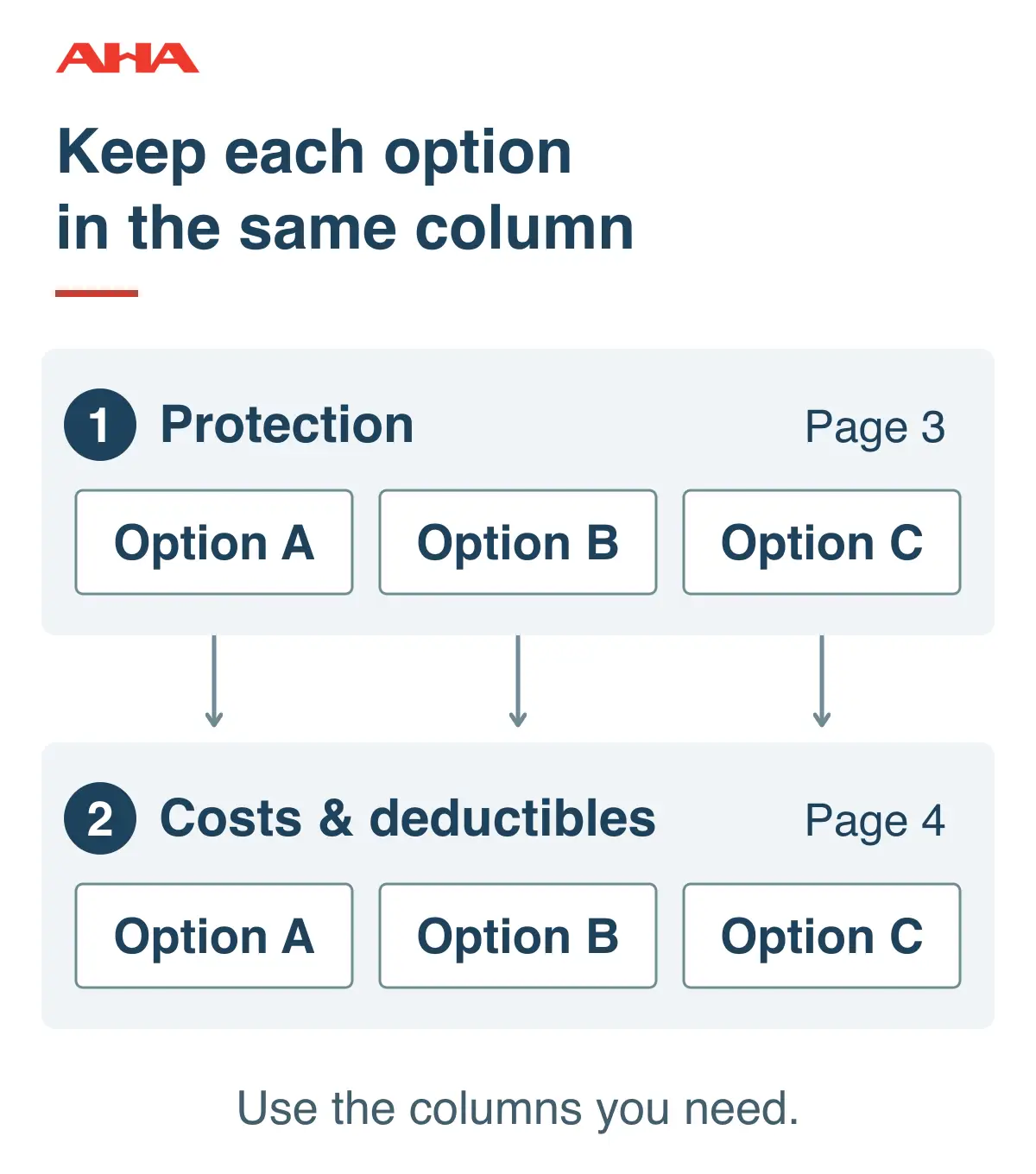
Keep each option in the same column on Compare the Protection and Compare Costs & Deductibles, pages 3 and 4. Option A can be your current policy or renewal offer, depending on why you’re shopping. For new coverage, use the columns for competing quotes. That way, you can follow each option from its coverage terms to its price without mixing up the details.
Compare Coverage Across Your Quotes
On the first pass, set the premiums aside. Look for differences in what the options protect and how a claim would be paid. Record the limits and payment terms for the house, roof, and belongings separately. Replacement cost generally does not subtract for age and wear; actual cash value generally does. Limits, deductibles, and policy conditions still matter, and a replacement-cost label does not tell you how every part of the home would be treated.
You don’t need to resolve every coverage question in this article. If you need help choosing limits or understanding payment methods, start with AHA’s guide to choosing homeowners insurance that fits your home, then return to the comparison.
Use the remaining rows to flag meaningful gaps. Ask whether protection for water backup, flood, earthquake, valuables, or building-code upgrades is included, added, separate, or unavailable. You don’t automatically need every extra, but a blank cell should not quietly become an assumption that something is covered. For water-related questions, AHA’s water damage coverage guide explains why the source of the water matters.
Compare Costs and Deductibles
On the second pass, compare costs for the same period. Include fees and separate coverage premiums that are not already counted. If bundling home and auto is an option, compare the combined cost with buying the policies separately, using equivalent coverage and the same full-year period.
If a switch would happen before your current policy ends, ask that insurer what cancellation steps, charges, or nonrefundable fees would apply and what premium refund, if any, you would receive. Get the amounts and dates in writing. Keep any refund separate from the new policy’s quoted price, and ask the insurers to help compare the costs over matching dates.
Translate each applicable deductible into dollars. For a percentage deductible, confirm the amount the percentage uses and the event that triggers it. Then ask whether you could manage that amount after a loss while keeping essential bills covered. AHA’s deductible guide gives a closer explanation.
Watch Out: A deductible is not a ceiling on everything you might pay. Depreciation, excluded damage, and costs above policy limits can leave additional expenses. Ask which deductible applies; don’t assume every event deductible adds together.
Turn the Differences Into a Few Useful Questions
The lowest price may reflect a discount, a higher deductible, different coverage, or a combination. Before choosing it, ask what changed to make it less expensive.
Use Get Answers Before You Choose, page 5, for the questions that could affect your decision. Record the answer, the relevant policy wording, and who will follow up. An unresolved question belongs on the page until it is answered, rather than disappearing into a series of phone calls.
Pro Tip: Send each agent the same short request: “Please explain your rebuilding estimate, show each deductible in dollars, and identify exclusions, payment limits, discounts, and any conditions still required before coverage begins.”
Record the legal insurer name, not just the agency or brand. The National Association of Insurance Commissioners explains how to identify the correct company. Use your state insurance department to verify both the insurer’s and agent’s status. Review complaint information and financial strength together rather than choosing on one factor alone. Ask who helps with coverage questions and claims, too.
A quote is an estimate. Find out whether an inspection, additional information, or another condition is still pending, and request the proposed coverage details in writing.
Put the Choice in Place and Check the Final Documents
On Make & Document Your Decision, page 6, record the option you chose and the trade-offs you accepted. Arranging new coverage, keeping the current policy, making adjustments, and switching are all possible outcomes. Shopping to save can lead to staying, and a renewal offer can still be the best fit after comparison. The workbook does not assume switching is the goal.
For any new policy, confirm the start date, start time, and payment arrangements. Get written confirmation of coverage.
If you’re buying with a mortgage, send the selected policy information to your loan officer. Check that coverage meets the lender’s requirements and the mortgage details are correct. Coordinate the agreed coverage start with your closing arrangements.
If you’re switching, the Texas Department of Insurance advises keeping the old policy until you receive the new policy or written coverage confirmation. Coordinate the effective dates and times so there is no gap. Confirm the start date of any separate coverage as well; don’t assume all policies begin together.
Whether you’re changing now or at renewal, ask your mortgage servicer about its switching process, required documents, and refund handling if insurance is paid through escrow. If you’re staying, get written confirmation of any policy changes you selected; at renewal, confirm the next period’s terms too.
Finally, compare the issued policy and endorsements with the option you chose. Ask promptly about discrepancies, and save the response with your coverage confirmation and policy documents.
Make One Useful Comparison
Start with the checklist and the situation that fits: new coverage, shopping to save, or renewal. Gather your home details, current policy, or upcoming renewal offer as appropriate, then record your next useful step. Open the workbook when you need space for the comparison. Print it or type into the fields and save your copy; calculations are manual.
You don’t have to find a perfect policy. You need protection that fits your home, costs you can manage, and a clear understanding of the differences that matter.
This guide provides general education, not an insurance quote or a promise of coverage. Policy terms, eligibility, lender requirements, and state rules vary. Keep completed worksheets private; do not record Social Security or payment-card numbers.