

A flickering light, a warm outlet cover, or a breaker that keeps tripping can put a homeowner in an uncomfortable spot. You can see that something changed, but you may not know whether it is minor, serious, or even connected to the electrical system at all. That is exactly why when to inspect electrical systems is less about diagnosing the cause and more about knowing the boundary between safe observation and qualified help.
This guide explains what homeowners can safely notice, which warning signs deserve attention, and what to write down before contacting a qualified electrician. It does not replace a professional inspection, local code guidance, permit advice, or electrical repair work. The goal is simpler: help you take the right concern seriously without turning your home into a do-it-yourself electrical project.
Quick answer: when should you ask for an electrical inspection?
Ask for qualified electrical evaluation when a warning sign repeats, gets worse, or involves heat, odor, sparks, shocks, buzzing, discolored covers, loose plugs, or a breaker that trips again after being reset. Your job is to notice the pattern and stop unsafe troubleshooting; the electrician’s job is to evaluate the cause.
A homeowner check is limited to what you can observe safely from the outside: lights, switches, outlets, cords, plugs, appliance behavior, and patterns you notice over time. A professional inspection is different. A qualified electrician can evaluate the system, identify likely causes, and tell you what repair or follow-up is appropriate for your home and local requirements.
If you are unsure, do not open covers, panels, devices, or wiring to investigate. Step back, stop using the affected item if that is safe to do, and call a qualified electrician.
Why Electrical Warning Signs Are Hard To Judge
Electrical issues can be confusing because the visible clue is often small. A light flickers. A plug feels loose. A switch plate looks a little darker than it used to. A breaker trips, then everything seems normal again.
The problem is that a visible clue does not tell you the cause. Flickering lights, warm covers, burning odors, sparks, unusual sounds, loose plugs, or repeated breaker resets may point to different issues depending on the fixture, circuit, device, age of the system, installation, load, and local electrical requirements.
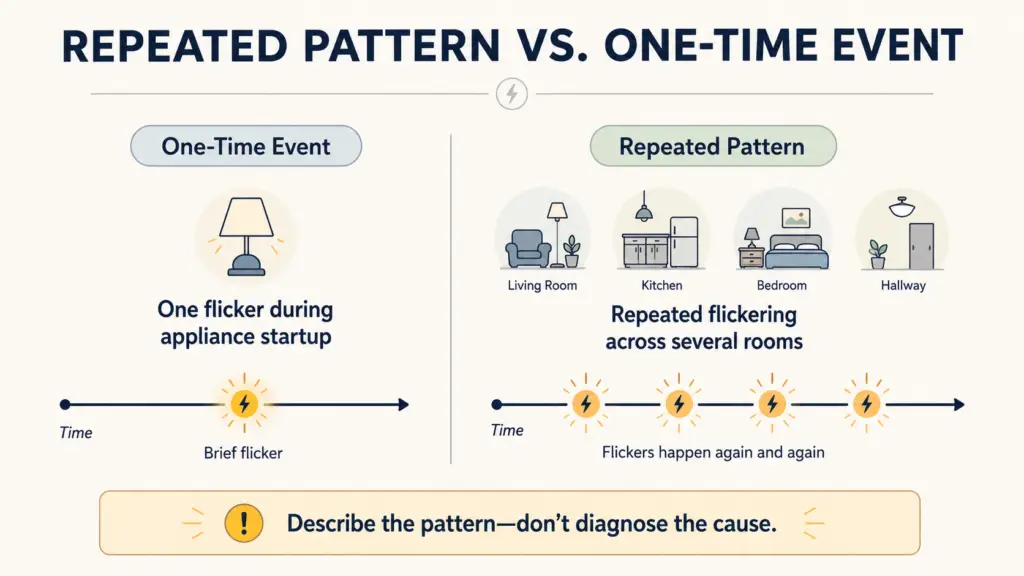
For example, one light that flickers once when a large appliance starts is a different homeowner observation from several rooms flickering repeatedly. Neither pattern is something to diagnose from the hallway. The useful step is to describe what happened, where it happened, and whether it keeps happening.
That does not mean every symptom proves a major defect. It does mean the homeowner’s role should stay narrow. You can notice the change, stop using something that seems unsafe, and get qualified help when a warning sign appears. You do not need to prove what is wrong before you call.
The U.S. Consumer Product Safety Commission (CPSC) publishes homeowner electrical-safety materials that focus on visible conditions and warning signs. The safe lesson for homeowners is not “diagnose the system.” It is “recognize when a visible condition deserves professional review.”
What Homeowners Can Safely Notice
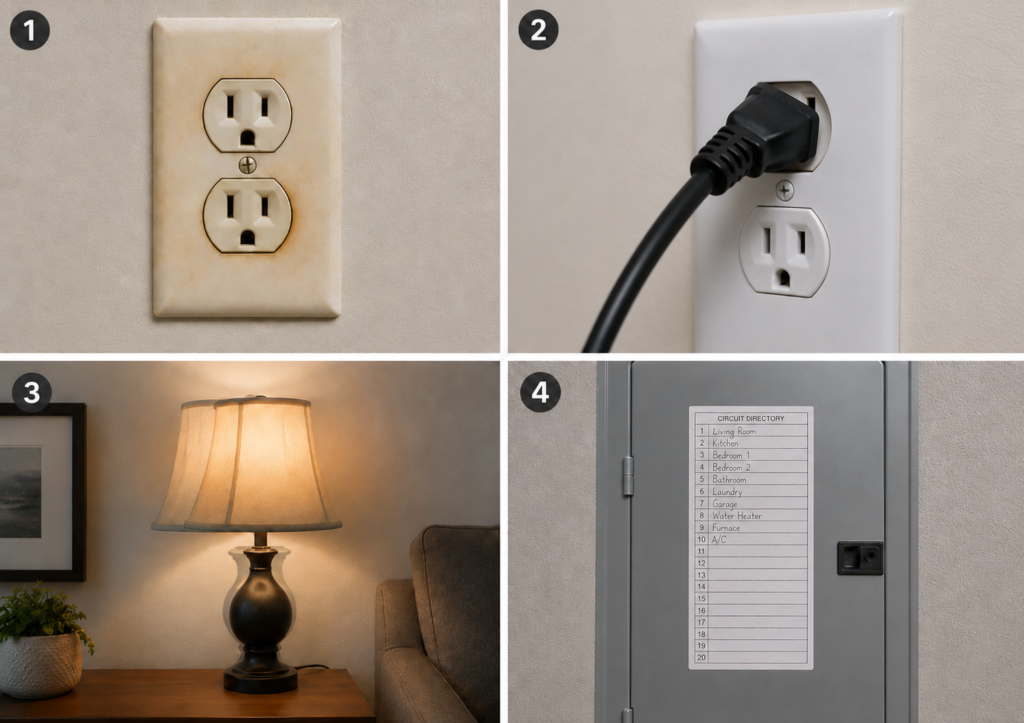
A safe homeowner check is observational. You are looking, listening, and paying attention to changes. You are not testing live wiring, removing devices, opening panels, replacing parts, or trying to confirm whether something meets code.
You can safely note things like:
- lights that flicker, dim, or behave differently than they used to;
- outlets, switches, covers, plugs, or cords that feel warm during ordinary use;
- discoloration around an outlet, switch, plug, or cover;
- a burning, hot-plastic, or unusual electrical odor;
- buzzing, sizzling, crackling, or other unusual sounds;
- sparks from an outlet, switch, plug, or device;
- plugs that fit loosely or fall out of outlets;
- a breaker that trips repeatedly;
- cords or extension cords that are damaged, pinched, overloaded, or used in ways that feel temporary.
The CPSC’s Home Electrical Safety Checklist is useful because it frames the homeowner task as a room-by-room look at visible electrical products and conditions. Treat that kind of checklist as a noticing tool, not an inspection report.
A good rule of thumb: if checking it requires a tool, a tester, a ladder you are not comfortable using, removing a cover, touching wiring, opening the electrical panel, or guessing what is behind a wall, stop. That is no longer a homeowner observation.
Warning Signs That Deserve Qualified Evaluation
Some warning signs should move the issue from “keep an eye on it” to “ask a qualified electrician.” CPSC electrical-safety materials identify several observable signs that can indicate electrical-system hazards, including dimming or flickering lights, unusual sounds, overheated-plastic odors, loose plugs, sparks, hot covers, and frequent breaker resets.
Use those signs as prompts for qualified evaluation, not as proof of a specific defect. In this context, “inspect” means getting the right person to evaluate the concern, not opening anything yourself to confirm it.
Call a qualified electrician when you notice:
- Repeated breaker trips. A single trip may have an obvious context, but repeated trips deserve review. Do not keep resetting a breaker to make the symptom go away.
- Heat around outlets, switches, plugs, or covers. Warmth, discoloration, or a hot-plastic smell should be taken seriously.
- Sparks, buzzing, sizzling, or crackling. Unusual sound or visible sparking is not something to troubleshoot casually.
- Flickering or dimming that keeps happening. If the pattern repeats or affects multiple lights or areas, write down what you notice and get help.
- Loose plugs or damaged outlets. A plug that does not hold securely can be more than an annoyance.
- A mild shock or tingling sensation. The Electrical Safety Foundation International also treats this as a warning sign to take seriously; even if it seems minor, do not treat it as normal.
If a warning sign appears with smoke, active fire, a strong burning smell, visible damage, or immediate danger, leave the area and contact emergency help as appropriate. This article is not an emergency-response guide.
A Homeowner Check Is Not An Electrical Inspection
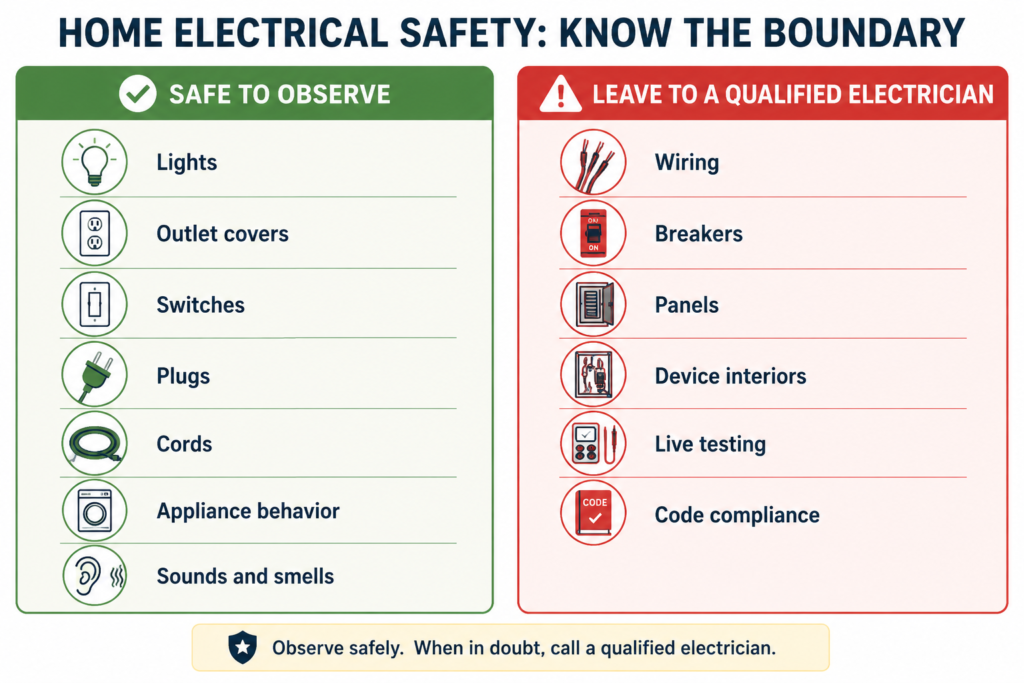
The word “inspection” can be misleading. A homeowner may walk through the house and notice visible conditions. A homebuyer may use a checklist to remember what to ask about. A professional home inspector may report visible concerns during a home inspection. A qualified electrician may evaluate the electrical system more directly.
Those are not the same thing.
A homeowner check can help you decide whether a concern deserves attention. It cannot determine whether wiring is safe, whether a circuit is overloaded, whether a panel is properly configured, whether a device was installed correctly, whether a repair is needed, or whether local code requirements are met. That is why the safest next step is often not more homeowner checking; it is a qualified electrical evaluation.
That distinction matters because electrical work carries safety risk and local variation. Codes, permits, licensing rules, and inspection requirements can vary by state, county, city, and situation. A national homeowner article can help you recognize a warning sign, but it cannot tell you the local rule or the exact repair.
What To Note Before You Call
You do not need a technical diagnosis before calling an electrician. You just need clear observations.
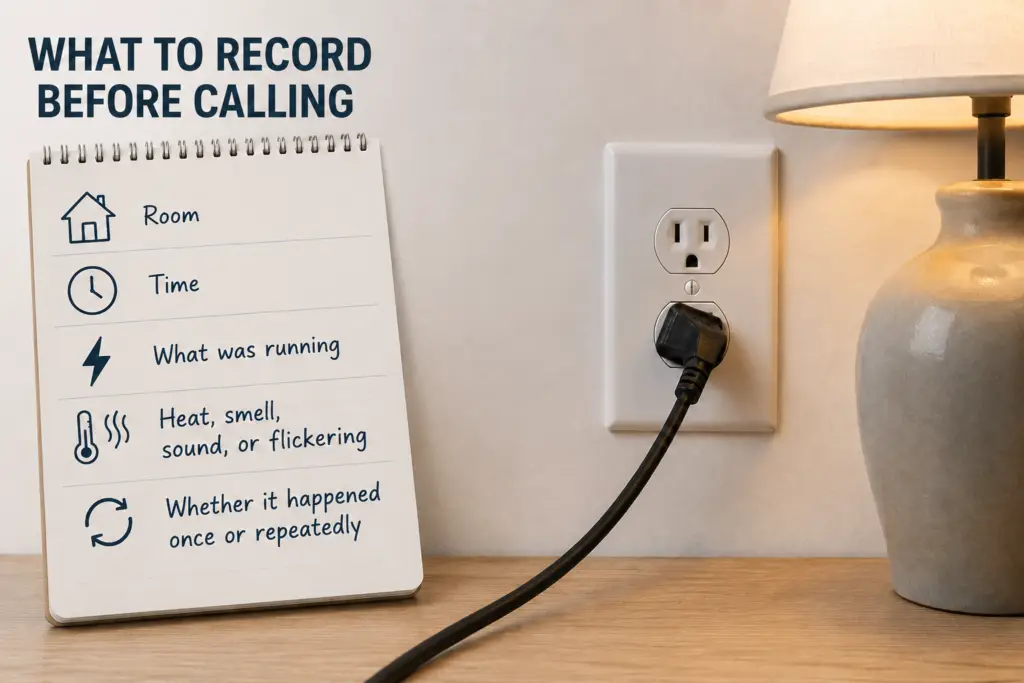
Before you call, write down:
- what you noticed;
- where it happened;
- when it started;
- whether it happened once or repeatedly;
- whether it affects one outlet, one room, several rooms, or a specific appliance;
- whether there was heat, smell, sound, sparking, discoloration, shock, or a tripped breaker;
- what you were using when it happened;
- whether anything recently changed, such as a new appliance, storm, renovation, service visit, or power outage;
- photos of visible discoloration, damaged cords, labels, or affected devices, if you can take them safely.
This helps the electrician understand the pattern. It also helps you avoid vague descriptions like “the electricity is acting weird,” which can make the first conversation harder.
You can ask simple questions:
- “Based on what I described, should I stop using this outlet, fixture, or appliance until someone looks at it?”
- “Is this something that needs a licensed electrician, or is there another professional I should call first?”
- “What information should I have ready before the visit?”
- “Are there local permit or inspection requirements I should know about if repair work is needed?”
Do not ask the electrician to confirm safety over the phone from a description alone. The point of the call is to decide the next appropriate step.
What Not To Do
Electrical uncertainty can make people want to test, reset, tighten, or open things. That is usually the wrong direction.
Unless you are knowledgeable in electrical systems avoid:
- opening the electrical panel to investigate a problem;
- removing outlet or switch covers to look behind them;
- testing live equipment unless you are qualified to do so;
- replacing outlets, breakers, wiring, or fixtures as a guess;
- using damaged cords, loose plugs, or outlets that show heat, odor, or discoloration;
- repeatedly resetting a breaker without understanding why it trips;
- covering up odors, heat, buzzing, or flickering because the device still works;
- assuming a homebuyer checklist, online article, or visual walk-through is the same as an electrical inspection.
You are not being overly cautious by stopping at the observation stage. You are keeping the decision in the right hands.
How This Fits With Home-System Planning
Electrical warning signs are different from ordinary home-system planning. A system-age article can help you understand that home components change over time. A homebuyer checklist can help you notice visible concerns during a walk-through. But an electrical warning sign is a safety-sensitive clue, not just a maintenance note.
If you are trying to understand your home systems more broadly, AHA’s Home Systems Lifespan article can help you think about age and context. If you are walking through a home as a buyer, the AHA DIY Homebuyer Inspection Checklist can help you remember visible items to observe.
Neither replaces qualified electrical evaluation. Use them as related reading, not as technical authority.
The Bottom Line
You do not need to solve an electrical concern before asking for help. You need to notice the pattern, avoid unsafe troubleshooting, and know when a qualified electrician should evaluate it.
If the issue involves heat, odor, sparking, buzzing, loose plugs, discolored covers, shock, repeated breaker trips, or persistent flickering, treat it as a reason to stop guessing. Write down what you observed, avoid opening or repairing anything yourself, and get qualified evaluation for your specific home.