
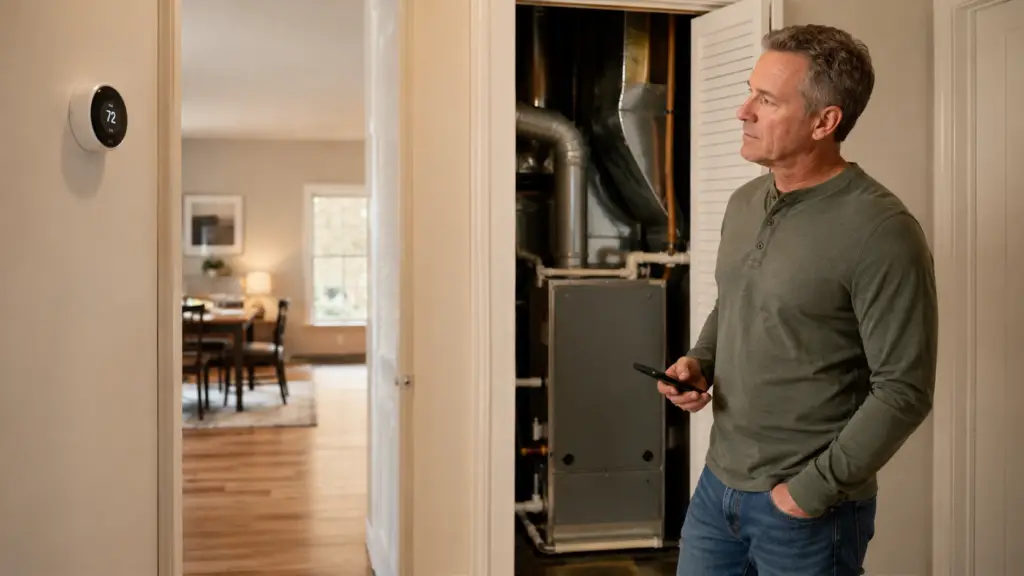
Few home repair conversations make your stomach drop quite like hearing, “You may need a new HVAC system.”
Maybe the air conditioner limped through another hot afternoon. Maybe the furnace started making a sound you can hear from the hallway. Or maybe the technician has already been out twice, and now you’re staring at a replacement quote you weren’t expecting.
Before replacing your HVAC system—your heating, ventilation and air conditioning equipment—get clear on what failed and what each option would accomplish. You don’t need to become an HVAC expert to understand your contractor’s recommendation and make a confident choice.
The decision comes down to three things: whether the diagnosis supports replacement, whether the proposed work solves your actual problem, and what you’re buying for the price.
Does the HVAC Replacement Recommendation Make Sense?
Age matters, but it’s only one clue—kind of like mileage on a car. The useful explanation connects the equipment’s age and maintenance history to what failed, its overall condition and what a repair would accomplish.
“It’s old” gives you less to work with than “This component failed; here is the repair, and here are the other condition problems that make replacement worth considering.” You should be able to understand the recommendation without knowing how to repair the equipment yourself. Electrical, combustion and refrigerant work belong with qualified professionals.
For example, an older system with one identified, repairable fault presents a different decision from equipment with a major failure and several unresolved problems. In the first situation, a repair might restore useful service. In the second, a repair might address today’s failure while leaving you facing other substantial work. The contractor’s explanation should make that distinction clear, including anything they cannot reasonably predict.
Maintenance belongs in that explanation, too. A dirty filter, restricted airflow or another maintenance issue deserves attention, but it doesn’t tell you whether replacement is necessary. The important point is what remains wrong after the technician accounts for those conditions. You’re describing symptoms; they’re responsible for investigating the cause.
Repeat visits also need context. Several invoices for the same unresolved problem are different from separate visits for routine service and unrelated repairs. Whatever records you readily have can help clarify the pattern. You don’t need to reconstruct the system’s entire history before getting useful advice.
A repair worth considering should have a defined purpose, a written price and clear limitations. Replacement deserves consideration when the documented condition, repair options and remaining problems support a broader solution. Neither equipment age nor a set number of service calls settles that choice.
If the explanation stays vague, or one contractor recommends replacement while another sees a repairable fault, another qualified assessment can help resolve the disagreement. The goal is a clearer diagnosis, not simply another sales quote. A same-day discount doesn’t answer a technical question, and the contractor should explain an urgent safety issue separately from an offer deadline.
Will New Equipment Solve the Comfort Problem?
Your HVAC equipment may sit in the basement, closet or side yard, but it works with the house around it. In a ducted system, the ducts carry conditioned air to the rooms. Replacing equipment may leave an existing delivery problem unresolved—like buying a new engine while ignoring a flat tire.
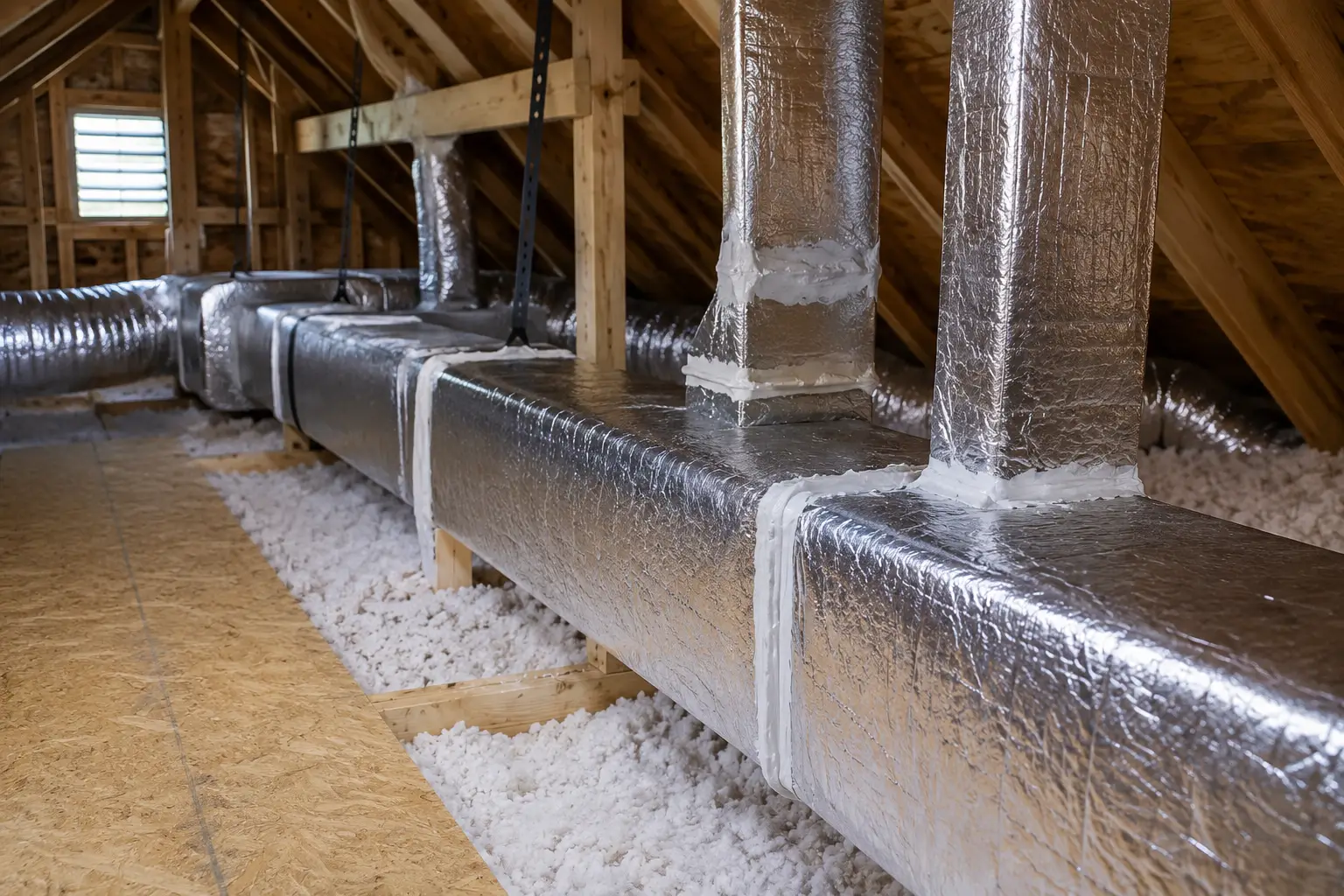
Suppose the system heats most of the house comfortably, but one bedroom never catches up. That observation doesn’t prove the equipment needs replacement. It gives the contractor a specific problem to investigate: whether airflow, duct condition, equipment performance or something about that room is contributing.
The proposal should connect the finding to the work. If duct repairs are needed, their location and purpose should be clear. If they aren’t included, you should understand whether the uncomfortable room is expected to remain a problem. A quote for new equipment is not necessarily a quote to correct every comfort issue.
Sizing belongs in this same conversation. Bigger isn’t automatically better: oversized equipment can cycle too frequently and leave comfort problems. A home-specific load calculation estimates heating and cooling needs. A useful explanation tells you how the contractor arrived at the proposed size, rather than relying only on the old unit’s capacity.
Air leakage and insulation can also affect comfort. When those issues appear relevant, a targeted evaluation—or a broader professional home energy assessment—may help identify the cause. That doesn’t mean every replacement requires an energy audit or whole-house renovation. Start with the problem you’re trying to solve. AHA’s energy-efficiency upgrade guide offers context if the conversation expands beyond the equipment.
Which Direction Fits What You Know?
Once the contractor has explained the findings, use this comparison to choose the next conversation—not to diagnose the system yourself.
| Direction | Circumstances that support considering it | Reasonable next step |
|---|---|---|
| A repair | An identified fault can be repaired, and the assessment doesn’t reveal broader condition problems that undermine that option. | Compare the written repair scope, limitations and warranty with what replacement would address. |
| Replacement | The documented failure and overall condition make repair less practical, and the proposed installation addresses the problems you need solved. | Compare replacement proposals covering equivalent equipment and work. |
| Another qualified assessment | The diagnosis is unclear, recommendations conflict, or the quote doesn’t explain how it addresses the symptoms. | Obtain an independent equipment-specific assessment; keep unsafe equipment out of service. |
Your budget and household needs matter alongside the technical findings. A safe repair may give you time to plan; a well-supported replacement may be preferable to taking on substantial unresolved problems. AHA’s broader Repair vs. Replace guide explores that tradeoff across home systems.
Compare the Work, Not Just the Price
Two replacement quotes can look similar while buying different jobs. One may include related duct changes, controls, removal and installation testing; another may cover only the equipment swap. A lower total becomes meaningful only when you understand those differences.
The written proposal should identify the equipment and capacity, included installation work, exclusions, removal, payment terms and expected timing. The contractor should explain equipment and labor warranties separately, including registration or maintenance conditions. Local permit, inspection, code and contractor requirements vary; the proposal should state who handles applicable requirements and whether their costs are included.
For example, if one bid includes correcting a documented duct problem and another leaves the ducts unchanged, don’t treat the price gap as an equipment discount. Have the contractors clarify the difference so you can decide whether both proposals would deliver the result you want. Necessary corrections and optional upgrades should be distinguishable.
Before you sign, ask the contractor: “What testing is included to confirm the new system’s airflow and refrigerant charge are correct, where applicable?” Proper setup matters as well as equipment selection. ENERGY STAR’s quality-installation guidance identifies airflow and refrigerant-charge verification as important installation considerations. A useful answer explains the applicable testing and how the contractor will document the results—not merely that the equipment will turn on.
Clear answers won’t eliminate every uncertainty, but they should make the scope easier to understand. Pressure to sign before you can read it, unexplained exclusions or resistance to a written explanation are reasons to slow the purchasing decision. Where safety or extreme weather creates urgency, address safe conditions first while keeping the proposed work and price clear.
Keep Equipment Choices and Incentives in Perspective
Replacement is a reasonable time to discuss whether a different system fits your home. Depending on the project, that could mean a heat pump, a ductless option for a particular area or a configuration combining a heat pump with a furnace. You don’t need to compare every technology. Have the contractor explain a relevant alternative alongside the baseline proposal, including related installation work and how it would meet your heating and cooling needs.
Refrigerant changes deserve a similarly focused explanation. EPA distinguishes continued use and repair of existing equipment from rules affecting new equipment and systems. A change affecting new installations does not, by itself, mean your existing system must be replaced. The useful discussion identifies your refrigerant, the actual repair options and any restrictions relevant to the proposed work. Refrigerant handling belongs with appropriately certified technicians.
Incentives should support a suitable purchase, not make the decision for you. IRS guidance checked October 16, 2026 states that the federal Section 25C Energy Efficient Home Improvement Credit is unavailable for property placed in service after December 31, 2025. Don’t build a current replacement budget around an older “through 2032” claim. See the IRS termination guidance.
That particular credit is separate from other incentive programs. State, utility and other offers can have different equipment, household, funding and application requirements. Verify any specific offer with its administrator before relying on it, including whether approval is needed before work begins. Compare the price you are responsible for paying separately from any conditional benefit.
Leave With a Decision You Can Explain
You don’t need every answer about HVAC. You need enough clarity to explain why the recommended work fits your system, your home and your circumstances.
If an identified repair addresses the problem, consider its written scope. When the findings support replacement, compare equivalent proposals. Still missing a clear explanation? Another qualified assessment is the next step—not a commitment to buy.
For help organizing those proposals, AHA’s SmartHire Contractor Kit includes project-planning and contractor-scope worksheets you can use for the work you’re considering.
With a clear explanation and a little support, you can make a confident choice for your home—without becoming an HVAC expert.